
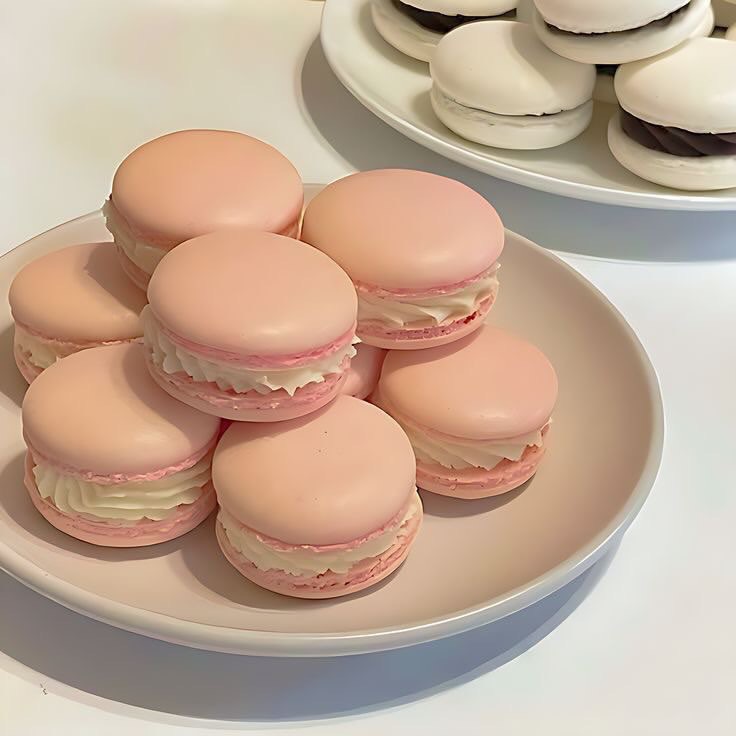
Classic French Macarons Recipe
A Complete Step-by-Step Guide to Perfect Parisian Macarons at Home
French macarons are among the most elegant and iconic pastries in the world. Delicate yet rich, crisp on the outside and tender within, these almond-based sandwich cookies are a hallmark of French pâtisserie. Their smooth domed shells, signature ruffled “feet,” and creamy filling make them both visually stunning and deeply satisfying to eat.
Despite their refined appearance, macarons have a reputation for being temperamental. Many home bakers feel intimidated by them, but the truth is that macarons are not difficult — they are precise. Success depends on understanding the technique, respecting the process, and paying attention to details.
This comprehensive guide will walk you through every stage of making classic French macarons using the French meringue method. From ingredient selection to troubleshooting common problems, this recipe is designed to help you achieve bakery-quality results in your own kitchen.
What Are French Macarons?
French macarons are not to be confused with macaroons, which are coconut-based cookies. Macarons are delicate almond meringue cookies sandwiched together with a filling, traditionally buttercream, ganache, or jam.
A proper macaron shell should have:
- A smooth, glossy top
- A crisp exterior
- A soft, chewy interior
- A ruffled base known as “feet”
- A balanced sweetness with a subtle almond flavor
This recipe focuses on the classic French macaron, flavored with vanilla and tinted pink, filled with a simple buttercream.
Ingredients Overview
Precision is essential in macaron baking. Measuring ingredients accurately, ideally by weight, will significantly improve consistency.
Macaron Shells
- 1¾ cups powdered sugar (confectioners’ sugar)
Provides sweetness and structure. Powdered sugar must be sifted to avoid lumps and achieve smooth shells. - 1 cup almond flour (finely ground blanched almonds)
Almond flour is the foundation of macarons. Use finely milled almond flour, not almond meal, which is coarser and contains skins. - 3 large egg whites, room temperature
Egg whites create the meringue structure. Aging egg whites slightly can improve stability, but room-temperature fresh whites work well. - ¼ cup granulated sugar
Stabilizes the meringue and gives the shells strength. - ½ teaspoon vanilla extract (optional)
Adds flavor. Use clear vanilla if maintaining color is important. - Pink gel food coloring
Gel coloring is preferred because it does not add excess moisture.
Filling
- Buttercream frosting
A classic vanilla buttercream pairs beautifully with the almond shells. You may substitute flavored buttercream, ganache, or jam.
Essential Equipment
Having the right tools makes a significant difference.
- Digital kitchen scale
- Fine-mesh sieve
- Food processor (optional, for refining almond flour)
- Stand mixer or hand mixer
- Large mixing bowls
- Rubber spatula
- Piping bag with round tip
- Baking sheets
- Parchment paper or silicone baking mats
- Oven thermometer (highly recommended)
Preparing Your Ingredients
Step 1: Measure Accurately
Macarons are sensitive to ratios. Measuring by weight is ideal, but if using cups, ensure they are leveled properly.
Step 2: Sift the Dry Ingredients
Combine the almond flour and powdered sugar and sift them together at least once, preferably twice. This removes clumps and ensures a smooth batter.
If large almond pieces remain, pulse the mixture briefly in a food processor, then sift again. Discard any coarse bits that do not pass through the sieve.
Making the French Meringue
Step 3: Whip the Egg Whites
Place the room-temperature egg whites in a clean, grease-free mixing bowl. Begin whipping on medium speed until they become foamy.
Gradually add the granulated sugar, one tablespoon at a time, while continuing to whip.
Increase speed to medium-high and whip until stiff, glossy peaks form. The meringue should stand upright when the whisk is lifted and should not slide around in the bowl.
Step 4: Add Flavor and Color
Add vanilla extract and pink gel food coloring. Mix briefly until just incorporated. Avoid overmixing, which can deflate the meringue.
Macaronage: Folding the Batter
Macaronage is the process of folding the dry ingredients into the meringue to achieve the correct batter consistency.
Step 5: Combine Dry Ingredients with Meringue
Add the sifted almond flour and powdered sugar mixture to the meringue in two or three additions.
Using a rubber spatula, gently fold by scraping the sides of the bowl and pressing the batter against the bowl to release air.
Step 6: Achieve Lava Consistency
The batter is ready when it flows slowly and smoothly off the spatula in a thick ribbon, resembling molten lava.
A common test is the figure-eight test: the batter should flow continuously enough to form a figure eight without breaking.
Overmixing will result in runny batter and flat shells. Undermixing will cause cracked or lumpy shells.
Piping the Macarons
Step 7: Prepare the Baking Sheets
Line baking sheets with parchment paper or silicone baking mats. For uniform sizing, you may use a printed macaron template placed beneath the parchment.
Step 8: Pipe the Shells
Transfer the batter to a piping bag fitted with a round tip.
Hold the piping bag vertically and pipe small rounds, approximately 1 to 1½ inches in diameter, spacing them about 1 inch apart.
Tap the baking sheets firmly against the counter several times to release air bubbles. Use a toothpick to pop any visible bubbles on the surface.
Resting the Macarons
Step 9: Dry the Shells
Allow the piped macarons to rest at room temperature for 30 to 60 minutes, or until a dry skin forms on the surface.
When lightly touched, the tops should feel dry and not stick to your finger. This resting period is crucial for developing feet during baking.
Baking the Macarons
Step 10: Preheat the Oven
Preheat your oven to 300°F (150°C). Use an oven thermometer to ensure accuracy, as temperature fluctuations can affect results.
Step 11: Bake
Bake one tray at a time on the center rack for 12 to 15 minutes.
The macarons are done when:
- The tops are set and do not wobble
- The feet are well-formed
- The shells lift cleanly from the parchment once cooled
Allow the shells to cool completely on the baking sheet before removing.
Making the Buttercream Filling
A simple vanilla buttercream complements the delicate almond flavor.
Basic Buttercream Recipe
- ½ cup unsalted butter, softened
- 1½ to 2 cups powdered sugar
- 1 teaspoon vanilla extract
- 1 to 2 tablespoons heavy cream or milk
Beat butter until smooth. Gradually add powdered sugar, then vanilla and cream, beating until light and fluffy.
Assembling the Macarons
Step 12: Pair the Shells
Match shells of similar size. Turn half of them upside down.
Step 13: Fill
Pipe a small amount of buttercream onto the center of each shell. Gently sandwich with the remaining shells, twisting slightly to spread the filling evenly.
Maturing the Macarons
Freshly assembled macarons benefit from resting.
Place filled macarons in an airtight container and refrigerate for 24 hours. This allows moisture from the filling to soften the interior of the shells, creating the ideal texture.
Bring to room temperature before serving.
Storage and Shelf Life
- Refrigerator: Up to 5 days in an airtight container
- Freezer: Up to 2 months; thaw overnight in the refrigerator
Unfilled shells can be stored in an airtight container at room temperature for 2 days or frozen for longer storage.
Troubleshooting Common Macaron Problems
Cracked Shells
Usually caused by insufficient resting time or excess air bubbles.
No Feet
Often due to under-whipped meringue, overmixed batter, or oven temperature issues.
Hollow Shells
Can result from overwhipped meringue or baking at too high a temperature.
Lopsided Feet
Typically caused by uneven oven heat or improper piping angle.
Tips for Consistent Success
- Use gel food coloring only
- Avoid baking on humid days if possible
- Always sift dry ingredients
- Practice macaronage technique
- Bake one tray at a time
Final Thoughts
French macarons are a beautiful blend of science and art. While they demand patience and precision, the reward is well worth the effort. With practice, careful attention, and this detailed guide, you can master classic French macarons in your own kitchen.
Whether you are baking for a special occasion, gifting homemade treats, or building a professional baking portfolio, these macarons deliver elegance, flavor, and timeless appeal.