
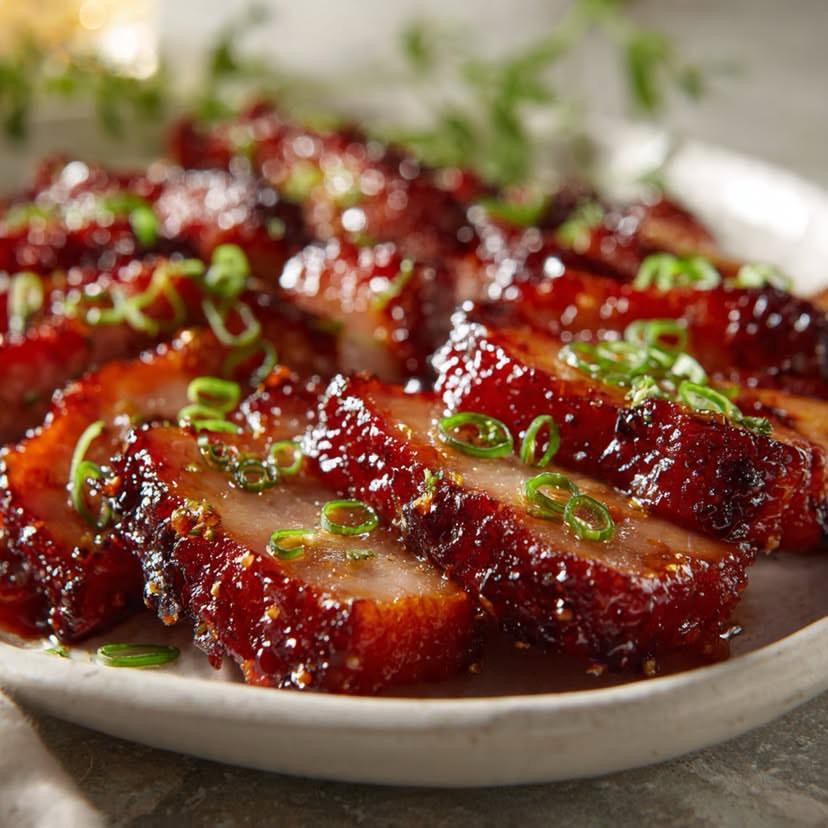
Authentic Chinese BBQ Pork Recipe (Char Siu): A Sweet and Savory Delight
Chinese BBQ Pork, commonly known as Char Siu, is one of the most iconic dishes in Cantonese cuisine. Recognizable by its glossy red exterior, caramelized edges, and deeply savory-sweet flavor, Char Siu has earned a beloved place in Chinese households, restaurants, and street-side barbecue stalls across the world. Whether sliced and served with rice, tucked into fluffy bao buns, or layered over noodles, this dish represents comfort, tradition, and irresistible flavor.
This comprehensive recipe will guide you through making authentic Chinese BBQ Pork at home, using traditional techniques and pantry-friendly ingredients. While many people believe Char Siu requires special equipment or hard-to-find sauces, this recipe proves that you can achieve restaurant-quality results in a standard home kitchen.
What Is Char Siu?
Char Siu (叉烧) translates roughly to “fork-roasted,” referring to the traditional method of skewering strips of marinated pork with long forks and roasting them over an open fire or in a covered oven. Historically, street vendors in southern China displayed hanging strips of glistening pork in glass cases, roasting them over charcoal fires until smoky, sticky, and perfectly cooked.
The hallmark characteristics of Char Siu include:
- A balance of sweet and savory flavors
- Tender, juicy pork with caramelized edges
- A shiny glaze that clings to the meat
- Subtle warmth from spices like five-spice powder
- Aromatics such as garlic and ginger
Though often dyed red in restaurants for visual appeal, the color is optional and does not affect flavor.
Choosing the Right Cut of Pork
The cut of pork you choose plays a major role in the final texture and taste of your Char Siu.
Pork Shoulder (Boston Butt)
- Slightly fatty
- Extremely flavorful
- Juicy and tender after roasting
- Traditional and highly recommended
Pork Tenderloin
- Leaner and milder
- Cooks faster
- Slightly less juicy but still delicious
- Ideal if you prefer lean meat
For the most authentic and indulgent result, pork shoulder is the preferred choice. A little fat helps the pork stay moist and enhances the caramelization of the glaze.
Ingredients Breakdown and Their Roles
Pork
The foundation of the dish. Cut into long strips to maximize surface area for marinade absorption and caramelization.
Hoisin Sauce
A thick, fragrant Chinese sauce made from fermented soybeans, garlic, vinegar, sugar, and spices. It provides sweetness, umami, and depth.
Soy Sauce
Adds saltiness and enhances the savory profile. Use light soy sauce for balance.
Honey or Sugar
Essential for sweetness and glaze formation. Honey creates a deeper shine and richer caramelization, while sugar provides a cleaner sweetness.
Chinese Five-Spice Powder
A warm blend typically including star anise, cloves, cinnamon, Sichuan peppercorns, and fennel seeds. It adds complexity and that unmistakable Char Siu aroma.
Garlic
Brings pungency and savory depth.
Ginger
Adds warmth, brightness, and a subtle peppery note that balances sweetness.
Red Food Coloring (Optional)
Traditionally used for the signature red appearance. Entirely optional and purely cosmetic.
Full Ingredient List
- 2 to 2.5 pounds pork shoulder or pork tenderloin
- 1/2 cup hoisin sauce
- 1/4 cup soy sauce
- 1/3 cup honey or granulated sugar
- 2 teaspoons Chinese five-spice powder
- 4 cloves garlic, finely minced
- 1 tablespoon fresh ginger, grated
- 1 teaspoon red food coloring (optional)
- 2 tablespoons vegetable oil (for roasting)
- 2 tablespoons additional honey (for glazing)
Preparing the Pork
- Trim excess skin or thick connective tissue from the pork, leaving some fat intact for flavor.
- Slice the pork lengthwise into strips about 1.5 to 2 inches thick.
- Pat dry with paper towels to help the marinade adhere.
Uniform sizing ensures even cooking and consistent texture.
Making the Marinade
In a large mixing bowl, combine:
- Hoisin sauce
- Soy sauce
- Honey or sugar
- Chinese five-spice powder
- Minced garlic
- Grated ginger
- Red food coloring, if using
Whisk until smooth and fully combined. The marinade should be thick, glossy, and deeply aromatic.
Marinating the Pork
- Place pork strips into the marinade.
- Massage the marinade into every surface of the meat.
- Cover and refrigerate for at least 8 hours, preferably overnight.
For best results, marinate for 24 hours. The longer marination allows the flavors to penetrate deeply and tenderize the meat.
Cooking Methods
Oven-Roasted Char Siu (Most Accessible Method)
This method recreates the traditional roasting style using a standard oven.
Setup
- Preheat oven to 425°F (220°C)
- Line a baking tray with foil
- Place a wire rack over the tray
- Fill tray with a little water to prevent burning drips
Cooking
- Arrange pork strips on the rack with space between them.
- Roast for 15 minutes.
- Remove and baste generously with marinade.
- Return to oven and roast another 10 minutes.
- Flip pork, baste again, and roast 10 more minutes.
- Brush with honey glaze and roast an additional 5 minutes.
Internal temperature should reach 145°F (63°C).
Grilling Method (For Smoky Flavor)
If you want a more traditional, smoky taste:
- Preheat grill to medium heat
- Oil grates lightly
- Grill pork strips, turning frequently
- Baste continuously with marinade
- Finish with honey glaze
Watch carefully to prevent burning due to sugar content.
Resting and Slicing
Once cooked, let the pork rest for 10 minutes before slicing. This allows juices to redistribute and keeps the meat moist.
Slice thinly across the grain for the most tender texture.
Serving Suggestions
Char Siu is incredibly versatile. Here are popular serving options:
- Steamed white rice with blanched greens
- Inside bao buns with pickled cucumbers
- Over egg noodles or wonton noodles
- As a topping for fried rice
- In lettuce wraps
- With Chinese broccoli (gai lan)
Storage and Reheating
Storage
- Refrigerate in an airtight container for up to 4 days
- Freeze for up to 2 months
Reheating
- Oven at 300°F until warmed
- Pan-sear slices for crispy edges
- Microwave gently with a splash of water
Common Mistakes to Avoid
- Skipping the rack: Pork sitting in juices will steam, not roast
- Overcooking: Leads to dryness
- High heat without monitoring: Sugar burns quickly
- Under-marinating: Results in bland pork
Authenticity vs. Adaptation
While traditional Char Siu often uses maltose, fermented red bean curd, or rose wine, this recipe balances authenticity with accessibility. The flavors remain true to Cantonese roots while allowing home cooks to succeed without specialty ingredients.
Nutritional Overview (Approximate)
- High in protein
- Moderate fat (depending on cut)
- Rich in umami flavor
- Naturally gluten-free if using gluten-free soy sauce
Why This Recipe Works
- Balanced sweetness and savoriness
- Long marination ensures depth of flavor
- Proper glazing creates signature shine
- Flexible cooking methods
- Authentic taste with accessible ingredients
Final Thoughts
Making authentic Chinese BBQ Pork at home is both rewarding and deeply satisfying. The aroma alone transforms your kitchen into a traditional Cantonese barbecue shop, while the finished dish delivers complex layers of flavor that rival restaurant versions.
With patience, proper marination, and careful roasting, you can master Char Siu and incorporate it into countless meals. This recipe honors tradition while remaining approachable, making it perfect for home cooks, food bloggers, and anyone passionate about Chinese cuisine.