
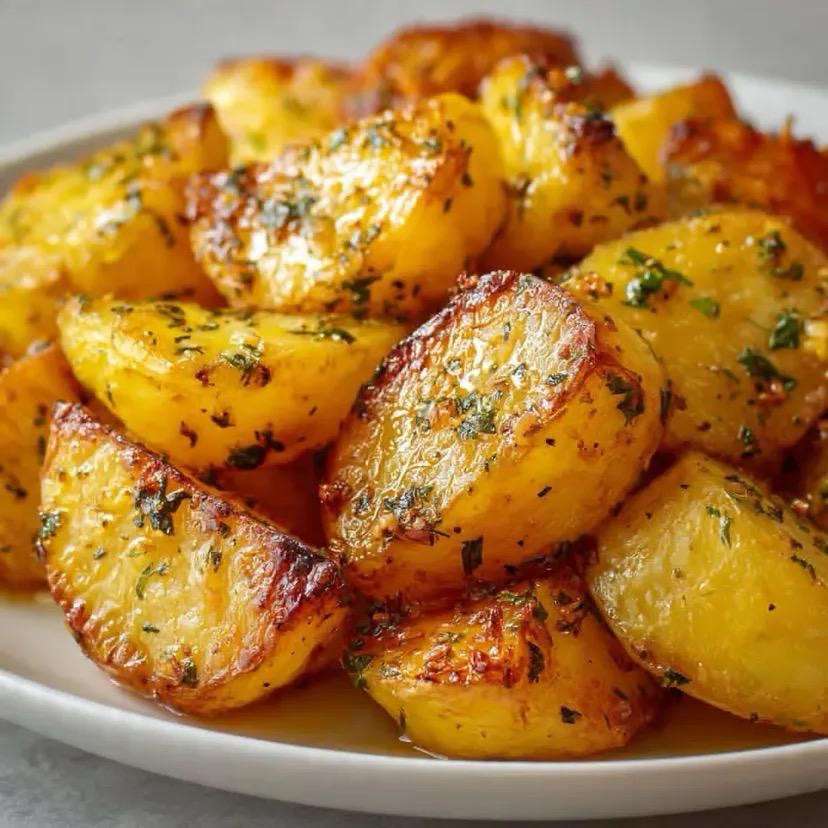
Greek Lemon Potatoes – Crispy, Tangy & Bursting with Flavor
Few side dishes can compete with the bold simplicity of Greek Lemon Potatoes. Golden and crispy on the outside, tender and fluffy on the inside, these potatoes are infused with olive oil, garlic, oregano, and fresh lemon juice, then slowly roasted in a savory broth until they soak up every drop of flavor. They are rustic, comforting, and deeply aromatic, yet bright and refreshing at the same time.
This dish is a staple in Greek cuisine and can be found everywhere from family kitchens to traditional tavernas. It often accompanies roasted meats, grilled fish, or festive holiday meals, but it is just as satisfying enjoyed on its own. What makes Greek lemon potatoes truly special is the balance of textures and flavors: the sharp acidity of lemon, the richness of olive oil, the herbal warmth of oregano, and the savory depth of chicken broth all come together in a way that feels both hearty and fresh.
In this guide, you will learn not only how to make authentic Greek lemon potatoes, but also why each ingredient matters, how to achieve the perfect crisp texture, common mistakes to avoid, and ways to adapt the recipe to your own tastes. Whether you are cooking for a weeknight dinner or a special gathering, this is a recipe you will return to again and again.
What Are Greek Lemon Potatoes?
Greek lemon potatoes, often called Patates Lemonates, are a classic roasted potato dish originating from Greece. Unlike typical roasted potatoes that rely solely on dry heat, this dish uses a combination of roasting and braising. The potatoes are first roasted in olive oil and seasonings, then slowly absorb a lemony broth as they cook.
As the liquid reduces in the oven, the potatoes become infused with flavor while their edges crisp beautifully. The result is a potato dish that is deeply seasoned all the way through, not just on the surface.
This cooking method is key to their unique character. Rather than boiling potatoes separately or par-roasting them, everything happens in one pan, allowing the flavors to concentrate and caramelize naturally.
Why This Recipe Works
This recipe is designed to deliver consistent, restaurant-quality results at home. Each ingredient serves a purpose, and the cooking method ensures maximum flavor and texture.
- Olive oil provides richness and promotes browning.
- Fresh lemon juice adds acidity that cuts through the fat and brightens the dish.
- Chicken broth adds savory depth and helps the potatoes cook evenly.
- Garlic and oregano deliver classic Greek flavor.
- Oven roasting ensures crisp edges and tender centers.
By allowing the potatoes to roast uncovered, the liquid gradually reduces, concentrating the flavor while encouraging caramelization. Turning the potatoes partway through cooking exposes more surfaces to heat, creating that signature crispness.
Ingredients Breakdown and Their Importance
Potatoes
Starchy or all-purpose potatoes work best for this recipe. Yukon Gold potatoes are ideal because they strike a balance between creamy interiors and crisp exteriors. Russet potatoes also work well, especially if you prefer extra fluffy centers.
Cutting the potatoes into wedges rather than cubes increases surface area, which helps them brown more effectively and absorb more flavor.
Olive Oil
Use a good-quality extra virgin olive oil. This is not the place for neutral oils. Olive oil is a defining flavor in Greek cooking, and its fruity, peppery notes shine through in the finished dish.
Fresh Lemon Juice
Freshly squeezed lemon juice is essential. Bottled lemon juice lacks the brightness and complexity needed for this recipe. The acidity not only flavors the potatoes but also balances the richness of the oil.
Garlic
Minced garlic infuses the oil and broth with a warm, aromatic depth. It roasts gently in the oven, becoming mellow rather than sharp.
Chicken Broth
Chicken broth provides umami and helps the potatoes cook evenly. As it reduces, it leaves behind concentrated savory notes. For a vegetarian version, vegetable broth can be substituted with excellent results.
Dried Oregano
Greek oregano has a slightly stronger, earthier flavor than other varieties. Dried oregano works particularly well here because it releases its oils slowly during roasting.
Salt and Black Pepper
Simple seasoning allows the other flavors to shine. Proper seasoning is essential, as potatoes require more salt than many other vegetables.
Optional Garnishes
Fresh parsley adds color and freshness, while lemon zest enhances the citrus aroma without increasing acidity.
Equipment You Will Need
- Large roasting pan or baking dish
- Sharp knife and cutting board
- Measuring cups and spoons
- Large mixing bowl (optional)
- Aluminum foil (optional, depending on roasting method)
A wide, shallow roasting pan is best. Crowding the potatoes can prevent proper browning, so choose a pan that allows the potatoes to sit in a single layer.
Step-by-Step Instructions
Step 1: Preheat the Oven
Preheat your oven to 400°F (200°C). A fully heated oven is essential for achieving crisp potatoes.
Step 2: Prepare the Potatoes
Peel the potatoes and cut them into evenly sized wedges. Uniform size ensures even cooking and consistent texture.
Rinse the potatoes briefly under cold water to remove excess starch, then pat them completely dry. Dry potatoes brown better in the oven.
Step 3: Mix the Marinade
In a large bowl or directly in the roasting pan, combine olive oil, fresh lemon juice, minced garlic, dried oregano, salt, and black pepper. Stir until well combined.
Step 4: Coat the Potatoes
Add the potato wedges to the pan and toss them thoroughly in the marinade. Make sure every piece is coated evenly.
Step 5: Add the Broth
Pour the chicken broth around the potatoes, not directly on top of them. This helps prevent washing off the seasoning while still allowing the potatoes to absorb the liquid as they cook.
Step 6: Roast the Potatoes
Place the pan uncovered in the oven. Roast for 40 minutes, then remove the pan and turn the potatoes carefully.
Return the pan to the oven and roast for an additional 30–40 minutes, or until the liquid has mostly evaporated and the potatoes are golden brown and crisp around the edges.
Step 7: Finish and Garnish
Once cooked, taste and adjust seasoning if needed. Garnish with fresh parsley or lemon zest before serving.
How to Get Perfectly Crispy Potatoes
- Do not overcrowd the pan.
- Always preheat the oven.
- Turn the potatoes halfway through cooking.
- Let the liquid reduce naturally; do not rush the process.
- Use enough olive oil to coat the potatoes generously.
Crispness comes from evaporation and caramelization, both of which require patience and proper heat.
Common Mistakes to Avoid
One of the most common mistakes is using too much liquid. While the potatoes need broth to absorb flavor, excess liquid will cause them to steam rather than roast.
Another mistake is skipping the turning step. Turning the potatoes exposes new surfaces to heat, which is crucial for even browning.
Using low-quality olive oil or bottled lemon juice can also significantly reduce flavor.
Variations and Customizations
Vegetarian and Vegan Version
Replace chicken broth with vegetable broth. The flavor will still be rich and satisfying.
Herb Variations
Add fresh thyme, rosemary, or bay leaves for additional herbal depth.
Garlic Lovers
Roast whole garlic cloves alongside the potatoes for bursts of sweet, roasted garlic.
Spicy Twist
Add a pinch of crushed red pepper flakes or a dash of smoked paprika.
Extra Crispy Finish
For an extra crisp exterior, switch the oven to broil for the final 3–5 minutes, watching carefully to avoid burning.
Serving Suggestions
Greek lemon potatoes pair beautifully with:
- Roasted or grilled chicken
- Lamb chops or leg of lamb
- Grilled fish or seafood
- Greek salad and tzatziki
- Warm pita bread and hummus
They also work well as part of a vegetarian mezze platter.
Make-Ahead and Storage Tips
These potatoes can be prepared a few hours in advance and reheated in the oven. Store leftovers in an airtight container in the refrigerator for up to four days.
To reheat, place them on a baking sheet and warm in a 375°F oven until heated through and crisp again. Avoid microwaving, as it will soften the texture.
Nutritional Overview
Greek lemon potatoes are naturally gluten-free and made with whole, simple ingredients. They are rich in healthy fats from olive oil and provide potassium and fiber from the potatoes. While they are indulgent, they can easily fit into a balanced diet when enjoyed in moderation.
Frequently Asked Questions
Can I leave the skins on the potatoes?
Yes, leaving the skins on adds texture and nutrients. Just be sure to scrub them well.
Can I use bottled lemon juice?
Fresh lemon juice is strongly recommended for the best flavor.
Why are my potatoes not crispy?
This is usually due to overcrowding, too much liquid, or insufficient oven heat.
Can I freeze Greek lemon potatoes?
Freezing is not recommended, as the texture will suffer when reheated.
Final Thoughts
Greek lemon potatoes are a perfect example of how simple ingredients, when treated with care, can create something extraordinary. This dish celebrates balance: crisp and tender, rich and bright, rustic and refined. It is a recipe rooted in tradition yet endlessly adaptable to modern kitchens.
Once you master this technique, you will find yourself using it as a foundation for countless variations. Whether served alongside a holiday roast or enjoyed as a comforting weeknight side, these potatoes are guaranteed to become a favorite on your table.
If you are looking for a side dish that delivers bold flavor with minimal effort, Greek lemon potatoes are the answer.
Greek Lemon Potatoes – Crispy, Tangy & Bursting with Flavor
Few side dishes can compete with the bold simplicity of Greek Lemon Potatoes. Golden and crispy on the outside, tender and fluffy on the inside, these potatoes are infused with olive oil, garlic, oregano, and fresh lemon juice, then slowly roasted in a savory broth until they soak up every drop of flavor. They are rustic, comforting, and deeply aromatic, yet bright and refreshing at the same time.
This dish is a staple in Greek cuisine and can be found everywhere from family kitchens to traditional tavernas. It often accompanies roasted meats, grilled fish, or festive holiday meals, but it is just as satisfying enjoyed on its own. What makes Greek lemon potatoes truly special is the balance of textures and flavors: the sharp acidity of lemon, the richness of olive oil, the herbal warmth of oregano, and the savory depth of chicken broth all come together in a way that feels both hearty and fresh.
In this guide, you will learn not only how to make authentic Greek lemon potatoes, but also why each ingredient matters, how to achieve the perfect crisp texture, common mistakes to avoid, and ways to adapt the recipe to your own tastes. Whether you are cooking for a weeknight dinner or a special gathering, this is a recipe you will return to again and again.
What Are Greek Lemon Potatoes?
Greek lemon potatoes, often called Patates Lemonates, are a classic roasted potato dish originating from Greece. Unlike typical roasted potatoes that rely solely on dry heat, this dish uses a combination of roasting and braising. The potatoes are first roasted in olive oil and seasonings, then slowly absorb a lemony broth as they cook.
As the liquid reduces in the oven, the potatoes become infused with flavor while their edges crisp beautifully. The result is a potato dish that is deeply seasoned all the way through, not just on the surface.
This cooking method is key to their unique character. Rather than boiling potatoes separately or par-roasting them, everything happens in one pan, allowing the flavors to concentrate and caramelize naturally.
Why This Recipe Works
This recipe is designed to deliver consistent, restaurant-quality results at home. Each ingredient serves a purpose, and the cooking method ensures maximum flavor and texture.
- Olive oil provides richness and promotes browning.
- Fresh lemon juice adds acidity that cuts through the fat and brightens the dish.
- Chicken broth adds savory depth and helps the potatoes cook evenly.
- Garlic and oregano deliver classic Greek flavor.
- Oven roasting ensures crisp edges and tender centers.
By allowing the potatoes to roast uncovered, the liquid gradually reduces, concentrating the flavor while encouraging caramelization. Turning the potatoes partway through cooking exposes more surfaces to heat, creating that signature crispness.
Ingredients Breakdown and Their Importance
Potatoes
Starchy or all-purpose potatoes work best for this recipe. Yukon Gold potatoes are ideal because they strike a balance between creamy interiors and crisp exteriors. Russet potatoes also work well, especially if you prefer extra fluffy centers.
Cutting the potatoes into wedges rather than cubes increases surface area, which helps them brown more effectively and absorb more flavor.
Olive Oil
Use a good-quality extra virgin olive oil. This is not the place for neutral oils. Olive oil is a defining flavor in Greek cooking, and its fruity, peppery notes shine through in the finished dish.
Fresh Lemon Juice
Freshly squeezed lemon juice is essential. Bottled lemon juice lacks the brightness and complexity needed for this recipe. The acidity not only flavors the potatoes but also balances the richness of the oil.
Garlic
Minced garlic infuses the oil and broth with a warm, aromatic depth. It roasts gently in the oven, becoming mellow rather than sharp.
Chicken Broth
Chicken broth provides umami and helps the potatoes cook evenly. As it reduces, it leaves behind concentrated savory notes. For a vegetarian version, vegetable broth can be substituted with excellent results.
Dried Oregano
Greek oregano has a slightly stronger, earthier flavor than other varieties. Dried oregano works particularly well here because it releases its oils slowly during roasting.
Salt and Black Pepper
Simple seasoning allows the other flavors to shine. Proper seasoning is essential, as potatoes require more salt than many other vegetables.
Optional Garnishes
Fresh parsley adds color and freshness, while lemon zest enhances the citrus aroma without increasing acidity.
Equipment You Will Need
- Large roasting pan or baking dish
- Sharp knife and cutting board
- Measuring cups and spoons
- Large mixing bowl (optional)
- Aluminum foil (optional, depending on roasting method)
A wide, shallow roasting pan is best. Crowding the potatoes can prevent proper browning, so choose a pan that allows the potatoes to sit in a single layer.
Step-by-Step Instructions
Step 1: Preheat the Oven
Preheat your oven to 400°F (200°C). A fully heated oven is essential for achieving crisp potatoes.
Step 2: Prepare the Potatoes
Peel the potatoes and cut them into evenly sized wedges. Uniform size ensures even cooking and consistent texture.
Rinse the potatoes briefly under cold water to remove excess starch, then pat them completely dry. Dry potatoes brown better in the oven.
Step 3: Mix the Marinade
In a large bowl or directly in the roasting pan, combine olive oil, fresh lemon juice, minced garlic, dried oregano, salt, and black pepper. Stir until well combined.
Step 4: Coat the Potatoes
Add the potato wedges to the pan and toss them thoroughly in the marinade. Make sure every piece is coated evenly.
Step 5: Add the Broth
Pour the chicken broth around the potatoes, not directly on top of them. This helps prevent washing off the seasoning while still allowing the potatoes to absorb the liquid as they cook.
Step 6: Roast the Potatoes
Place the pan uncovered in the oven. Roast for 40 minutes, then remove the pan and turn the potatoes carefully.
Return the pan to the oven and roast for an additional 30–40 minutes, or until the liquid has mostly evaporated and the potatoes are golden brown and crisp around the edges.
Step 7: Finish and Garnish
Once cooked, taste and adjust seasoning if needed. Garnish with fresh parsley or lemon zest before serving.
How to Get Perfectly Crispy Potatoes
- Do not overcrowd the pan.
- Always preheat the oven.
- Turn the potatoes halfway through cooking.
- Let the liquid reduce naturally; do not rush the process.
- Use enough olive oil to coat the potatoes generously.
Crispness comes from evaporation and caramelization, both of which require patience and proper heat.
Common Mistakes to Avoid
One of the most common mistakes is using too much liquid. While the potatoes need broth to absorb flavor, excess liquid will cause them to steam rather than roast.
Another mistake is skipping the turning step. Turning the potatoes exposes new surfaces to heat, which is crucial for even browning.
Using low-quality olive oil or bottled lemon juice can also significantly reduce flavor.
Variations and Customizations
Vegetarian and Vegan Version
Replace chicken broth with vegetable broth. The flavor will still be rich and satisfying.
Herb Variations
Add fresh thyme, rosemary, or bay leaves for additional herbal depth.
Garlic Lovers
Roast whole garlic cloves alongside the potatoes for bursts of sweet, roasted garlic.
Spicy Twist
Add a pinch of crushed red pepper flakes or a dash of smoked paprika.
Extra Crispy Finish
For an extra crisp exterior, switch the oven to broil for the final 3–5 minutes, watching carefully to avoid burning.
Serving Suggestions
Greek lemon potatoes pair beautifully with:
- Roasted or grilled chicken
- Lamb chops or leg of lamb
- Grilled fish or seafood
- Greek salad and tzatziki
- Warm pita bread and hummus
They also work well as part of a vegetarian mezze platter.
Make-Ahead and Storage Tips
These potatoes can be prepared a few hours in advance and reheated in the oven. Store leftovers in an airtight container in the refrigerator for up to four days.
To reheat, place them on a baking sheet and warm in a 375°F oven until heated through and crisp again. Avoid microwaving, as it will soften the texture.
Nutritional Overview
Greek lemon potatoes are naturally gluten-free and made with whole, simple ingredients. They are rich in healthy fats from olive oil and provide potassium and fiber from the potatoes. While they are indulgent, they can easily fit into a balanced diet when enjoyed in moderation.
Frequently Asked Questions
Can I leave the skins on the potatoes?
Yes, leaving the skins on adds texture and nutrients. Just be sure to scrub them well.
Can I use bottled lemon juice?
Fresh lemon juice is strongly recommended for the best flavor.
Why are my potatoes not crispy?
This is usually due to overcrowding, too much liquid, or insufficient oven heat.
Can I freeze Greek lemon potatoes?
Freezing is not recommended, as the texture will suffer when reheated.
Final Thoughts
Greek lemon potatoes are a perfect example of how simple ingredients, when treated with care, can create something extraordinary. This dish celebrates balance: crisp and tender, rich and bright, rustic and refined. It is a recipe rooted in tradition yet endlessly adaptable to modern kitchens.
Once you master this technique, you will find yourself using it as a foundation for countless variations. Whether served alongside a holiday roast or enjoyed as a comforting weeknight side, these potatoes are guaranteed to become a favorite on your table.
If you are looking for a side dish that delivers bold flavor with minimal effort, Greek lemon potatoes are the answer.