
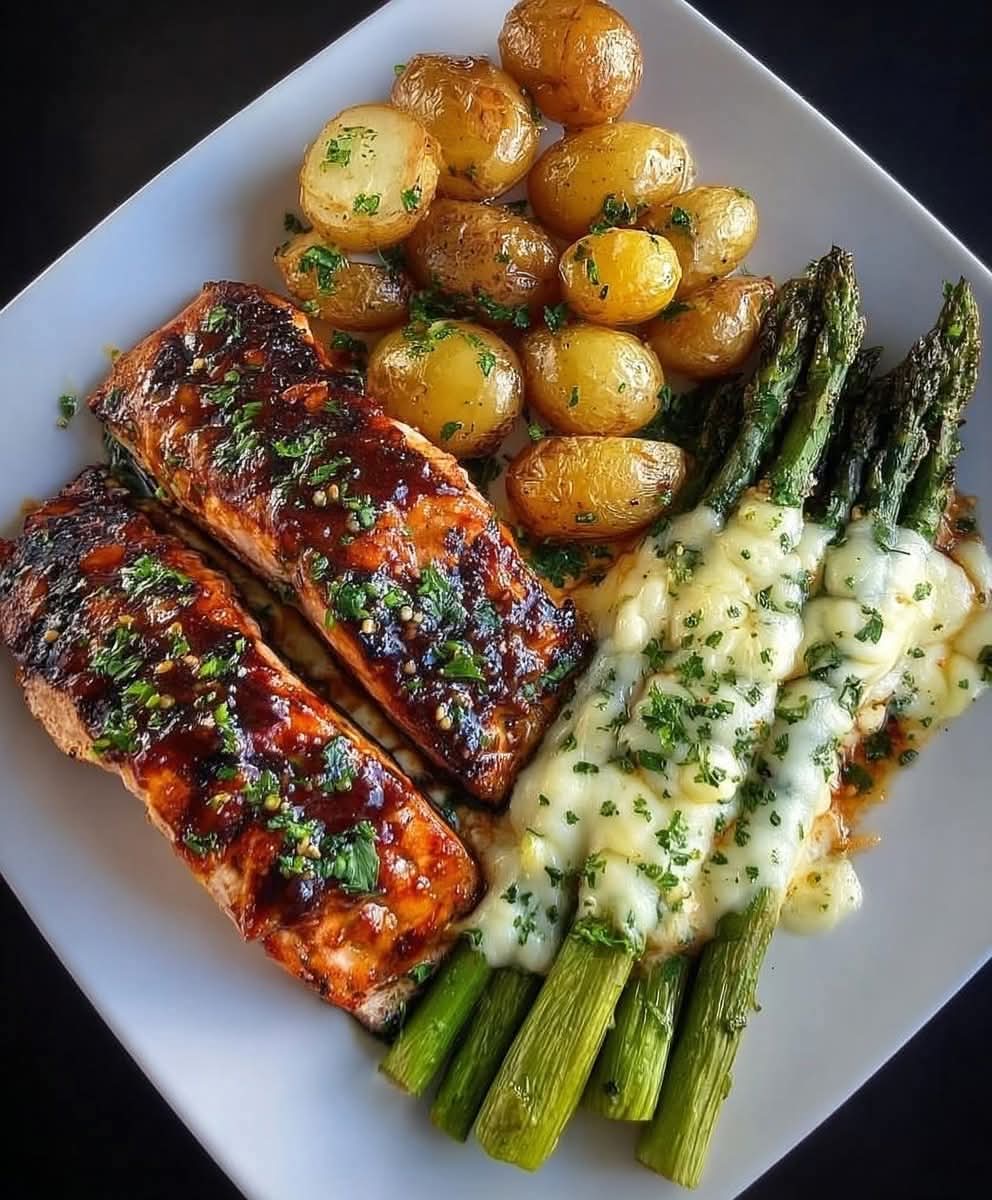
Honey Garlic Salmon with Roasted Baby Potatoes and Cheesy Asparagus
Few meals strike the perfect balance between comfort and elegance quite like Honey Garlic Salmon with Roasted Baby Potatoes and Cheesy Asparagus. This dish brings together tender, flaky salmon glazed in a sweet and savory honey garlic sauce, crispy oven-roasted baby potatoes with golden edges, and asparagus finished with a rich, cheesy topping that melts beautifully into every bite.
Whether you are preparing a cozy weeknight dinner, hosting guests, or looking for a wholesome yet indulgent meal, this recipe delivers on flavor, texture, and presentation. It is satisfying without being heavy, simple without being boring, and impressive without requiring complicated techniques.
In this guide, you will find everything you need to master this dish: ingredient breakdowns, preparation tips, step-by-step instructions, cooking science insights, variations, storage advice, and serving suggestions. By the end, you will not only know how to make this meal perfectly, but also understand why each step matters.
Why This Recipe Works
This recipe is built around contrast and balance:
- Sweet and savory flavors from honey, garlic, soy sauce, and lemon
- Crispy and tender textures from roasted potatoes and flaky salmon
- Fresh and rich elements from asparagus paired with melted cheese
Each component is cooked separately but timed to come together seamlessly, ensuring everything is hot and fresh when served. The techniques used are beginner-friendly, yet refined enough for experienced home cooks.
Ingredients
For the Honey Garlic Salmon
- 2 salmon fillets (about 6 ounces each), skin on or skinless
- 1 tablespoon olive oil
- 1½ tablespoons honey
- 1 tablespoon soy sauce (low sodium preferred)
- 1 tablespoon fresh lemon juice
- 2 garlic cloves, finely minced
- Salt, to taste
- Freshly ground black pepper, to taste
For the Roasted Baby Potatoes
- 1½ pounds baby potatoes (Yukon gold or red potatoes work best)
- 2 tablespoons olive oil
- 1 teaspoon garlic powder
- 1 teaspoon dried rosemary or thyme
- ½ teaspoon paprika
- Salt, to taste
- Freshly ground black pepper, to taste
For the Cheesy Asparagus
- 1 bunch fresh asparagus, woody ends trimmed
- 1 tablespoon olive oil or melted butter
- Salt, to taste
- Black pepper, to taste
- ½ cup shredded mozzarella cheese
- ¼ cup freshly grated Parmesan cheese
Ingredient Notes and Substitutions
Salmon
Choose fresh, high-quality salmon fillets with firm flesh and a mild smell. Atlantic salmon is rich and buttery, while sockeye offers a deeper flavor and firmer texture. Frozen salmon can also be used if fully thawed and patted dry.
Honey
Honey provides sweetness and helps the salmon caramelize. If you prefer a less sweet glaze, reduce the amount slightly or substitute maple syrup for a different flavor profile.
Soy Sauce
Low sodium soy sauce is recommended to prevent the dish from becoming overly salty. Tamari or coconut aminos are suitable gluten-free alternatives.
Potatoes
Baby potatoes roast evenly and develop crisp skins while remaining creamy inside. If unavailable, cut larger potatoes into uniform pieces.
Asparagus
Look for bright green stalks with tightly closed tips. Thinner asparagus cooks faster and works especially well for this recipe.
Cheese
Mozzarella provides meltiness, while Parmesan adds sharpness and depth. You can substitute with provolone, gruyère, or a mild cheddar if desired.
Kitchen Tools You Will Need
- Baking sheets (2 recommended)
- Parchment paper or aluminum foil
- Mixing bowls
- Small whisk or spoon
- Sharp knife
- Cutting board
- Tongs or spatula
- Measuring spoons
Preparation Tips Before You Start
- Bring salmon to room temperature for about 10 minutes before cooking to ensure even cooking.
- Dry ingredients thoroughly, especially salmon and potatoes, to encourage browning.
- Preheat the oven fully before roasting to achieve crisp textures.
- Use separate baking sheets for potatoes and asparagus to avoid overcrowding and steaming.
Step-by-Step Instructions
Step 1: Preheat the Oven
Preheat your oven to 400°F (200°C). Line two baking sheets with parchment paper or lightly grease them with oil.
Step 2: Prepare the Roasted Baby Potatoes
Wash the baby potatoes thoroughly and pat them dry. If some potatoes are larger than others, cut them in half to ensure even cooking.
Place the potatoes in a large bowl and drizzle with olive oil. Add garlic powder, dried rosemary or thyme, paprika, salt, and black pepper. Toss until every potato is evenly coated.
Spread the potatoes out on one of the prepared baking sheets in a single layer, cut-side down if halved. This encourages maximum browning.
Place in the oven and roast for 30–35 minutes, flipping halfway through, until the potatoes are golden brown and fork-tender.
Step 3: Make the Honey Garlic Sauce
In a small bowl, whisk together honey, soy sauce, lemon juice, minced garlic, olive oil, salt, and black pepper.
Taste and adjust seasoning if needed. The sauce should be slightly sweet, savory, and tangy.
Step 4: Prepare the Salmon
Pat the salmon fillets dry with paper towels. Season lightly with salt and black pepper on both sides.
Place the salmon on the second baking sheet, skin-side down if applicable. Brush generously with the honey garlic sauce, reserving a small amount for later.
Step 5: Roast the Salmon
Once the potatoes have roasted for about 15 minutes, place the salmon tray into the oven alongside them.
Roast the salmon for 12–15 minutes, depending on thickness, until it flakes easily with a fork and reaches an internal temperature of 125–130°F for medium.
For extra caramelization, you may broil the salmon for the last 1–2 minutes, keeping a close eye to prevent burning.
Step 6: Prepare the Cheesy Asparagus
While the salmon and potatoes cook, trim the woody ends off the asparagus.
Place asparagus on the remaining space of a baking sheet or a separate sheet if needed. Drizzle with olive oil or melted butter and season with salt and pepper. Toss gently to coat.
Roast the asparagus in the oven for 8–10 minutes, until tender but still bright green.
Remove from the oven, sprinkle evenly with mozzarella and Parmesan cheese, and return to the oven for an additional 3–5 minutes, until the cheese is melted and lightly golden.
Step 7: Final Assembly
Remove all components from the oven. Brush the salmon with the reserved honey garlic sauce for extra shine and flavor.
Plate the salmon alongside a generous portion of roasted baby potatoes and cheesy asparagus. Serve immediately while everything is hot and fresh.
Cooking Science: Why These Techniques Matter
- High-heat roasting encourages caramelization through the Maillard reaction, enhancing flavor.
- Honey in the glaze promotes browning while balancing salty and acidic elements.
- Separate roasting prevents moisture buildup, ensuring crisp potatoes and properly cooked vegetables.
- Finishing with cheese adds umami and richness without overpowering the freshness of asparagus.
Flavor Variations and Add-Ons
- Add crushed red pepper flakes to the honey garlic sauce for heat.
- Stir Dijon mustard into the glaze for extra depth.
- Toss potatoes with grated Parmesan during the last 5 minutes of roasting.
- Add lemon zest to the asparagus before serving for brightness.
Serving Suggestions
This dish pairs beautifully with:
- A crisp green salad with lemon vinaigrette
- Steamed rice or quinoa for a heartier meal
- A chilled glass of white wine such as Sauvignon Blanc or Pinot Grigio
For a family-style presentation, arrange everything on a large serving platter and garnish with fresh herbs like parsley or dill.
Storage and Reheating
Storage
Store leftovers in airtight containers in the refrigerator for up to 3 days.
Reheating
Reheat in a 350°F oven until warmed through. Avoid microwaving the salmon if possible, as it can dry out.
Nutritional Overview
This meal is rich in protein, healthy fats, fiber, and essential vitamins. Salmon provides omega-3 fatty acids, asparagus delivers antioxidants and folate, and potatoes contribute potassium and complex carbohydrates.
Final Thoughts
Honey Garlic Salmon with Roasted Baby Potatoes and Cheesy Asparagus is a dish that feels both indulgent and nourishing. It is proof that simple ingredients, when treated thoughtfully, can create something truly special. Whether you are cooking for yourself or sharing with loved ones, this recipe is designed to become a reliable favorite in your kitchen.
With its bold flavors, comforting textures, and straightforward preparation, it is the kind of meal that brings people back to the table again and again.