
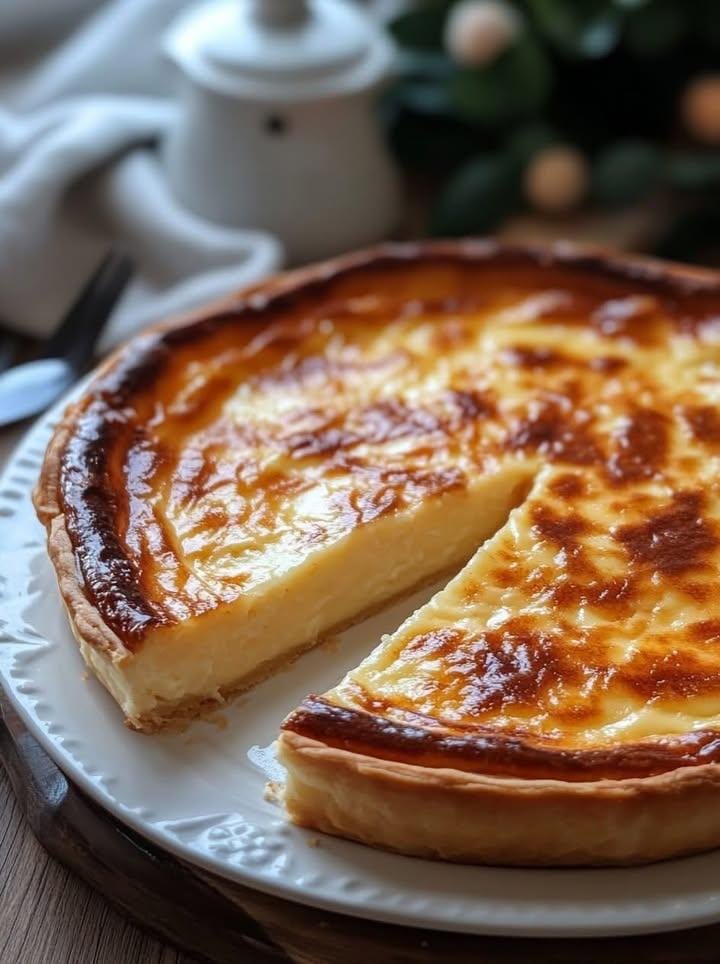
Classic French Grandmother’s Vanilla Custard Tart (Tarte à la Crème à la Vanille)
There are few desserts as quietly comforting and timeless as a classic French grandmother’s vanilla custard tart. Known in various regions of France as tarte à la crème, flan pâtissier, or simply tarte au flan, this dessert represents the heart of traditional French home baking. It is not flashy, heavily decorated, or overly sweet. Instead, it is honest, creamy, gently perfumed with vanilla, and deeply nostalgic.
This is the kind of tart that would cool on a lace-covered kitchen table in a provincial French home, sliced carefully with a long knife, and served slightly chilled with nothing more than coffee or afternoon tea. Every French family seems to have its own version, passed down through generations, adjusted by instinct rather than strict measurement. Grandmothers rarely wrote it down, yet they never forgot it.
What follows is a comprehensive, carefully explained recipe for a classic French grandmother’s vanilla custard tart, written for cooks who want not only to make the dessert, but to understand it. This article explores the ingredients, techniques, variations, storage tips, and cultural background, ensuring reliable success and authentic flavor every time.
What Is a French Vanilla Custard Tart?
At its core, a French vanilla custard tart consists of a buttery shortcrust pastry shell filled with a thick, baked vanilla custard made from milk, cream, eggs, sugar, and starch. Unlike crème brûlée or crème caramel, the custard is fully set and sliceable. Unlike American custard pies, it is less sweet and more focused on the natural flavor of dairy and vanilla.
The texture is key. A proper French custard tart should be:
- Smooth and creamy, never grainy
- Firm enough to hold a clean slice
- Rich but not heavy
- Gently scented with real vanilla
- Balanced between milkiness and egg richness
The pastry should be crisp and neutral, providing contrast without competing with the custard.
Ingredients Overview
A traditional French grandmother’s recipe relies on simple, high-quality ingredients. Nothing exotic is required, but freshness and balance matter greatly.
For the Shortcrust Pastry
You may use a store-bought shortcrust pastry, as many French grandmothers do today, or prepare one from scratch.
- 1 shortcrust pastry (store-bought or homemade)
If making at home, you will need:
- 1 ¼ cups (160 g) all-purpose flour
- ½ cup (115 g) unsalted butter, cold and cubed
- ¼ cup (50 g) granulated sugar
- 1 large egg yolk
- 1–2 tablespoons cold water
- A pinch of salt
For the Vanilla Custard Filling
- 2 cups (480 ml) whole milk
- ½ cup (120 ml) heavy cream
- ¾ cup (150 g) granulated sugar
- 4 large eggs
- ¼ cup (30 g) cornstarch
- 1 vanilla bean or 2 teaspoons pure vanilla extract
- A pinch of salt
These proportions create a custard that is firm yet creamy, rich without being dense.
Equipment You Will Need
- 9-inch (23 cm) tart pan with removable bottom
- Medium saucepan
- Whisk
- Mixing bowls
- Fine mesh sieve
- Rolling pin (if making pastry)
- Baking beans or dried beans for blind baking
- Parchment paper
- Cooling rack
Step 1: Preparing the Shortcrust Pastry
Homemade Pastry Method
In a large bowl, combine the flour, sugar, and salt. Add the cold butter cubes and rub them into the flour using your fingertips until the mixture resembles coarse sand with a few pea-sized pieces remaining. This method ensures tenderness.
Add the egg yolk and one tablespoon of cold water. Mix gently until the dough begins to come together. If needed, add a second tablespoon of water sparingly. The dough should be soft but not sticky.
Form the dough into a flat disc, wrap in plastic, and refrigerate for at least 30 minutes. Resting relaxes the gluten and prevents shrinkage during baking.
Rolling and Lining the Tart Pan
Once chilled, roll the dough on a lightly floured surface to about 3 mm thickness. Gently transfer it into the tart pan, pressing it into the edges without stretching. Trim excess dough and prick the base with a fork.
Place the lined pan back into the refrigerator for 15 minutes. This step is essential for a crisp crust.
Step 2: Blind Baking the Crust
Preheat the oven to 350°F (180°C).
Line the chilled pastry shell with parchment paper and fill with baking beans. Bake for 15 minutes, then remove the beans and parchment and return the crust to the oven for another 5–7 minutes, until lightly golden.
Allow the crust to cool slightly while preparing the custard.
Step 3: Preparing the Vanilla Custard
Infusing the Milk and Cream
In a medium saucepan, combine the milk and cream. Split the vanilla bean lengthwise, scrape out the seeds, and add both seeds and pod to the milk mixture. Heat gently over medium heat until just below boiling. Do not let it boil.
Remove from heat, cover, and let steep for 10 minutes to fully infuse the vanilla flavor. Remove the vanilla pod before proceeding.
If using vanilla extract, add it later instead.
Mixing the Eggs and Sugar
In a large bowl, whisk the eggs with the sugar until pale and slightly thickened. Add the cornstarch and salt, whisking until completely smooth with no lumps.
Slowly pour the warm milk mixture into the egg mixture while whisking constantly. This gradual incorporation prevents curdling.
Step 4: Cooking the Custard
Return the mixture to the saucepan and cook over medium heat, whisking continuously. Within a few minutes, the custard will begin to thicken. Once it reaches a pudding-like consistency, continue cooking for one additional minute to ensure the starch is fully cooked.
Remove from heat. If using vanilla extract instead of a bean, stir it in now.
For an ultra-smooth custard, pass the mixture through a fine mesh sieve.
Step 5: Assembling and Baking the Tart
Pour the hot custard into the pre-baked tart shell. Smooth the surface gently with a spatula.
Bake at 350°F (180°C) for 30–40 minutes, until the custard is set around the edges but still slightly wobbly in the center. The surface may develop light caramelized spots; this is traditional and desirable.
Remove from the oven and allow to cool completely at room temperature, then refrigerate for at least 2 hours before slicing.
Texture and Flavor Notes
A properly made French vanilla custard tart should:
- Slice cleanly without collapsing
- Melt gently on the tongue
- Taste predominantly of milk, cream, and vanilla
- Avoid excessive sweetness
The custard should not jiggle like gelatin, nor should it resemble scrambled eggs. Achieving this balance comes from gentle heat and careful whisking.
Common Mistakes and How to Avoid Them
Overcooking the Custard
This leads to a grainy texture. Remove the custard from heat as soon as it thickens.
Skipping Blind Baking
Without blind baking, the crust becomes soggy and heavy.
Using Low-Fat Milk
Whole milk is essential. Lower-fat milk compromises texture and flavor.
Rushing the Cooling Process
The tart continues to set as it cools. Cutting too early results in loose slices.
Traditional Variations
French grandmothers often adapted this tart based on region and season.
- Orange zest for a citrus note
- A splash of rum for warmth
- Nutmeg or cinnamon in winter
- Thicker flan-style custard with more starch
Despite these variations, vanilla always remains the star.
Serving Suggestions
This tart is traditionally served plain, allowing the custard to speak for itself. However, it pairs beautifully with:
- Fresh berries
- A spoon of lightly whipped cream
- Strong black coffee
- Unsweetened tea
It is best served slightly chilled but not cold from the refrigerator.
Storage and Shelf Life
- Refrigerate, loosely covered, for up to 3 days
- Do not freeze; freezing damages custard texture
- Allow slices to sit at room temperature for 10 minutes before serving
Why This Recipe Endures
The enduring appeal of a French grandmother’s vanilla custard tart lies in its restraint. It does not rely on decoration, novelty, or excess. Instead, it celebrates technique, patience, and respect for ingredients.
It is a dessert made to be shared quietly, remembered fondly, and repeated often. Once mastered, it becomes part of a cook’s personal repertoire, just as it was for generations of French home bakers.
Final Thoughts
This classic French vanilla custard tart is more than a recipe. It is a lesson in balance, simplicity, and culinary tradition. By following these steps carefully and respecting the process, you can recreate a dessert that feels timeless, comforting, and deeply authentic.
Whether served at a family table or featured proudly on a food website, this tart tells a story of heritage, care, and enduring flavor.