
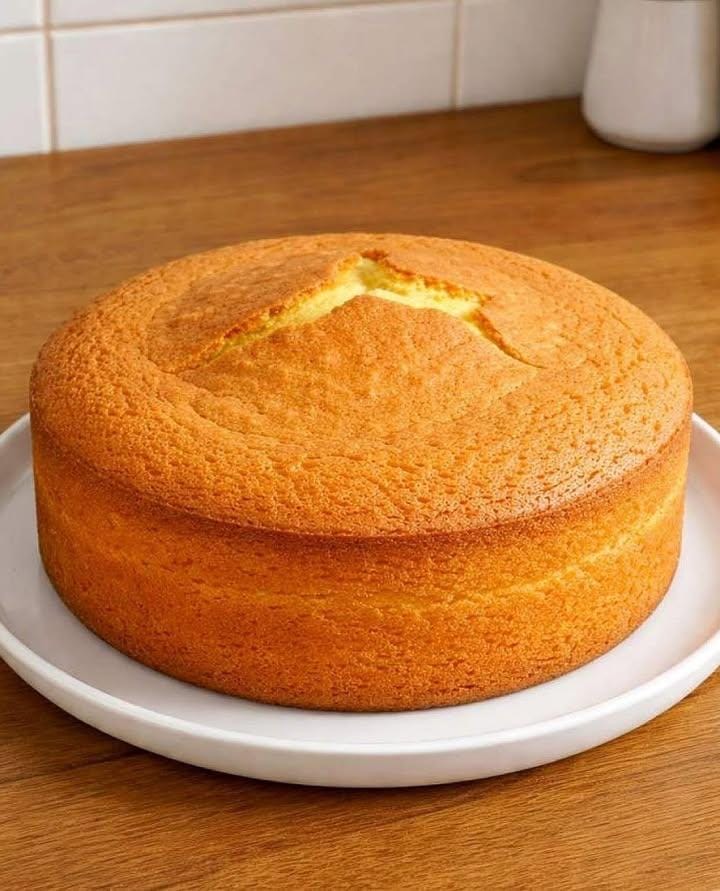
Classic Sponge Cake Recipe
A Light, Airy, and Timeless Cake for Every Occasion
Introduction
Sponge cake is one of the most classic and beloved cakes in the world of baking. Known for its light, airy texture and delicate crumb, sponge cake forms the foundation of countless desserts across cultures and cuisines. From elegant layered cakes filled with cream and fruit to simple afternoon treats dusted with powdered sugar, sponge cake is versatile, refined, and endlessly adaptable.
What makes sponge cake unique is its reliance on whipped eggs for structure and volume rather than chemical leaveners like baking powder or baking soda. This technique results in a cake that is soft yet resilient, tender yet strong enough to support fillings, syrups, and frostings. While sponge cake may appear simple, mastering it requires attention to detail, proper technique, and an understanding of how each ingredient works.
This recipe uses only three basic ingredients—eggs, sugar, and flour—yet delivers impressive results when prepared correctly. Whether you are a beginner baker learning foundational skills or an experienced home cook looking to perfect a classic, this comprehensive guide will walk you through every step of the process.
Ingredients
This sponge cake recipe relies on precision and quality ingredients. Because there are so few components, each one plays a critical role in the final result.
Ingredients List
- 5 large eggs, at room temperature
- 1 cup (200 grams) granulated sugar
- 1 cup (125 grams) all-purpose flour, sifted
Understanding the Ingredients
Eggs
Eggs are the backbone of a sponge cake. They provide structure, moisture, and most importantly, air. When eggs are whipped with sugar, they trap air, creating a foam that expands during baking and gives the cake its signature lightness.
For best results, always use large eggs at room temperature. Cold eggs do not whip as efficiently, which can reduce the volume of the batter and result in a denser cake.
Sugar
Sugar serves multiple purposes in sponge cake. It sweetens the cake, stabilizes the whipped eggs, and contributes to moisture and tenderness. Granulated sugar is ideal because it dissolves well when whipped with eggs and provides consistent results.
Adding sugar gradually during whipping helps maintain a stable foam and prevents the eggs from collapsing.
Flour
All-purpose flour provides structure. Because sponge cake relies on air rather than chemical leaveners, the flour must be handled gently to avoid deflating the batter. Sifting the flour is essential, as it removes lumps and makes it easier to fold into the whipped eggs without losing volume.
Essential Equipment
Having the right tools will make the process smoother and improve your results.
- Stand mixer or hand mixer
- Large mixing bowl
- Fine mesh sieve
- Rubber spatula
- 8-inch or 9-inch round cake pan
- Parchment paper
- Kitchen scale (recommended for accuracy)
Preparation Before Baking
Preheating the Oven
Preheat your oven to 170°C (340°F). Sponge cake batter should be baked immediately after mixing, so it is essential that the oven is fully heated before you begin.
Preparing the Cake Pan
Line the bottom of your cake pan with parchment paper. Do not grease the sides of the pan. Leaving the sides ungreased allows the batter to cling to the pan as it rises, helping the cake achieve maximum height.
Step-by-Step Instructions
Step 1: Whipping the Eggs and Sugar
Crack the eggs into a large mixing bowl. Begin beating the eggs on medium speed until they become foamy. Gradually add the sugar, a few tablespoons at a time, while continuing to beat.
Once all the sugar is added, increase the mixer speed to high and continue whipping for 8 to 10 minutes. The mixture should become pale, thick, and voluminous. When lifted with a whisk, the batter should fall back into the bowl in thick ribbons that sit on the surface for a few seconds before dissolving.
This stage is critical. Under-whipping will result in a dense cake, while over-whipping can cause the batter to collapse when folded with flour.
Step 2: Folding in the Flour
Sift the flour directly over the whipped egg mixture in three additions. Using a rubber spatula, gently fold the flour into the batter using slow, deliberate movements.
To fold correctly, cut down through the center of the batter, sweep along the bottom of the bowl, and lift the batter up and over itself. Rotate the bowl slightly after each fold. Continue until the flour is fully incorporated and no dry pockets remain.
Avoid overmixing, as this will deflate the batter and reduce the cake’s volume.
Step 3: Transferring the Batter
Pour the batter into the prepared cake pan. Use a spatula to gently level the surface. Tap the pan lightly on the counter once or twice to release any large air bubbles.
Step 4: Baking the Cake
Place the pan in the preheated oven and bake for 35 to 40 minutes, or until the cake is golden brown and springs back when lightly pressed in the center.
Avoid opening the oven door during the first 25 minutes of baking, as sudden temperature changes can cause the cake to collapse.
Step 5: Cooling the Cake
Once baked, remove the cake from the oven and immediately invert the pan onto a wire rack. Allow the cake to cool completely upside down. This helps prevent the cake from sinking as it cools.
After the cake has fully cooled, run a thin knife around the edges of the pan to release it. Invert the cake onto a serving plate and remove the parchment paper.
Texture and Flavor Profile
A properly made sponge cake should be light, soft, and evenly textured, with a fine crumb and subtle sweetness. The flavor is neutral and delicate, making it an excellent base for a wide variety of fillings, syrups, and toppings.
Common Mistakes and How to Avoid Them
Cake Is Dense or Flat
This usually occurs due to under-whipped eggs or overmixing during folding. Make sure the egg mixture reaches the ribbon stage and fold the flour gently.
Cake Collapses After Baking
This can be caused by opening the oven door too early, over-whipping the eggs, or removing the cake from the oven before it is fully baked.
Uneven Texture
Uneven folding or improperly sifted flour can lead to pockets of dense batter. Always sift the flour and fold carefully.
Variations and Adaptations
Vanilla Sponge Cake
Add 1 teaspoon of pure vanilla extract to the egg mixture after whipping to enhance flavor.
Lemon Sponge Cake
Add 1 tablespoon of finely grated lemon zest to the batter for a fresh citrus note.
Chocolate Sponge Cake
Replace 2 tablespoons of flour with unsweetened cocoa powder, sifted together with the flour.
Layered Sponge Cake
Slice the cooled cake horizontally into two or three layers and fill with whipped cream, pastry cream, fruit preserves, or fresh fruit.
Serving Suggestions
Sponge cake can be served in many ways, depending on the occasion.
- Dust lightly with powdered sugar and serve with tea or coffee
- Fill with whipped cream and strawberries for a classic dessert
- Soak with simple syrup and layer with buttercream for celebration cakes
- Serve with fresh berries and a dollop of mascarpone
Storage Instructions
Room Temperature
Store plain sponge cake in an airtight container at room temperature for up to two days.
Refrigeration
If filled or frosted, store the cake in the refrigerator for up to four days. Bring to room temperature before serving for best texture.
Freezing
Sponge cake freezes well. Wrap the unfrosted cake tightly in plastic wrap, then in aluminum foil. Freeze for up to two months. Thaw at room temperature before use.
Why This Recipe Works
This sponge cake recipe succeeds because it respects the fundamental principles of sponge baking: proper aeration, gentle handling, and precise baking. By relying solely on eggs for lift, the cake achieves a natural lightness that cannot be replicated with chemical leaveners.
The simplicity of the ingredient list also allows bakers to focus on technique, making this recipe an excellent learning tool and a reliable staple.
Final Thoughts
Sponge cake is a timeless classic that every baker should know how to make. While it requires patience and care, the reward is a beautifully light cake that can be adapted to countless desserts. With just eggs, sugar, and flour, this recipe proves that simplicity and technique are often more powerful than complexity.
Whether you enjoy it on its own or transform it into an elaborate layered creation, this sponge cake will quickly become a favorite in your kitchen and a dependable recipe for any occasion.