
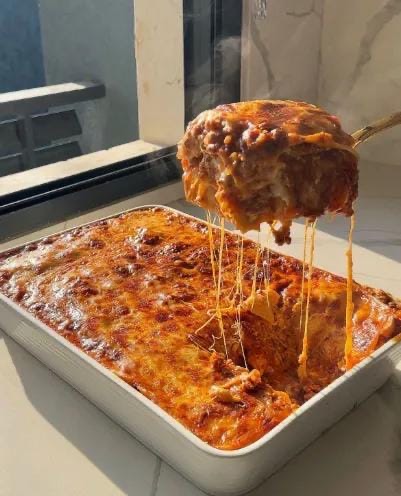
Classic Cheesy Meat Lasagna (The Ultimate Comfort Food)
Lasagna is one of those dishes that instantly feels like home. Rich, hearty, layered with flavor, and unapologetically comforting, it’s the kind of meal that gathers people around the table and keeps them there. This classic cheesy meat lasagna recipe delivers everything you want: a deeply savory meat sauce, creamy cheese layers, tender pasta, and a bubbling golden top that fills the kitchen with irresistible aromas.
This recipe is designed to be reliable, crowd-pleasing, and perfect for a website audience, whether your readers are beginners looking for step-by-step guidance or experienced home cooks wanting a foolproof version of a timeless dish. It balances traditional Italian-American flavors with practical techniques that ensure consistent results every time.
Why This Lasagna Recipe Works
This lasagna is all about balance. Each layer plays a specific role, and none overpower the others.
- The meat sauce is slow-simmered just long enough to develop depth without becoming heavy.
- The cheese mixture combines mozzarella, ricotta, parmesan, and egg for a creamy but structured layer.
- The pasta absorbs flavor while still holding its shape.
- The final bake melds everything together into clean, satisfying slices.
It’s rich without being greasy, cheesy without being overwhelming, and hearty without feeling dense.
Ingredients
For the Meat Sauce
- 500 g ground beef, or a mix of ground beef and Italian sausage
- 1 medium onion, finely chopped
- 2 garlic cloves, minced
- 1 jar (about 700 g) tomato sauce or marinara
- 1 can crushed tomatoes
- Salt, to taste
- Freshly ground black pepper, to taste
- Italian seasoning (or dried oregano and basil)
- A small pinch of sugar (optional, to balance acidity)
- Olive oil for cooking
For the Cheese Layer
- 400–500 g shredded low-moisture mozzarella cheese
- 250 g ricotta cheese (or cottage cheese, well drained)
- 50 g grated parmesan cheese
- 1 large egg
- Fresh parsley, finely chopped (optional)
- Salt and pepper, to taste
For Assembly
- 12–15 lasagna noodles (no-boil or pre-cooked)
- Extra mozzarella and parmesan cheese for topping
Equipment You’ll Need
- Large skillet or saucepan
- Mixing bowl
- 9×13-inch baking dish
- Aluminum foil
- Large pot (if boiling noodles)
Step-by-Step Instructions
Step 1: Prepare the Meat Sauce
Heat a large skillet or saucepan over medium heat and add a drizzle of olive oil. Once the oil is warm, add the chopped onion. Cook for 3–5 minutes, stirring occasionally, until the onion becomes soft and translucent. This step builds the base flavor of the sauce, so take your time and avoid browning too quickly.
Add the minced garlic and cook for another 30 seconds, just until fragrant. Garlic burns easily, so keep the heat moderate.
Add the ground beef (or beef and sausage mixture) to the pan. Break it apart with a wooden spoon and cook until fully browned, about 6–8 minutes. Season with salt and pepper as it cooks. If there is excess fat, carefully drain it off to prevent the sauce from becoming greasy.
Once the meat is cooked, stir in the tomato sauce and crushed tomatoes. Add Italian seasoning and a pinch of sugar if the tomatoes taste acidic. Bring the sauce to a gentle simmer.
Reduce the heat to low and let the sauce simmer uncovered for 20–30 minutes, stirring occasionally. This allows the flavors to meld and the sauce to thicken slightly. Taste and adjust seasoning as needed.
Set the sauce aside while you prepare the cheese mixture.
Step 2: Make the Cheese Mixture
In a large mixing bowl, combine the ricotta cheese, grated parmesan, egg, and chopped parsley if using. Season lightly with salt and pepper.
Mix until smooth and well combined. The egg helps bind the cheese layer, giving the lasagna structure and making it easier to slice after baking.
Fold in about one-third of the shredded mozzarella, reserving the rest for layering and topping.
Set the cheese mixture aside.
Step 3: Prepare the Lasagna Noodles
If you’re using traditional lasagna noodles, bring a large pot of salted water to a boil. Cook the noodles until just al dente, following the package instructions. Do not overcook them, as they will continue cooking in the oven.
Drain the noodles and lay them flat on a clean kitchen towel or lightly oiled surface to prevent sticking.
If using no-boil noodles, no preparation is needed. Just make sure your sauce is not too thick, as the noodles need moisture to cook properly in the oven.
Step 4: Assemble the Lasagna
Preheat your oven to 180°C (350°F).
Lightly grease a 9×13-inch baking dish. Spread a thin layer of meat sauce on the bottom. This prevents the noodles from sticking and helps them cook evenly.
Place a layer of lasagna noodles over the sauce, slightly overlapping if necessary.
Spread a generous layer of the ricotta cheese mixture over the noodles, followed by a layer of meat sauce. Sprinkle a handful of shredded mozzarella over the top.
Repeat the layers: noodles, cheese mixture, meat sauce, mozzarella.
Continue until all ingredients are used, finishing with a layer of meat sauce on top. Sprinkle the remaining mozzarella and extra parmesan evenly over the surface.
Step 5: Bake the Lasagna
Cover the baking dish loosely with aluminum foil, making sure it doesn’t touch the cheese.
Bake in the preheated oven for 35–40 minutes. This allows the lasagna to heat through and the flavors to meld.
Remove the foil and bake for an additional 15–20 minutes, or until the cheese on top is melted, bubbly, and lightly golden.
For a deeper golden crust, you can switch the oven to broil for the last 2–3 minutes, watching carefully to avoid burning.
Step 6: Rest Before Serving
Once baked, remove the lasagna from the oven and let it rest for at least 15–20 minutes before slicing. This step is essential. Resting allows the layers to set, resulting in clean slices that hold their shape.
Serving Suggestions
Serve lasagna hot, garnished with fresh parsley or basil if desired. It pairs beautifully with:
- A crisp green salad with vinaigrette
- Garlic bread or crusty Italian bread
- Roasted vegetables such as zucchini or broccoli
Storage and Make-Ahead Tips
Refrigeration
Lasagna keeps well in the refrigerator for up to 4 days. Store tightly covered or in an airtight container.
Freezing
Lasagna freezes exceptionally well.
- To freeze unbaked: Assemble fully, wrap tightly, and freeze for up to 3 months. Bake from frozen, adding 20–30 minutes to the baking time.
- To freeze baked: Let cool completely, then wrap and freeze. Reheat covered until hot throughout.
Reheating
Reheat individual portions in the microwave or reheat the entire dish in the oven at 170°C (325°F), covered, until warmed through.
Variations and Customizations
Meat Variations
- Use all Italian sausage for a richer, spicier flavor.
- Substitute ground turkey or chicken for a lighter version.
Cheese Variations
- Add provolone or fontina for extra depth.
- Use mascarpone for an ultra-creamy cheese layer.
Vegetable Add-Ins
- Sauté mushrooms, spinach, or zucchini and add them to the meat sauce.
- Layer thin slices of roasted eggplant or zucchini for a heartier vegetable lasagna.
Gluten-Free Option
Use gluten-free lasagna noodles and ensure your sauce ingredients are certified gluten-free.
Common Mistakes to Avoid
- Skipping the resting time: This leads to messy slices.
- Overloading with cheese: Too much can make the lasagna greasy.
- Using watery ricotta: Drain excess moisture for best texture.
- Dry noodles: Always ensure enough sauce to hydrate the pasta.
Final Thoughts
This classic cheesy meat lasagna is a timeless recipe that delivers comfort, flavor, and satisfaction in every bite. It’s ideal for family dinners, gatherings, holidays, or meal prep, and it adapts beautifully to personal preferences.
With its rich meat sauce, creamy cheese layers, and perfectly baked pasta, this lasagna proves why it has remained a favorite for generations. Whether you’re cooking it for the first time or adding it to your regular rotation, this recipe is one you’ll come back to again and again.