
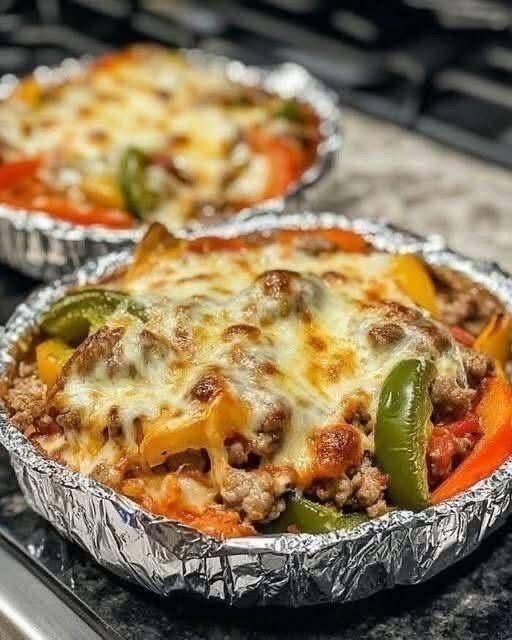
There are some dishes that immediately feel familiar the moment you see them. Bubbling cheese, seasoned beef, tender peppers, and onions all coming together in a single dish is one of those combinations that speaks directly to comfort, satisfaction, and classic flavor. These Philly Cheesesteak–Style Beef and Pepper Casserole Bowls take everything people love about a traditional cheesesteak and transform it into a hearty, oven-baked meal that is both practical and indulgent.
This recipe is designed for a professional food website audience and written with clarity, depth, and technique in mind. It is not simply a list of steps, but a complete guide to understanding why this dish works, how to perfect it, and how to adapt it to suit different tastes and lifestyles. Served in individual foil bowls or a family-style baking dish, this casserole delivers bold flavor, satisfying texture, and an irresistible cheesy finish.
Whether you are cooking for a busy weeknight dinner, preparing meals ahead of time, or serving a casual gathering, this recipe offers the kind of comfort food that feels generous and dependable.
Why This Dish Works So Well
The appeal of a Philly cheesesteak has always been about balance. Savory beef, sweet peppers and onions, and melted cheese come together in a way that feels rich without being heavy. By turning those elements into a baked casserole, the flavors deepen and meld, creating a cohesive dish that is easy to portion, serve, and enjoy.
Baking allows the ingredients to finish together gently, ensuring the beef stays juicy, the vegetables soften without losing their character, and the cheese melts into a golden, bubbly topping. The result is a meal that feels comforting and substantial while remaining straightforward and accessible.
This recipe also adapts beautifully to different preferences. It can be made low-carb by serving it without bread, or more traditional by pairing it with rolls or hoagies. It can be prepared in individual foil bowls for convenience or assembled in one large baking dish for family-style serving.
Choosing the Right Ingredients
Ground beef is used in this version for ease and accessibility. It cooks quickly, absorbs seasoning well, and creates a hearty base for the casserole. A medium-fat ground beef works best, providing flavor without excessive grease.
Bell peppers are essential for authentic cheesesteak flavor. A combination of green, red, and yellow peppers adds sweetness, color, and depth. Green peppers provide slight bitterness, while red and yellow peppers add natural sweetness that balances the savory beef.
Onions bring richness and aroma. When sautéed properly, they soften and sweeten, forming a natural flavor base for the entire dish.
Cheese is the defining element that brings everything together. Provolone is the most traditional choice, offering mild flavor and excellent meltability. Mozzarella can be used for a creamier texture, while a blend of both creates an ideal balance.
Seasonings such as salt, black pepper, garlic, and Worcestershire sauce enhance the meat without overpowering the dish. These ingredients add depth and a subtle umami quality that mimics classic cheesesteak flavor.
Preparing the Beef and Vegetables
Start by heating a large skillet over medium heat. Add the ground beef and cook until browned, breaking it into small pieces as it cooks. Proper browning is essential for flavor, so allow the beef to develop color before stirring too frequently.
Once cooked, drain any excess fat to prevent the casserole from becoming greasy. Season the beef with salt, black pepper, and garlic, stirring to evenly distribute the seasoning.
In the same skillet or a separate pan, sauté sliced onions and bell peppers in a small amount of oil or butter. Cook them until softened but not mushy. The vegetables should retain some texture, as they will continue cooking in the oven.
Combining the Ingredients
Once the beef and vegetables are prepared, combine them in a large bowl or directly in the skillet. Add Worcestershire sauce and any additional seasoning, tasting and adjusting as needed.
This mixture forms the base of the casserole. At this stage, everything should be well-seasoned and flavorful on its own. Proper seasoning before baking ensures the finished dish is balanced and satisfying.
Assembling the Casserole Bowls
For individual servings, divide the beef and pepper mixture evenly among foil baking bowls. For a family-style version, transfer the mixture to a lightly greased baking dish and spread it into an even layer.
Top generously with shredded or sliced cheese, covering the surface evenly. The cheese layer should be thick enough to melt into a cohesive topping without overwhelming the other ingredients.
Baking to Perfection
Preheat the oven to 190°C (375°F). Place the assembled casserole bowls on a baking sheet to catch any drips and ensure stability.
Bake uncovered until the cheese is fully melted and lightly golden, usually about 20 to 25 minutes. For a more browned top, briefly switch the oven to broil, watching closely to prevent burning.
The casserole is ready when the cheese is bubbling and the edges are slightly crisp.
Texture and Flavor Profile
This dish delivers multiple layers of texture. The beef is tender and savory, the peppers and onions are soft with a slight bite, and the cheese forms a rich, stretchy topping that ties everything together.
The flavor is deeply satisfying without being overly heavy. Savory notes from the beef and Worcestershire sauce are balanced by the sweetness of the peppers and onions, while the cheese adds creaminess and comfort.
Serving Suggestions
These Philly Cheesesteak–Style Casserole Bowls can be served in several ways. Enjoy them as-is for a low-carb meal, or pair them with toasted hoagie rolls, garlic bread, or soft dinner rolls.
They also pair well with simple sides such as a green salad, roasted vegetables, or coleslaw. The richness of the casserole is balanced nicely by something fresh and crisp on the side.
Storage and Reheating
Leftovers store well in an airtight container in the refrigerator for up to four days. Reheat gently in the oven or microwave until warmed through.
This dish is also freezer-friendly. Assemble the casserole without baking, wrap tightly, and freeze for up to two months. Bake from thawed or frozen, adding extra time as needed.
Common Mistakes to Avoid
Overcooking the beef can lead to dryness, so cook it just until browned. Skipping the step of draining excess fat can result in a greasy casserole. Using too little cheese can leave the dish feeling incomplete, while too much can overpower the other flavors.
Taking the time to properly sauté the vegetables and season each component ensures a well-balanced final dish.
Why This Recipe Is Ideal for a Professional Website
This recipe appeals to a broad audience because it is familiar, flexible, and deeply comforting. It offers clear instructions, adaptable serving options, and reliable results.
Its visual appeal, with colorful peppers and golden melted cheese, makes it especially suitable for online food content. The structure of the recipe allows readers to understand not just how to make the dish, but how to make it well.
Final Thoughts
Philly Cheesesteak–Style Beef and Pepper Casserole Bowls are the kind of meal that brings people back for seconds. Hearty, cheesy, and packed with classic flavor, they deliver everything people love about a cheesesteak in an easy, oven-baked format.
This dish proves that comfort food does not need to be complicated to be satisfying. With simple ingredients, thoughtful preparation, and a generous layer of melted cheese, it becomes a reliable, crowd-pleasing recipe worthy of any professional food website.