
INTRODUCTION
Baked vanilla custard is one of those desserts that feels deeply familiar no matter where you grew up. It is simple, comforting, and quietly elegant, relying on basic pantry ingredients and careful technique rather than excess. Long before elaborate cakes and layered desserts became common, custard was a staple in home kitchens, baked slowly in the oven until just set, then served warm or chilled. This classic baked vanilla custard recipe celebrates that tradition, offering a dessert that is rich yet light, creamy yet structured, and endlessly satisfying.
This version is written for home cooks who appreciate timeless recipes and want dependable results. Whether you are baking for family, preparing a dessert for guests, or simply craving something soothing and nostalgic, baked custard delivers. Its golden top, silky interior, and gentle vanilla aroma make it a dessert that feels special without being complicated.
THE HISTORY AND TRADITION OF BAKED CUSTARD
Custard has roots that stretch back centuries, appearing in European kitchens as early as the Middle Ages. Originally thickened with eggs and sometimes bread crumbs, custard evolved into the smooth, baked dessert we recognize today. In many cultures, custard became a way to transform milk and eggs into something comforting and nourishing.
In home kitchens, baked custard often appeared as a practical dessert. It required no special equipment, used ingredients most households already had, and could be baked alongside savory dishes in the oven. Over time, it became associated with warmth, care, and simplicity. Many people remember custard as a dessert made by parents or grandparents, served after dinner or brought to the table for special occasions.
WHY THIS RECIPE WORKS
This baked vanilla custard recipe works because it respects the science of custard-making. Eggs provide structure, milk adds creaminess, sugar balances sweetness, and gentle heat allows everything to set without curdling. Baking the custard slowly ensures a smooth texture, while proper resting time allows it to firm up perfectly.
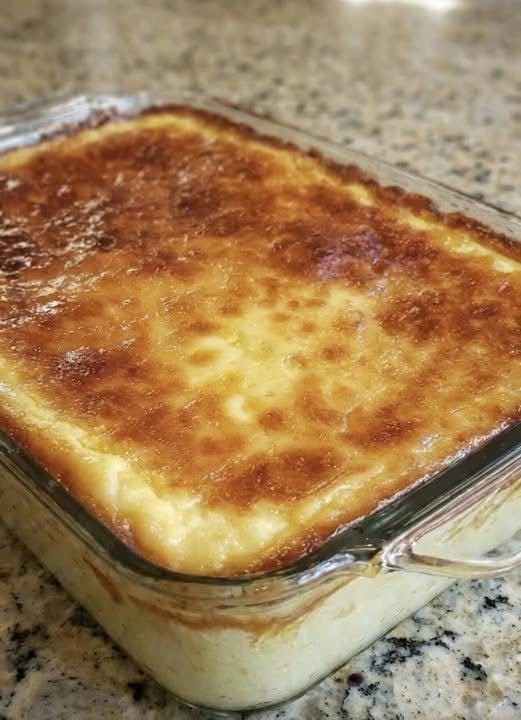
The lightly browned top adds visual appeal and a subtle caramelized flavor that contrasts beautifully with the soft interior. By following the steps carefully and paying attention to temperature and timing, you achieve a custard that slices cleanly yet melts in the mouth.
INGREDIENT OVERVIEW
Milk: Whole milk is ideal for custard because it provides richness without heaviness. Lower-fat milk can be used, but the texture will be lighter.
Eggs: Eggs are the backbone of custard. They thicken the mixture and create structure when gently cooked.
Sugar: Granulated sugar sweetens the custard and contributes to browning.
Vanilla: Vanilla extract or vanilla bean gives the custard its signature flavor.
Salt: A small amount enhances sweetness and balances the flavors.
INGREDIENTS
4 cups whole milk
4 large eggs
3/4 cup granulated sugar
1 tablespoon vanilla extract
1/4 teaspoon salt
STEP-BY-STEP INSTRUCTIONS
Begin by preheating your oven to 325°F. Lightly butter a baking dish to prevent sticking.
In a large bowl, whisk the eggs until smooth. Add the sugar gradually, whisking until fully dissolved. Stir in the vanilla extract and salt.
Warm the milk gently in a saucepan until it is hot but not boiling. Slowly pour the warm milk into the egg mixture while whisking continuously. This step tempers the eggs and prevents curdling.
Pour the custard mixture into the prepared baking dish. Place the dish inside a larger roasting pan and carefully add hot water to the outer pan, creating a water bath that reaches halfway up the sides of the custard dish.
Bake uncovered for 45 to 55 minutes, or until the custard is set around the edges and slightly jiggly in the center.
Remove from the oven and water bath. Allow the custard to cool at room temperature, then refrigerate for at least two hours before serving.
TEXTURE AND DONENESS
A properly baked custard should be smooth and creamy, never rubbery. The center should wobble gently when shaken, similar to gelatin. Overbaking causes the eggs to tighten too much, resulting in a grainy texture.
COMMON MISTAKES TO AVOID
Avoid boiling the milk, which can scramble the eggs. Do not skip the water bath, as it ensures even, gentle cooking. Always allow the custard to cool before slicing.
SERVING SUGGESTIONS
Baked vanilla custard can be served warm, chilled, or at room temperature. It pairs well with fresh fruit, a dusting of powdered sugar, or a light caramel sauce.
MAKE-AHEAD AND STORAGE
Custard can be made up to two days in advance and stored covered in the refrigerator. Leftovers should be kept chilled and consumed within three days.
VARIATIONS
Cinnamon Custard: Add ground cinnamon or nutmeg to the mixture.
Lemon Custard: Add lemon zest for brightness.
Coconut Custard: Replace part of the milk with coconut milk.
FREQUENTLY ASKED QUESTIONS
Can I use cream instead of milk? Yes, but the custard will be much richer.
Can this be frozen? Freezing is not recommended, as custard texture can suffer.
FINAL THOUGHTS
Classic baked vanilla custard is proof that simple desserts endure for a reason. With its gentle sweetness, creamy texture, and timeless appeal, it remains a favorite across generations. This recipe offers a reliable way to recreate that comfort at home, ensuring a dessert that feels both nostalgic and satisfying every time it is served.