
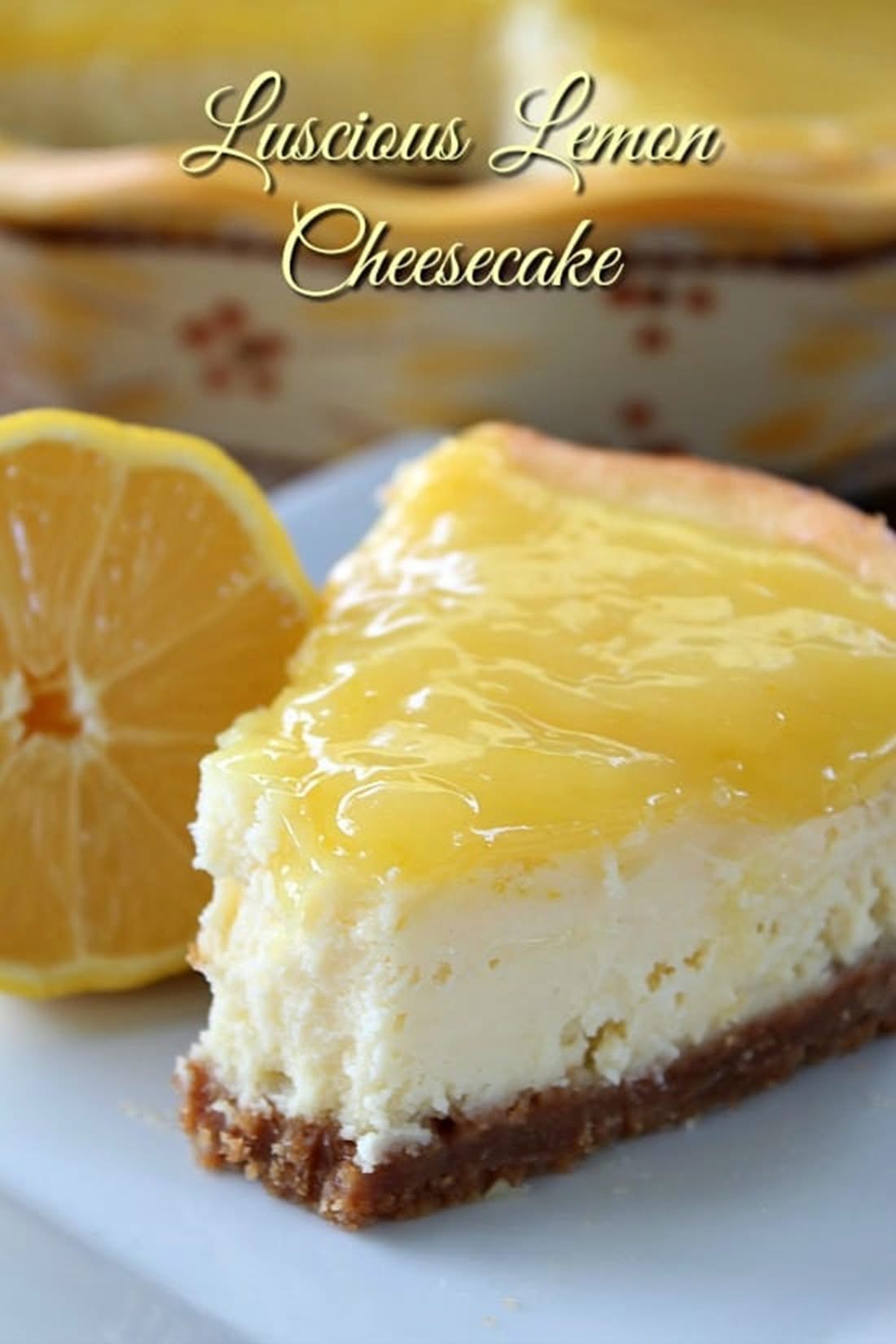
Luscious Lemon Cheesecake
A Bright, Creamy Dessert That Defines Cheesecake Perfection
Few desserts strike the perfect balance between richness and freshness quite like a lemon cheesecake. Creamy, velvety smooth, and infused with vibrant citrus flavor, this Luscious Lemon Cheesecake is the kind of dessert that feels both indulgent and refreshing at the same time. It’s elegant enough for special occasions yet comforting enough to enjoy on a quiet weekend at home.
This recipe has been carefully crafted to deliver a flawless texture, bold lemon flavor, and a beautifully balanced sweetness. From the buttery graham cracker crust to the silky lemon-kissed filling and optional lemon topping, every layer works in harmony to create a cheesecake that truly earns the title of perfection.
Whether you’re an experienced baker or making cheesecake for the first time, this detailed guide will walk you through every step, sharing professional tips, troubleshooting advice, and variations to help you achieve the best possible results every time.
Why This Lemon Cheesecake Works
A truly great cheesecake depends on more than just good ingredients. Technique, balance, and patience all play an essential role. This recipe works because it focuses on:
- High-fat dairy for richness and structure
- Fresh lemon juice and zest for clean, natural citrus flavor
- Gentle mixing to prevent cracks and air bubbles
- Low, even baking temperatures for a creamy interior
- Slow cooling to protect the cheesecake’s surface
The result is a cheesecake that slices cleanly, melts in your mouth, and delivers a bright lemon flavor without overwhelming the palate.
Ingredients Overview
Using high-quality ingredients is key to a standout cheesecake. Below is a breakdown of each component and why it matters.
For the Graham Cracker Crust
- Graham cracker crumbs
- Granulated sugar
- Unsalted butter, melted
The crust provides a buttery, slightly sweet base that complements the tangy lemon filling. Graham crackers are classic, but substitutions are discussed later if you’d like to experiment.
For the Lemon Cheesecake Filling
- Full-fat cream cheese, softened
- Granulated sugar
- Sour cream or Greek yogurt
- Large eggs, room temperature
- Fresh lemon juice
- Lemon zest
- Vanilla extract
- All-purpose flour or cornstarch
This combination ensures a filling that is rich, stable, and smooth, with enough acidity to balance the sweetness and richness.
Optional Lemon Topping
- Fresh lemon juice
- Lemon zest
- Sugar
- Cornstarch
- Water
This optional topping adds visual appeal and an extra burst of lemon flavor, perfect for those who love a bold citrus finish.
Equipment You’ll Need
- 9-inch springform pan
- Mixing bowls
- Electric mixer or stand mixer
- Rubber spatula
- Measuring cups and spoons
- Microplane or fine grater
- Roasting pan (for water bath)
- Aluminum foil
Using the right equipment helps ensure consistent results and a smooth baking process.
Step-by-Step Instructions
Step 1: Prepare the Pan
Preheat your oven to 325°F (165°C). Lightly grease a 9-inch springform pan and line the bottom with parchment paper. Wrap the outside of the pan tightly with two layers of aluminum foil to protect it from water seepage during baking.
This step is critical for achieving an evenly baked cheesecake without a soggy crust.
Step 2: Make the Graham Cracker Crust
In a medium bowl, combine graham cracker crumbs and sugar. Pour in melted butter and mix until the texture resembles wet sand.
Press the mixture firmly into the bottom of the prepared pan, using the back of a measuring cup to create an even layer. Bake the crust for 10 minutes, then remove from the oven and allow it to cool while you prepare the filling.
Pre-baking the crust helps it stay crisp and prevents it from absorbing moisture from the filling.
Step 3: Prepare the Lemon Cheesecake Filling
In a large mixing bowl, beat the softened cream cheese on low to medium speed until completely smooth. Take your time here — any lumps left in the cream cheese will remain in the finished cheesecake.
Gradually add the sugar, beating until fully incorporated and smooth. Scrape down the sides of the bowl as needed.
Add the sour cream (or Greek yogurt), lemon juice, lemon zest, and vanilla extract. Mix gently until just combined. The lemon zest provides aromatic citrus oils, while the juice adds brightness and acidity.
Next, add the eggs one at a time, mixing on low speed after each addition. Overmixing at this stage can incorporate too much air, leading to cracks during baking.
Finally, sprinkle in the flour or cornstarch and fold gently until the batter is smooth and silky.
Step 4: Assemble and Bake
Pour the cheesecake batter over the cooled crust, smoothing the top with a spatula.
Place the springform pan inside a larger roasting pan. Carefully pour hot water into the roasting pan until it reaches about halfway up the sides of the cheesecake pan. This water bath helps regulate temperature and prevents the cheesecake from drying out or cracking.
Bake at 325°F for 60–75 minutes, or until the edges are set and the center still has a slight jiggle. The cheesecake will continue to firm up as it cools.
Step 5: Cool Slowly
Once the baking time is complete, turn off the oven and crack the door open slightly. Allow the cheesecake to cool inside the oven for one hour. This gradual cooling process prevents sudden temperature changes that can cause cracks.
After one hour, remove the cheesecake from the oven and water bath. Let it cool completely at room temperature, then cover and refrigerate for at least 6 hours, preferably overnight.
Chilling is essential for proper texture and clean slices.
Optional Lemon Topping
If you want an extra layer of lemon flavor, this simple topping is highly recommended.
In a small saucepan, combine lemon juice, zest, sugar, and water. Heat over medium heat until the sugar dissolves. In a separate bowl, mix cornstarch with a small amount of water to create a slurry, then whisk it into the saucepan.
Simmer until thickened, then remove from heat and allow to cool. Spoon over the chilled cheesecake just before serving.
Serving Suggestions
Lemon cheesecake pairs beautifully with:
- Fresh berries such as raspberries or blueberries
- Whipped cream
- Candied lemon slices
- A light dusting of powdered sugar
For clean slices, use a sharp knife dipped in warm water and wiped clean between cuts.
Storage and Make-Ahead Tips
- Store cheesecake covered in the refrigerator for up to 5 days.
- Cheesecake can be frozen without toppings for up to 2 months. Wrap tightly in plastic wrap and foil.
- Thaw overnight in the refrigerator before serving.
This makes it an excellent dessert for entertaining and holidays.
Variations and Customizations
No-Bake Lemon Cheesecake
Skip the oven and use gelatin or whipped cream for structure.
Lemon Blueberry Cheesecake
Fold fresh or cooked blueberries into the batter or swirl into the top before baking.
Gluten-Free Version
Use gluten-free graham crackers or almond flour for the crust.
Extra Tangy Lemon Cheesecake
Increase lemon zest and reduce sugar slightly for a sharper citrus profile.
Troubleshooting Common Cheesecake Issues
Cracks on top:
Usually caused by overmixing or rapid temperature changes.
Lumpy filling:
Cream cheese was not fully softened.
Soggy crust:
Foil wrapping was not secure during the water bath.
Too soft after chilling:
Cheesecake may need additional refrigeration time.
Final Thoughts
This Luscious Lemon Cheesecake is everything a great cheesecake should be: rich but not heavy, tangy yet smooth, elegant yet comforting. With its buttery crust, creamy lemon filling, and optional bright topping, it’s a dessert that consistently impresses.
Whether served at a celebration or enjoyed as a personal treat, this cheesecake delivers bakery-quality results from your own kitchen. Take your time, follow the steps carefully, and you’ll be rewarded with a dessert that truly lives up to the name of perfection.