
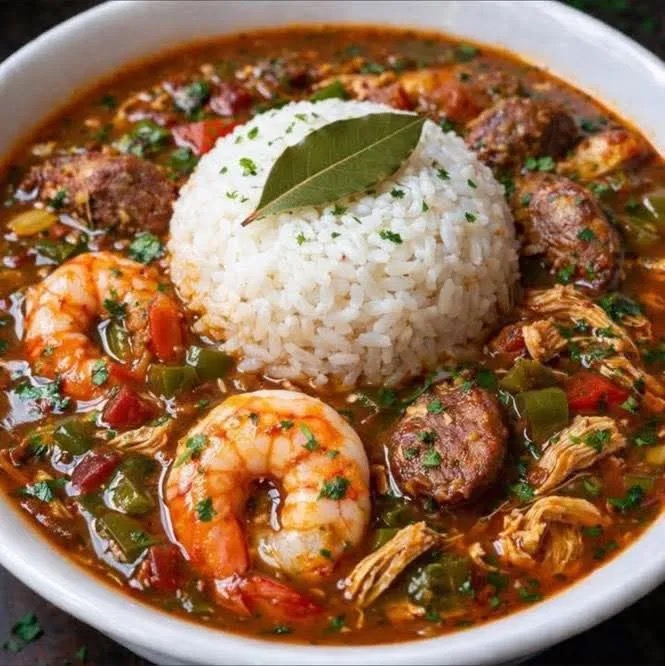
Louisiana Seafood and Sausage Gumbo
A Deep, Rich, Traditional Gumbo Built on Roux, Patience, and Flavor
Gumbo is not just a recipe. It is a ritual, a conversation, and a declaration of heritage. In Louisiana, gumbo is how people gather, how families stretch one meal into something generous, and how history quietly simmers on the stove. Every gumbo is different, and that is exactly the point.
This Louisiana seafood and sausage gumbo brings together smoky sausage, tender chicken, and fresh shrimp in a dark, well-developed roux with the classic trinity of onion, bell pepper, and celery. It is bold without being aggressive, layered without being complicated, and deeply satisfying in a way only slow-cooked food can be.
This is not a rushed gumbo. It rewards patience, attention, and respect for the process. What you get in return is a pot of something that tastes like it has always existed.
A Brief History of Gumbo
To understand gumbo, you have to understand Louisiana.
Gumbo is a Creole and Cajun dish shaped by West African, French, Spanish, and Native American influences. The word “gumbo” itself likely comes from the West African word ki ngombo, meaning okra. In some versions, okra is the thickener; in others, it is a dark roux or filé powder made from ground sassafras leaves.
There is no single “correct” gumbo. What matters is balance, depth, and intention.
Some rules are commonly agreed upon:
- Gumbo is served with rice, not mixed into it.
- The roux matters more than almost anything else.
- You do not rush gumbo.
- You do not argue with someone else’s gumbo at their table.
This recipe leans toward a Creole-style gumbo with tomatoes and seafood, while still honoring Cajun technique through the roux and sausage.
What Makes This Gumbo Special
This gumbo uses:
- A medium-dark roux, cooked slowly for maximum flavor
- The holy trinity of onion, bell pepper, and celery
- Chicken and smoked sausage for body and richness
- Shrimp added at the very end to keep it tender
- Tomatoes for brightness, without overpowering the base
- A layered seasoning approach instead of overwhelming heat
It is bold but balanced, rich but not greasy, and deeply savory without being heavy.
Ingredients
For the Roux
- 2 tablespoons neutral oil (vegetable, canola, or peanut)
- 2 tablespoons all-purpose flour
The Trinity and Aromatics
- 1 large onion, finely chopped
- 1 green bell pepper, chopped
- 2 celery stalks, chopped
- 3 cloves garlic, minced
Proteins
- 1 pound chicken breast, cooked and shredded
(Rotisserie chicken works well) - 8 ounces smoked sausage, sliced into rounds
(Andouille is traditional, but any good smoked sausage works) - 12 large shrimp, peeled and deveined
Liquid and Base
- 1 can (14 ounces) diced tomatoes, with juices
- 4 cups chicken broth (preferably low sodium)
Seasonings
- 1 teaspoon paprika
- 1 teaspoon Cajun seasoning
- 1/2 teaspoon dried thyme
- 1/2 teaspoon dried oregano
- 1/4 teaspoon cayenne pepper (adjust to taste)
- 2 bay leaves
- Salt and freshly ground black pepper, to taste
Optional but Traditional
- 1/2 teaspoon filé powder (added at the end, optional)
- Chopped green onions for garnish
- Fresh parsley, chopped
For Serving
- Cooked white rice
- Hot sauce, optional
Equipment You’ll Need
- Heavy-bottomed pot or Dutch oven
- Wooden spoon
- Sharp knife
- Cutting board
- Ladle
A heavy pot matters. Thin cookware burns roux quickly and unevenly.
Step-by-Step Instructions
Step 1: Make the Roux
Heat the oil over medium heat in a heavy pot. Once warm, sprinkle in the flour while stirring continuously.
This step defines your gumbo.
Cook the roux slowly, stirring constantly, scraping the bottom and corners of the pot. At first, it will look pale and chalky. After several minutes, it will turn blond, then peanut-butter colored, then deeper.
For this gumbo, aim for a medium to medium-dark roux, roughly the color of milk chocolate. This can take anywhere from 10 to 20 minutes depending on heat and cookware.
Do not walk away. Roux burns quickly, and burnt roux cannot be fixed.
If it smells nutty and rich, you’re on the right track.
Step 2: Add the Trinity
Once the roux reaches the desired color, immediately add the onion, bell pepper, and celery.
The vegetables will sizzle and release moisture, stopping the roux from darkening further. Stir well to coat everything evenly.
Cook for 5 to 7 minutes, stirring often, until the vegetables soften and the onions turn translucent.
Add the garlic and cook for 30 seconds to 1 minute, just until fragrant.
Step 3: Build the Base
Stir in the diced tomatoes, scraping up any browned bits from the bottom of the pot. Let them cook for about 3 minutes to mellow their acidity.
Slowly pour in the chicken broth while stirring constantly. This prevents lumps and helps the roux incorporate smoothly into the liquid.
Bring the mixture to a gentle simmer.
Step 4: Season and Simmer
Add paprika, Cajun seasoning, thyme, oregano, cayenne, bay leaves, and a pinch of salt and black pepper.
Stir well and reduce heat to low. Let the gumbo simmer uncovered for 30 to 45 minutes, stirring occasionally.
This is where flavors deepen and meld. The broth should thicken slightly but remain fluid.
Taste and adjust seasoning as it cooks.
Step 5: Add Chicken and Sausage
Stir in the shredded chicken and sliced sausage.
Simmer for another 20 to 30 minutes. The sausage will release smoky fat into the broth, enriching the gumbo.
Skim off excess fat if needed, but do not remove too much. Gumbo should have body.
Step 6: Add the Shrimp
Add the shrimp during the final 5 to 7 minutes of cooking.
Shrimp cook quickly. Overcooking makes them rubbery. Once they turn pink and opaque, they’re done.
Remove bay leaves.
If using filé powder, sprinkle it in after removing the pot from heat and stir gently.
Serving the Gumbo
Serve hot, ladled over a scoop of white rice.
Garnish with chopped green onions and parsley if desired. Offer hot sauce at the table so everyone can adjust heat to their liking.
Gumbo is even better the next day, once flavors have had time to settle.
Common Gumbo Questions
Can I use okra?
Yes. Okra is traditional and can be added during the simmering stage. Slice it and sauté it separately first to reduce sliminess.
Can I skip tomatoes?
Yes. Many Cajun gumbos are tomato-free. Leaving them out results in a darker, smokier gumbo.
Can I use seafood stock?
Absolutely. Seafood stock deepens flavor, especially if adding crab or oysters.
Is filé powder required?
No. It is optional and should be used sparingly. Never boil gumbo after adding filé.
Variations and Additions
- Add crab meat for a richer seafood version
- Replace chicken with duck for a more traditional Cajun gumbo
- Add oysters at the very end for briny depth
- Use homemade stock for maximum flavor
Storage and Reheating
Gumbo stores beautifully.
- Refrigerate up to 4 days
- Freeze up to 3 months (add shrimp fresh after thawing if possible)
- Reheat gently on the stove, adding a splash of broth if needed
Why Gumbo Still Matters
Gumbo survives because it adapts. It welcomes what you have, forgives substitutions, and rewards care. It is food made to feed people, not impress them.
Yes, people still eat gumbo. They argue about it, pass it down, and make it their own. And as long as someone is standing at a stove stirring a roux and thinking about who they’re cooking for, gumbo will stay exactly where it belongs.