
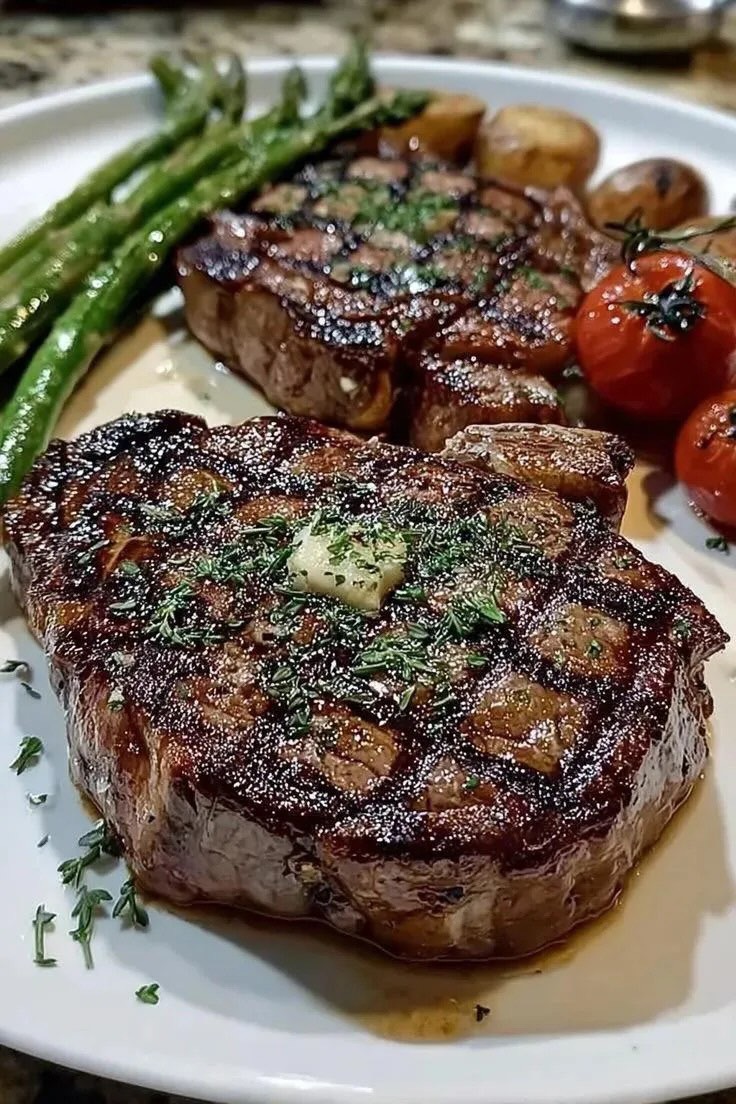
Garlic Butter Ribeye Steak: The Ultimate Guide to a Perfectly Seared Steak at Home
Few meals deliver the same level of satisfaction as a perfectly cooked ribeye steak finished with rich, aromatic garlic butter. With its generous marbling, deep beefy flavor, and tender texture, the ribeye is widely regarded as one of the most luxurious and flavorful cuts of beef. When seared properly and basted with butter, garlic, and fresh herbs, it transforms into a restaurant-quality dish that can easily be prepared in your own kitchen.
This comprehensive guide will walk you through everything you need to know to prepare the perfect garlic butter ribeye steak, from selecting the right cut of meat to mastering the cooking technique and pairing it with delicious side dishes. Whether you are a beginner or an experienced home cook, this detailed recipe will help you achieve consistently excellent results.
Why Choose Ribeye Steak?
Ribeye steak comes from the rib section of the cow and is known for its exceptional marbling. Marbling refers to the thin streaks of fat that run through the meat. As the steak cooks, this fat melts and bastes the meat from within, creating a juicy, flavorful, and tender result.
Compared to leaner cuts such as sirloin or filet, ribeye delivers a richer taste and a more succulent bite. The combination of high heat searing and butter basting enhances its natural flavor without overpowering it.
Ingredients
For the Steak
- 2 ribeye steaks (about 1 to 1½ inches thick)
- Salt, to taste
- Freshly ground black pepper, to taste
- 1 tablespoon olive oil
For the Garlic Butter
- 2 tablespoons unsalted butter
- 2 garlic cloves, minced
- Fresh parsley or thyme, finely chopped
Optional Side Ingredients
- Cherry tomatoes
- Asparagus or other seasonal vegetables
- Baby potatoes
Choosing the Best Ribeye
Selecting high-quality meat is the first step toward a successful steak dinner. When purchasing ribeye steaks, look for:
- Good Marbling: Thin white streaks of fat distributed throughout the meat.
- Bright Red Color: Fresh beef should appear vibrant and not dull or brown.
- Even Thickness: Steaks that are at least 1 inch thick cook more evenly and are easier to sear without overcooking.
- Bone-In or Boneless: Both work well. Bone-in ribeye can offer slightly more flavor, while boneless is easier to handle and slice.
If possible, buy from a trusted butcher who can recommend the best cut available.
Preparing the Steak
Step 1: Bring to Room Temperature
Remove the steaks from the refrigerator 20 to 30 minutes before cooking. Allowing the meat to come closer to room temperature ensures more even cooking. If you cook a steak straight from the refrigerator, the outside may overcook before the center reaches the desired doneness.
Step 2: Pat Dry
Use paper towels to pat the steaks dry. Removing excess moisture is crucial for achieving a proper sear. Moisture creates steam, which prevents browning.
Step 3: Season Generously
Season both sides of the steak with salt and freshly ground black pepper. Be generous but balanced. The salt enhances the natural beef flavor and helps create a flavorful crust during searing.
For best results, season just before cooking. If you salt too early, moisture may be drawn out of the meat and affect the crust.
Cooking Equipment
To achieve a professional-quality sear, you will need:
- A heavy skillet, preferably cast iron
- Tongs
- A spoon for basting
- A meat thermometer (optional but highly recommended)
Cast iron pans are ideal because they retain heat exceptionally well and create a consistent, high-temperature cooking surface.
Cooking Method
Step 1: Preheat the Pan
Place your skillet over medium-high to high heat. Allow it to heat thoroughly for several minutes. The pan should be very hot before adding the steak. You can test it by sprinkling a few drops of water into the pan; they should sizzle and evaporate quickly.
Step 2: Add Oil
Add 1 tablespoon of olive oil to the hot pan. Swirl it to coat the surface. The oil helps prevent sticking and supports even browning.
Step 3: Sear the Steak
Carefully place the steaks into the pan. Lay them away from you to avoid splashing hot oil. Do not move the steaks once they are in the pan. Let them sear undisturbed for about 3 to 4 minutes.
This initial sear is crucial for developing a rich, golden-brown crust. Moving the steak too early will interrupt the browning process.
Step 4: Flip and Add Butter
Using tongs, flip the steaks. Immediately reduce the heat slightly to medium. Add the butter and minced garlic to the pan. If using fresh thyme or parsley, add it now as well.
As the butter melts, tilt the pan slightly so the melted butter pools on one side. Use a spoon to continuously baste the steaks by scooping the butter and pouring it over the top. This process adds flavor and keeps the surface moist while the inside continues cooking.
Continue cooking and basting for another 3 to 4 minutes, depending on thickness and desired doneness.
Doneness Guide
Using a meat thermometer ensures precise cooking. Insert it into the thickest part of the steak.
- Rare: 120–125°F (49–52°C)
- Medium Rare: 130–135°F (54–57°C)
- Medium: 140–145°F (60–63°C)
- Medium Well: 150–155°F (65–68°C)
- Well Done: 160°F (71°C) and above
For ribeye, medium rare is often recommended to preserve tenderness and flavor.
Remember that the steak will continue cooking slightly after being removed from the heat. Remove it from the pan when it is about 5°F below your target temperature.
Resting the Steak
Transfer the steaks to a cutting board or plate and let them rest for 5 to 10 minutes. Resting allows the juices to redistribute throughout the meat. If you slice too soon, the juices will run out, leaving the steak dry.
You may loosely tent the steaks with foil while resting, but avoid wrapping them tightly, as this can soften the crust.
Preparing the Garlic Butter Sauce
If desired, you can enhance the garlic butter further:
- After removing the steaks, keep the pan on low heat.
- Add a small additional knob of butter if needed.
- Stir in fresh chopped parsley.
- Spoon the aromatic butter over the rested steaks before serving.
The residual heat of the pan intensifies the garlic flavor without burning it.
Optional Side Dishes
Roasted Baby Potatoes
- Preheat the oven to 400°F (200°C).
- Toss baby potatoes with olive oil, salt, and pepper.
- Roast for 25 to 35 minutes until golden and crispy.
- Finish with fresh herbs.
Sautéed Asparagus
- Heat olive oil in a skillet over medium heat.
- Add trimmed asparagus.
- Cook for 5 to 7 minutes until tender but crisp.
- Season with salt and pepper.
Cherry Tomatoes
Cherry tomatoes can be added to the steak pan during the last few minutes of cooking. The heat softens them slightly and enhances their natural sweetness.
Plating and Presentation
Slice the steak against the grain for maximum tenderness. Arrange it on a warm plate. Spoon garlic butter over the top and sprinkle with freshly chopped parsley.
Serve alongside roasted potatoes and vegetables for a complete, balanced meal.
For a refined presentation:
- Use warm plates to maintain temperature.
- Add a light sprinkle of flaky sea salt before serving.
- Garnish with a sprig of fresh thyme.
Common Mistakes to Avoid
- Cooking Cold Steak: Always bring it to room temperature first.
- Overcrowding the Pan: Cook in batches if necessary.
- Moving the Steak Too Soon: Allow a proper crust to form.
- Skipping the Resting Period: This leads to juice loss.
- Using Low Heat: High heat is essential for a proper sear.
Flavor Variations
Once you master the basic garlic butter ribeye, try variations:
- Add crushed red pepper flakes for subtle heat.
- Use rosemary instead of thyme.
- Add a splash of lemon juice to the butter for brightness.
- Include shallots in the butter for extra depth.
Wine Pairing Suggestions
Ribeye pairs beautifully with bold red wines that complement its richness. Consider:
- Cabernet Sauvignon
- Malbec
- Syrah
These wines balance the fat content and enhance the savory flavors.
Storage and Reheating
If you have leftovers:
- Store in an airtight container in the refrigerator for up to 3 days.
- Reheat gently in a skillet over low heat with a small amount of butter.
- Avoid microwaving if possible, as it can overcook the meat.
Leftover steak can also be sliced thin and used in sandwiches, salads, or wraps.
Nutritional Information (Approximate per Serving)
- Calories: 600–800 (depending on size)
- Protein: 45–60 grams
- Fat: 45–65 grams
- Carbohydrates: Minimal (without sides)
Values vary depending on portion size and added ingredients.
Final Thoughts
Garlic butter ribeye steak is a timeless dish that combines simplicity with indulgence. With just a few high-quality ingredients and proper technique, you can create a meal that rivals any fine dining experience.
The key elements are:
- Selecting well-marbled ribeye
- Using high heat for a proper sear
- Basting with garlic butter
- Allowing adequate resting time
Once you master these fundamentals, you will consistently produce tender, juicy, and deeply flavorful steaks.
Whether served for a special occasion, a weekend dinner, or an elegant gathering, garlic butter ribeye steak remains one of the most satisfying and impressive meals you can prepare at home.