
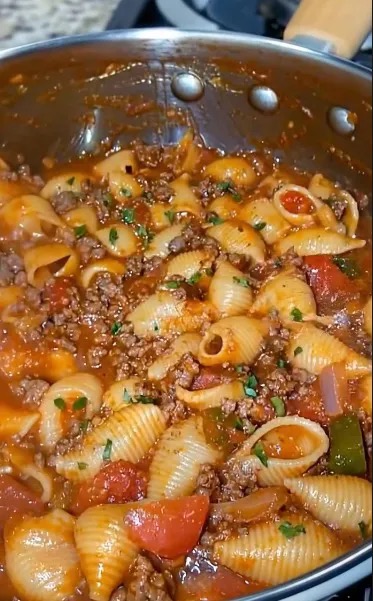
Creamy Beef and Shells is a comforting and satisfying pasta dish that brings together tender pasta shells, savory ground beef, aromatic vegetables, and a rich, velvety cream sauce. This recipe is perfect for weeknight dinners, family meals, or whenever you crave something warm, filling, and flavorful. The combination of hearty meat, soft pasta, and creamy seasoning creates a dish that feels both homey and indulgent at the same time. While this recipe may look simple at first glance, each step is designed to help you achieve restaurant-quality results in your own kitchen.
Pasta dishes have long been a favorite in many households because they are versatile, affordable, and easy to customize. Shell-shaped pasta works especially well in creamy meat sauces because the hollow center and curved surface allow the sauce to settle inside each piece. This means every bite delivers a balanced mix of pasta, meat, and sauce rather than leaving the flavor sitting only on the surface.
The ground beef used in this recipe provides depth and richness to the overall flavor profile. You can choose lean ground beef if you prefer a lighter version or regular ground beef if you want a more traditional, richer taste. The vegetables included in this recipe add color, texture, and natural sweetness that helps balance the savory components of the dish.
One of the key characteristics of Creamy Beef and Shells is the sauce. The sauce should be smooth, thick enough to coat the pasta, and flavorful without being overwhelming. Achieving the perfect consistency requires careful control of heat and proper incorporation of dairy ingredients.
This recipe is also very adaptable. You can adjust seasoning levels, add extra vegetables, or even increase the amount of cheese depending on personal preference. Many home cooks enjoy experimenting with this dish because it serves as a wonderful base for creative cooking.
Ingredients
For the pasta and meat
8 to 12 ounces medium pasta shells (conchiglie pasta)
1 pound ground beef
1 medium onion, finely diced
1 green bell pepper, diced
2 to 4 cloves garlic, minced
1 to 2 tablespoons olive oil
For the creamy sauce
1 cup heavy cream
1 cup beef broth
1 cup shredded cheddar cheese
2 tablespoons cream cheese, softened
1 teaspoon salt (adjust to taste)
1/2 teaspoon black pepper
1 teaspoon paprika
1/2 teaspoon Italian seasoning
1 tablespoon tomato paste
1/2 teaspoon onion powder
1/2 teaspoon garlic powder
Optional garnish
Fresh parsley, chopped
Extra shredded cheese for topping
Step-by-step cooking instructions
Preparing the pasta
Begin by filling a large pot with water and bringing it to a rolling boil. Add a generous pinch of salt to the boiling water because this helps season the pasta from the inside as it cooks.
Once the water is boiling, add the pasta shells and stir gently to prevent them from sticking together. Cook the pasta according to the package instructions until it reaches an al dente texture. Al dente pasta should be tender but still have a slight firmness when bitten.
Cooking time may vary depending on the brand and type of pasta used, but generally, medium shells take around eight to twelve minutes to cook properly.
When the pasta is finished cooking, drain it using a colander but do not rinse it with water. Keeping a small amount of starch on the pasta surface helps the sauce adhere better later. Set the cooked pasta aside while you prepare the meat and sauce.
Cooking the ground beef
Place a large skillet or deep pan over medium heat and add olive oil. Allow the oil to warm for about one minute before adding the vegetables.
Add the diced onion and green bell pepper to the pan. Sauté the vegetables for approximately three to four minutes until they begin to soften and release their natural aroma. Stir occasionally to prevent burning.
Next, add the minced garlic and continue cooking for about thirty to sixty seconds. Garlic cooks quickly, so it is important to monitor the heat level carefully to avoid burning it.
After the vegetables become fragrant and tender, add the ground beef to the skillet. Use a wooden spoon or spatula to break the meat into small pieces while it cooks.
Cook the ground beef until it is completely browned and no pink color remains. This process usually takes about six to eight minutes depending on the heat level and the amount of meat.
Once the beef is fully cooked, carefully drain any excess grease from the pan if necessary. Removing excess fat helps keep the sauce from becoming overly oily.
Seasoning the meat mixture
After draining excess fat, return the skillet to the stove if you removed it temporarily.
Add salt, black pepper, paprika, Italian seasoning, onion powder, and garlic powder to the cooked beef mixture. Stir well so the seasoning spreads evenly across the meat and vegetables.
Next, add the tomato paste and mix it thoroughly with the meat. The tomato paste adds depth, richness, and a subtle tangy background flavor that enhances the overall taste of the dish.
Allow the seasoned meat mixture to cook for another minute to help the flavors develop fully.
Creating the creamy sauce
Slowly pour the beef broth into the skillet while stirring continuously. This step helps deglaze the pan and lift any flavorful browned bits that may be stuck to the bottom.
After adding the broth, pour in the heavy cream and stir gently until the liquid becomes smooth and well combined.
Reduce the heat to low or medium-low heat before adding dairy ingredients because high heat can cause the cream to separate or curdle.
Add the softened cream cheese to the mixture. Stir continuously until the cream cheese melts completely and blends into the sauce. This ingredient helps thicken the sauce and gives it a rich, luxurious texture.
Add the shredded cheddar cheese gradually, stirring slowly as it melts into the sauce. Adding cheese little by little helps maintain a smooth consistency and prevents clumping.
Continue cooking the sauce on low heat for about three to five minutes until it thickens slightly. The sauce should be creamy and able to coat the back of a spoon without being too runny.
Combining pasta, beef, and sauce
Once the sauce reaches the desired consistency, add the cooked pasta shells directly into the skillet.
Use a large spoon or spatula to gently toss the pasta with the beef and creamy sauce. Make sure every shell is coated evenly so that the flavor is distributed throughout the dish.
Allow the combined mixture to cook together for an additional two to three minutes over low heat. This step helps the pasta absorb some of the sauce and enhances the overall flavor.
If the sauce appears too thick, you can add a small splash of beef broth or cream to loosen it slightly. If the sauce is too thin, continue simmering for a little longer while stirring gently.
Serving suggestions
Creamy Beef and Shells is best served hot and fresh from the stove. Transfer the finished pasta into serving bowls or a large serving dish.
Garnish the top with chopped fresh parsley to add color and a light herbal freshness. You can also sprinkle extra shredded cheddar cheese on top if you enjoy a cheesier presentation.
This dish pairs well with simple side options such as garlic bread, roasted vegetables, or a fresh garden salad. The mild acidity of a salad helps balance the richness of the creamy sauce.
For beverage pairing, many people enjoy serving this dish with water, iced tea, or a light fruit juice. If serving at dinner gatherings, it can also be accompanied by non-alcoholic sparkling drinks.
Customization options
This recipe can be modified in several ways depending on your taste preferences.
If you enjoy more vegetables in your meal, you can add mushrooms, diced carrots, or spinach. Mushrooms work especially well because they enhance the umami flavor of the beef.
If you prefer a spicier version, add crushed red pepper flakes, cayenne pepper, or a small amount of hot sauce into the sauce while cooking.
For those who want a richer cheese flavor, consider mixing different types of cheese such as mozzarella or Parmesan along with cheddar.
You can also substitute ground beef with ground turkey, ground chicken, or even plant-based meat alternatives if desired.
Storage and reheating instructions
If you have leftovers, allow the pasta to cool completely before transferring it into an airtight container. Store the dish in the refrigerator for up to three days.
When reheating, it is best to use a stovetop method or oven rather than a microwave to help maintain the creamy texture of the sauce.
If reheating on the stove, add a small splash of milk, cream, or broth to restore moisture and prevent the sauce from becoming too thick.
Cook the pasta on low heat while stirring gently until it is warmed through.
Cooking tips for best results
Always cook pasta in salted water because this adds flavor directly to the pasta itself.
Avoid cooking the creamy sauce over high heat because dairy products can separate when exposed to excessive heat.
Use freshly shredded cheese when possible because pre-shredded cheese sometimes contains anti-caking agents that may affect melting quality.
Taste the sauce before serving and adjust seasoning if needed since cheese and broth can already contain salt.
Conclusion
Creamy Beef and Shells is a classic comfort food dish that combines tender pasta, savory ground beef, and a smooth, flavorful cream sauce into one satisfying meal. Its simple ingredient list makes it accessible to home cooks of all experience levels, while its rich taste and hearty texture make it a favorite among both adults and children.
Whether you are preparing dinner for your family, hosting a casual gathering, or simply craving a warm and filling pasta dish, this recipe offers a reliable and delicious solution. With proper attention to cooking temperature, sauce consistency, and seasoning balance, you can easily recreate a restaurant-style creamy pasta meal in your own kitchen.
This dish is highly versatile, allowing endless opportunities for customization based on personal taste preferences. Once you master the basic technique, you can experiment with different ingredients and flavor combinations to make it uniquely yours. Creamy Beef and Shells is more than just pasta; it is a comforting, satisfying experience that brings warmth and flavor to the table with every bite.