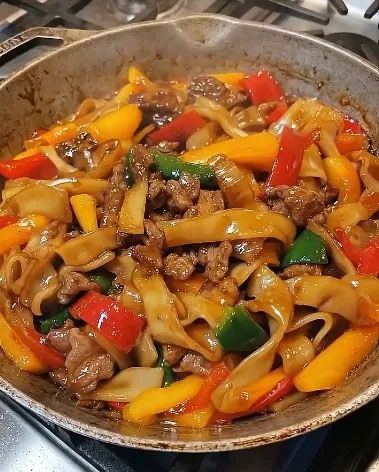
Beef and Pepper Stir-Fried Noodles is the kind of dish that immediately captures attention with its glossy sauce, vibrant vegetables, and tender slices of beef wrapped around silky, wide noodles. It is hearty yet balanced, colorful yet comforting, and delivers bold flavor in every bite. This recipe brings together tender marinated beef, sweet bell peppers, aromatic garlic and onions, and flat rice noodles coated in a rich savory sauce that clings beautifully to every strand. Perfect for a satisfying weeknight dinner or an impressive homemade takeout-style meal, this dish is both approachable and deeply rewarding to prepare. The magic lies in proper preparation, high-heat cooking, and building layers of flavor step by step. To begin, gather your ingredients. For the noodles and beef: 12 ounces wide flat rice noodles (fresh or dried), 1 pound flank steak or sirloin thinly sliced against the grain, 1 tablespoon soy sauce for the marinade, 1 tablespoon oyster sauce for the marinade, 1 teaspoon cornstarch, 1 teaspoon sesame oil, and a pinch of black pepper. For the vegetables: 1 red bell pepper sliced into thick strips, 1 yellow bell pepper sliced, 1 green bell pepper sliced, 1 medium onion sliced into petals, and 3 to 4 cloves garlic minced. For the sauce: 3 tablespoons soy sauce, 2 tablespoons oyster sauce, 1 tablespoon dark soy sauce for color, 1 tablespoon hoisin sauce, 1 teaspoon sugar, 1 teaspoon cornstarch mixed with 2 tablespoons water, 1/2 cup beef broth or water, and 1 tablespoon sesame oil. You will also need 2 tablespoons neutral cooking oil such as vegetable or canola oil. Start by preparing the beef. Thin slicing is crucial because it ensures tenderness and quick cooking. Always slice against the grain to shorten the muscle fibers, which results in a more tender bite. Place the sliced beef into a bowl and add soy sauce, oyster sauce, cornstarch, sesame oil, and black pepper. Toss thoroughly until each slice is evenly coated. The cornstarch not only helps tenderize the meat but also creates a light protective coating that seals in juices during cooking. Allow the beef to marinate for at least 20 minutes while you prepare the remaining ingredients. If using dried rice noodles, cook them according to package instructions until just tender but still slightly firm. Be careful not to overcook them, as they will continue to cook in the pan later. Drain and rinse briefly with cool water to stop the cooking process, then toss lightly with a teaspoon of oil to prevent sticking. If using fresh rice noodles, gently separate them and set aside. Next, prepare the sauce. In a small bowl combine soy sauce, oyster sauce, dark soy sauce, hoisin sauce, sugar, beef broth, and sesame oil. Stir until the sugar dissolves, then mix in the cornstarch slurry. Set this aside so it is ready to pour into the wok at the right moment. Having everything prepared before you start cooking is essential because stir-frying happens quickly and there is little time to measure or chop once the heat is on. Heat a large wok or heavy skillet over medium-high to high heat. Allow the pan to get very hot before adding oil; this step ensures a good sear and prevents sticking. Add 1 tablespoon of oil and swirl to coat the surface. Add the marinated beef in a single layer, working in batches if necessary to avoid overcrowding. Let the beef sear undisturbed for about 1 minute to develop color, then stir-fry for another 1 to 2 minutes until just cooked through. Remove the beef from the pan and set aside. It is important not to overcook the beef at this stage because it will return to the pan later with the noodles and sauce. Add the remaining tablespoon of oil to the wok. Toss in the sliced onions and cook for about 1 minute until they begin to soften but still maintain some crunch. Add the minced garlic and stir quickly for about 20 seconds until fragrant, being careful not to burn it. Immediately add the sliced bell peppers and stir-fry over high heat for 2 to 3 minutes. The goal is to keep the vegetables vibrant and slightly crisp, which provides contrast to the tender noodles and beef. Once the vegetables are slightly tender but still colorful, return the beef to the pan. Toss everything together briefly to combine. Add the prepared rice noodles to the wok, gently lifting and turning them with tongs or a spatula to avoid breaking them. Pour the sauce evenly over the mixture. Continue to toss and stir-fry over high heat. As the sauce heats, it will thicken slightly from the cornstarch and coat the noodles, beef, and vegetables in a glossy sheen. Cook for another 2 to 3 minutes, ensuring the noodles are evenly coated and heated through. If the mixture appears too dry, add a splash of water or broth. If it looks too wet, continue cooking for another minute to reduce the sauce. Taste and adjust seasoning if necessary by adding a little more soy sauce or a pinch of sugar depending on your preference. The finished dish should have tender slices of beef, slightly crisp bell peppers, silky noodles, and a rich savory sauce that balances salty, sweet, and umami flavors. Serve immediately while hot for the best texture and flavor. This recipe works beautifully because of the harmony between its components. The beef provides richness and protein, the peppers add natural sweetness and color, and the noodles absorb the sauce while maintaining their satisfying chew. The sauce itself is layered with complexity from soy sauce for saltiness, oyster sauce for depth, hoisin for subtle sweetness, and dark soy sauce for color and mild caramel notes. Each ingredient plays an important role in building the final flavor profile. For best results, use high heat throughout the cooking process. Stir-frying depends on quick cooking and proper caramelization. If the heat is too low, the ingredients will steam rather than sear, resulting in a less flavorful dish. A wok is ideal because its shape distributes heat efficiently and allows easy tossing, but a large heavy skillet will also work well. If you want to customize this recipe, there are many variations you can explore. Add sliced mushrooms for an earthy dimension, snow peas for extra crunch, or baby corn for additional texture. A pinch of red pepper flakes or a drizzle of chili oil can introduce gentle heat. For a slightly smoky flavor, allow the noodles to sit undisturbed for a few seconds in the hot pan before tossing; this creates light charring that enhances depth. If you prefer a thicker sauce, increase the cornstarch slurry slightly, but use restraint to avoid making the noodles gummy. To make the dish ahead of time, you can marinate the beef and prepare the vegetables several hours in advance. Store them separately in the refrigerator until ready to cook. Leftovers can be refrigerated in an airtight container for up to three days. Reheat in a hot skillet with a small splash of water to loosen the sauce and restore texture. Avoid microwaving for too long, as it can overcook the beef and make the noodles too soft. This Beef and Pepper Stir-Fried Noodles recipe is ideal for busy evenings because it comes together quickly once everything is prepped. It also offers restaurant-quality flavor without the need for complicated techniques or hard-to-find ingredients. The key lies in attention to detail: slicing the beef correctly, balancing the sauce, and cooking at high heat for the right amount of time. When done properly, the result is a deeply satisfying dish with bold flavor and beautiful presentation. The vibrant reds, yellows, and greens of the peppers contrast with the glossy brown sauce and tender beef, making it as visually appealing as it is delicious. Serve it as a complete meal on its own or alongside a simple cucumber salad or steamed greens for additional freshness. Whether you are cooking for family or entertaining guests, this dish is guaranteed to impress with its rich aroma, balanced seasoning, and comforting appeal. Once you master the technique, it will quickly become a staple in your kitchen rotation, delivering dependable flavor and satisfying texture every time you prepare it.