
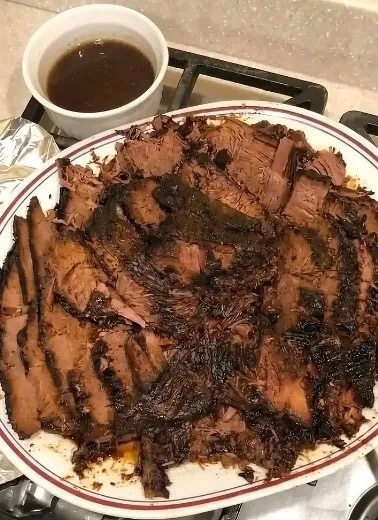
Slow-Roasted Beef Brisket with Rich Pan Jus
Few dishes capture the essence of comfort food quite like a beautifully slow-roasted beef brisket. Deeply browned on the outside, tender enough to slice with ease, and served with a savory pan jus that intensifies every bite, this dish is both rustic and elegant. Whether prepared for a family gathering, a weekend dinner, or a special occasion, slow-roasted beef brisket delivers rich flavor, impressive presentation, and unforgettable satisfaction.
This recipe focuses on patience, technique, and simple ingredients treated with care. Brisket is a cut of beef that rewards slow cooking, transforming from a tough, collagen-rich muscle into something succulent and luxurious. When cooked correctly, the meat absorbs seasoning deeply, retains moisture, and develops complex layers of flavor that only time can create.
In this comprehensive guide, you will learn everything you need to prepare the perfect slow-roasted beef brisket—from choosing the right cut and seasoning it properly, to mastering the roasting process and creating a glossy, flavorful pan jus. This recipe is written to be reliable, adaptable, and suitable for publication on a professional food website.
Understanding Beef Brisket
Beef brisket comes from the lower chest of the cow, a heavily worked muscle that contains a significant amount of connective tissue. Because of this, brisket is not suitable for quick cooking methods. Instead, it excels when cooked low and slow, allowing the collagen to break down into gelatin, which gives the meat its signature tenderness and richness.
There are two main parts of the brisket:
- Flat cut: Leaner, more uniform in thickness, ideal for slicing.
- Point cut: Thicker, fattier, and more marbled, offering deeper flavor.
For this recipe, either cut can be used, though a whole brisket or flat cut is generally preferred for neat slices and even cooking.
Why Slow Roasting Works
Slow roasting at a low temperature allows heat to penetrate the meat gradually. This method prevents moisture loss, reduces toughness, and encourages the natural beef flavors to concentrate. Unlike braising, which submerges the meat in liquid, slow roasting uses minimal added liquid, allowing the surface of the beef to caramelize while still producing enough drippings to create a luxurious jus.
The result is beef that is deeply savory, tender but structured, and perfect for slicing.
Ingredients
For the Beef Brisket
- 4 to 5 lb (1.8 to 2.3 kg) beef brisket
- 2 tablespoons olive oil or neutral cooking oil
- 2 tablespoons kosher salt
- 1 tablespoon freshly ground black pepper
- 2 teaspoons garlic powder
- 2 teaspoons onion powder
- 1 teaspoon smoked paprika
- 1 teaspoon dried thyme
- 1 teaspoon dried rosemary
- 1 teaspoon brown sugar (optional, for subtle caramelization)
For the Roasting Pan
- 1 large onion, sliced
- 2 carrots, roughly chopped
- 2 celery stalks, roughly chopped
- 4 cloves garlic, smashed
- 2 cups beef broth or stock
- 1 tablespoon Worcestershire sauce
- 1 tablespoon soy sauce or tamari
- 2 bay leaves
For the Pan Jus
- Reserved pan drippings
- Additional beef broth as needed
- Salt and black pepper to taste
Equipment Needed
- Large roasting pan
- Aluminum foil or roasting lid
- Sharp slicing knife
- Cutting board
- Fine mesh strainer (optional, for smooth jus)
Preparing the Brisket
Step 1: Bring the Meat to Room Temperature
Remove the brisket from the refrigerator at least one hour before cooking. Allowing the meat to come to room temperature ensures more even cooking and prevents the exterior from overcooking before the center warms.
Step 2: Trim Excess Fat
While brisket benefits from some fat, excessive fat can prevent seasoning from penetrating the meat. Trim the fat cap to about ¼ inch thickness. This allows flavor absorption while still keeping the meat moist.
Step 3: Season Generously
In a small bowl, combine salt, black pepper, garlic powder, onion powder, smoked paprika, thyme, rosemary, and brown sugar if using. Rub the brisket all over with olive oil, then coat evenly with the spice mixture. Press the seasoning firmly into the surface.
For best results, the brisket can be seasoned up to 24 hours in advance and refrigerated uncovered. This dry-brining technique enhances flavor and improves texture.
Preparing the Roasting Pan
Spread the sliced onions, carrots, celery, and garlic evenly across the bottom of the roasting pan. These vegetables act as a natural rack, lifting the brisket slightly while also contributing flavor to the pan juices.
Place the seasoned brisket on top of the vegetables, fat side up. This allows the fat to slowly render and baste the meat during cooking.
Pour the beef broth into the pan, taking care not to wash away the seasoning. Add Worcestershire sauce, soy sauce, and bay leaves.
Slow Roasting the Brisket
Step 1: Cover and Roast Low and Slow
Preheat the oven to 300°F (150°C).
Cover the roasting pan tightly with aluminum foil or a fitted lid. Place the pan in the center of the oven and roast for approximately 4 to 5 hours, depending on the size of the brisket.
During this stage, the brisket slowly tenderizes as the connective tissue breaks down. The meat should be fork-tender but still sliceable.
Step 2: Uncover and Brown
Once the brisket is tender, remove the foil and increase the oven temperature to 425°F (220°C). Return the pan to the oven uncovered and roast for an additional 20 to 30 minutes.
This step creates a beautifully caramelized exterior while intensifying the flavor of the pan juices.
Resting the Meat
Resting is a critical step that should never be skipped.
Remove the brisket from the oven and transfer it to a cutting board. Tent loosely with foil and allow it to rest for at least 30 minutes. This resting period allows the juices to redistribute throughout the meat, ensuring moist, flavorful slices.
Making the Rich Pan Jus
While the brisket rests, prepare the pan jus.
Step 1: Strain the Drippings
Carefully pour the pan drippings through a fine mesh strainer into a saucepan. Press lightly on the vegetables to extract as much liquid as possible. Discard the solids.
Step 2: Degrease if Necessary
If the jus appears overly fatty, skim excess fat from the surface using a spoon. Leave some fat behind for flavor.
Step 3: Reduce and Season
Place the saucepan over medium heat and simmer the jus for 10 to 15 minutes, allowing it to reduce slightly and concentrate in flavor. Taste and adjust seasoning with salt and black pepper as needed. Add additional beef broth if a thinner consistency is desired.
The finished jus should be glossy, deeply savory, and rich without being heavy.
Slicing the Brisket
To achieve tender slices, always cut brisket against the grain. Identify the direction of the muscle fibers and slice perpendicular to them using a sharp knife.
Slice the brisket into thin to medium slices, depending on preference. Arrange the slices on a serving platter and spoon warm pan jus over the top.
Serving Suggestions
Slow-roasted beef brisket pairs beautifully with a variety of side dishes:
- Creamy mashed potatoes
- Roasted root vegetables
- Buttered green beans
- Soft polenta or rice
- Crusty bread for soaking up the jus
This dish is equally suitable for formal dinners and casual family meals.
Storage and Reheating
Storage
- Store leftover brisket in an airtight container with some pan jus.
- Refrigerate for up to 4 days.
- Freeze for up to 3 months.
Reheating
Reheat gently in a covered dish with added jus or broth at 300°F (150°C) until warmed through. Avoid microwaving if possible, as it can dry out the meat.
Common Mistakes to Avoid
- Cooking at too high a temperature, which results in tough meat
- Skipping the resting period
- Under-seasoning the brisket
- Slicing with the grain instead of against it
Avoiding these mistakes ensures consistent, restaurant-quality results.
Why This Recipe Works
This slow-roasted brisket recipe relies on fundamental culinary principles: controlled heat, proper seasoning, patience, and respect for the cut of meat. By allowing time to do the work, the brisket transforms into a dish that is rich, tender, and deeply satisfying.
The pan jus captures everything that makes this dish special—concentrated beef flavor, aromatic vegetables, and a balance of savory depth that elevates each bite.
Final Thoughts
Slow-roasted beef brisket is more than just a recipe; it is a celebration of traditional cooking techniques and honest ingredients. This dish rewards attention and care, making it ideal for those who appreciate food that tells a story through flavor and texture.
Whether served at a holiday table or enjoyed as leftovers the next day, this brisket delivers comfort, elegance, and unforgettable taste in every slice.