
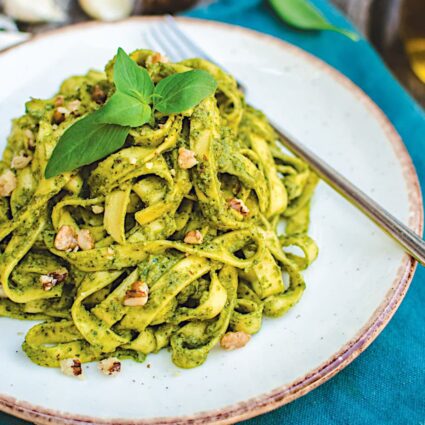
Introduction: The Essence of Fresh Italian Cooking
Few dishes capture the beauty of simple, ingredient-driven cooking quite like Basil Pesto Fettuccine. With its vibrant green color, aromatic basil fragrance, silky olive oil richness, and perfectly cooked ribbons of pasta, this dish represents the heart of Italian culinary tradition. It is elegant yet uncomplicated, luxurious yet rooted in rustic simplicity.
Pesto is a sauce that celebrates freshness. Made with basil, garlic, nuts, cheese, and olive oil, it transforms everyday pasta into something deeply satisfying. When tossed with tender fettuccine, the result is a harmonious balance of herbaceous brightness, nutty depth, and savory richness. This recipe is ideal for weeknight dinners, special occasions, or professional website publication, offering both authenticity and visual appeal.
Why This Recipe Works
This Basil Pesto Fettuccine recipe stands out for several reasons:
- It uses fresh, high-quality ingredients.
- The sauce requires no cooking, preserving the brightness of the basil.
- The texture is creamy without relying on heavy cream.
- It can be customized with protein or vegetables.
- It is naturally vegetarian and easily adaptable.
The key to excellence lies in ingredient quality and proper technique. Because pesto contains only a handful of ingredients, each one must shine.
Ingredients
For the Pasta
- 12 ounces (340 g) fettuccine pasta
- 1 tablespoon salt (for boiling water)
For the Basil Pesto
- 2 packed cups fresh basil leaves (washed and thoroughly dried)
- 2–3 garlic cloves
- 1/3 cup toasted pine nuts or walnuts
- 1/2 cup freshly grated Parmesan cheese
- 1/2 cup extra virgin olive oil (high quality)
- 1–2 tablespoons fresh lemon juice (optional but recommended)
- Salt to taste
- Freshly ground black pepper to taste
Optional Garnishes
- Extra grated Parmesan
- Toasted nuts
- Fresh basil leaves
- A light drizzle of olive oil
Choosing the Best Ingredients
Fresh Basil
Use bright green leaves with no dark spots. Avoid wilted or bruised basil. Drying the leaves thoroughly after washing is essential to prevent the pesto from becoming watery.
Olive Oil
Extra virgin olive oil provides both richness and fruitiness. Since it makes up a large portion of the sauce, choose one with a balanced flavor rather than an overly bitter variety.
Cheese
Freshly grated Parmesan melts seamlessly into the sauce and enhances its savory depth. Avoid pre-shredded cheese, as it often contains anti-caking agents that affect texture.
Nuts
Traditional pesto uses pine nuts, but walnuts offer a more affordable and slightly earthier alternative. Toasting the nuts intensifies their flavor and adds depth.
Step-by-Step Instructions
Step 1: Toast the Nuts
In a dry skillet over medium heat, toast the pine nuts or walnuts for 3–5 minutes, stirring frequently. Remove immediately once fragrant and lightly golden. Allow to cool completely.
Step 2: Cook the Pasta
Bring a large pot of water to a rolling boil. Add salt generously; the water should taste slightly salty like the sea. Add the fettuccine and cook according to package instructions until al dente.
Before draining, reserve 1 cup of pasta cooking water. This starchy liquid will help bind the sauce to the pasta.
Drain the pasta but do not rinse it.
Step 3: Prepare the Pesto
In a food processor, combine the basil leaves, garlic, and toasted nuts. Pulse several times until coarsely chopped.
Add the grated Parmesan and pulse again.
With the processor running, slowly drizzle in the olive oil until the mixture becomes smooth and creamy. Scrape down the sides as needed.
Season with salt, black pepper, and lemon juice if using. Taste and adjust seasoning.
Step 4: Combine Pasta and Sauce
Place the hot drained pasta in a large mixing bowl. Add the pesto and toss gently to coat.
Add small amounts of reserved pasta water, one tablespoon at a time, until the sauce becomes silky and evenly coats every strand.
Serve immediately.
Texture and Flavor Profile
The finished dish should have:
- Silky, lightly glossy pasta
- A bright herbal aroma
- Balanced saltiness from cheese
- Subtle garlic warmth
- Nutty undertones
- Fresh, clean finish
The sauce should cling to the pasta rather than pool at the bottom of the bowl.
Professional Presentation Tips
For a polished website-ready presentation:
- Twirl the fettuccine into a tall nest using tongs.
- Garnish with whole basil leaves.
- Sprinkle lightly with toasted nuts for texture contrast.
- Finish with freshly grated Parmesan and a drizzle of olive oil.
Serve in wide, shallow bowls to highlight the vibrant green color.
Variations and Additions
Add Protein
- Grilled chicken slices
- Sautéed shrimp
- Pan-seared salmon
- Roasted chickpeas
Add Vegetables
- Cherry tomatoes
- Sautéed zucchini
- Roasted asparagus
- Steamed green beans
Make It Creamier
Stir in 2–3 tablespoons of mascarpone or a splash of heavy cream for a richer texture.
Make It Vegan
Replace Parmesan with nutritional yeast and a tablespoon of lemon zest for brightness.
Storage and Reheating
Storing Pesto
Store pesto in an airtight container in the refrigerator for up to 5 days. Pour a thin layer of olive oil on top to prevent oxidation.
Freezing
Freeze pesto in ice cube trays for convenient portioning. Once frozen, transfer cubes to a freezer-safe bag and store for up to 3 months.
Reheating Pasta
Reheat gently over low heat with a splash of water or olive oil. Avoid high heat to preserve the fresh basil flavor.
Common Mistakes to Avoid
- Using wet basil leaves
- Overprocessing the pesto
- Adding too much garlic
- Skipping the pasta water
- Overcooking the pasta
Attention to detail ensures restaurant-quality results.
Nutritional Highlights
This dish offers:
- Healthy fats from olive oil and nuts
- Calcium and protein from Parmesan
- Antioxidants from fresh basil
- Complex carbohydrates from pasta
When enjoyed in moderation and paired with a fresh salad, it becomes a balanced and satisfying meal.
Serving Suggestions
Pair Basil Pesto Fettuccine with:
- A crisp green salad with lemon vinaigrette
- Garlic bread
- Roasted vegetables
- Sparkling water with lemon
- Light white wine
This dish is best served immediately while warm and fragrant.
Frequently Asked Questions
Can I make pesto without a food processor?
Yes. Use a mortar and pestle for a more traditional texture.
Why did my pesto turn dark?
Exposure to air causes oxidation. Cover with olive oil or plastic wrap pressed directly onto the surface.
Can I use dried basil?
Fresh basil is essential for authentic pesto flavor. Dried basil will not produce the same result.
Conclusion
Basil Pesto Fettuccine is more than just pasta with green sauce. It is a celebration of freshness, simplicity, and thoughtful cooking. With only a few high-quality ingredients and proper technique, you can create a dish that feels refined yet comforting. Its vibrant color, aromatic profile, and satisfying texture make it a standout recipe for both home kitchens and professional food websites.
Whether served as a quick family dinner or presented elegantly for guests, this recipe proves that sometimes the most memorable dishes are built on simplicity. Master the technique once, and you will return to this timeless classic again and again.