
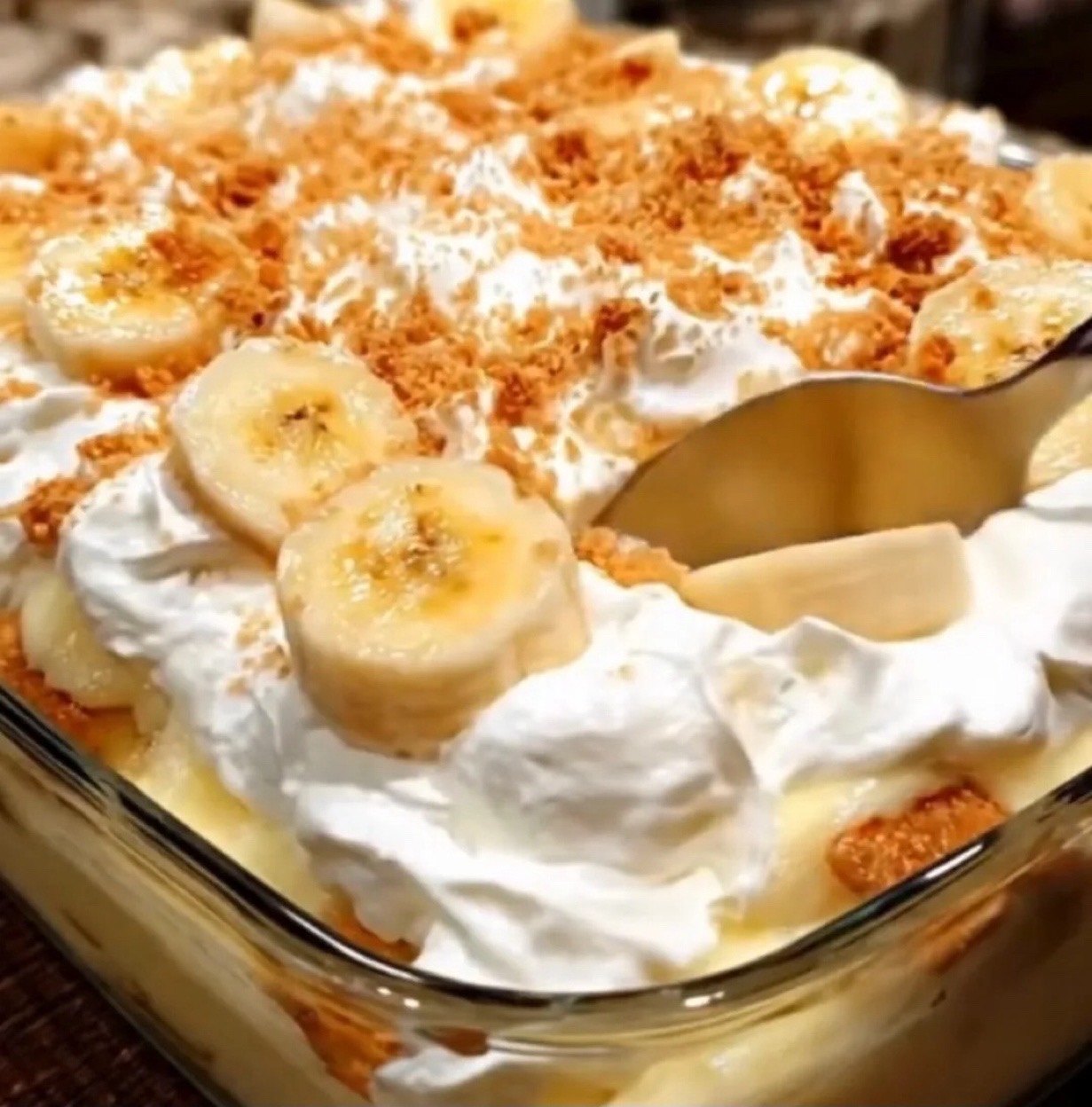
Classic Southern Banana Pudding
A Timeless Dessert of Creamy Custard, Sweet Bananas, and Vanilla Wafers
Introduction: The Soul of Southern Desserts
Few desserts are as deeply rooted in Southern American food culture as classic banana pudding. More than just a sweet treat, banana pudding represents comfort, family gatherings, church potlucks, summer picnics, and Sunday dinners where recipes are passed down through generations. It is a dessert that feels nostalgic even on the first bite, combining layers of silky vanilla custard, ripe bananas, and soft vanilla wafers that meld together into something far greater than the sum of its parts.
Classic Southern banana pudding is not complicated, yet it requires care, patience, and respect for tradition. Unlike quick refrigerator versions made with instant pudding, authentic banana pudding is built on a homemade custard made from egg yolks, milk, sugar, and flour, cooked gently until thick and smooth. The pudding is then layered with bananas and wafers, allowed to rest so the flavors can marry, and often finished with a delicate meringue topping.
This recipe honors the traditional Southern method while offering modern guidance to ensure perfect results every time. Whether you are making banana pudding for the first time or recreating a cherished family recipe, this guide will walk you through every step in detail.
A Brief History of Banana Pudding
Banana pudding became popular in the United States in the late 19th and early 20th centuries, when bananas became more widely available thanks to improved transportation and trade. The introduction of vanilla wafers, particularly in the early 1900s, helped solidify the dessert’s classic form.
Southern cooks embraced banana pudding because it was affordable, filling, and could be made in large quantities. Over time, it became a staple at community gatherings and family celebrations. While variations exist, the traditional Southern version relies on homemade custard rather than boxed pudding, setting it apart with richer flavor and a softer, more luxurious texture.
What Makes a Truly Classic Banana Pudding?
A classic Southern banana pudding has several defining characteristics:
- A cooked vanilla custard made from scratch
- Ripe bananas sliced fresh
- Vanilla wafers that soften into cake-like layers
- Gentle sweetness balanced by dairy richness
- A soft, creamy texture rather than a stiff or gelatinous one
Optional but traditional elements include a baked meringue topping or serving the pudding warm before chilling.
Ingredients for the Pudding
For the Homemade Custard
- ½ cup granulated sugar
- ¼ cup all-purpose flour
- ¼ teaspoon fine sea salt
- 3 large egg yolks
- 2 cups whole milk
- 1 tablespoon unsalted butter
- 1½ teaspoons pure vanilla extract
For Assembly
- 4 to 5 ripe bananas, sliced
- 1 box vanilla wafers (approximately 11 ounces)
Optional Meringue Topping
- 3 large egg whites
- ¼ cup granulated sugar
- ¼ teaspoon cream of tartar
- ½ teaspoon vanilla extract
Ingredient Notes and Selection Tips
Bananas
Choose bananas that are ripe but not overly soft. They should be yellow with a few brown speckles. Overripe bananas will become mushy and overly sweet, while underripe bananas will lack flavor.
Milk
Whole milk is essential for a rich custard. Lower-fat milk can be used, but the pudding will be less creamy.
Vanilla Wafers
Traditional vanilla wafers are key to the authentic texture. As the pudding rests, the wafers absorb moisture and soften beautifully.
Eggs
Fresh eggs are important, especially if using a meringue topping. Separate eggs carefully to avoid yolk contamination in the whites.
Equipment Needed
- Medium heavy-bottom saucepan
- Whisk
- Mixing bowls
- Heatproof spatula
- 9×13-inch baking dish or trifle bowl
- Electric mixer (for meringue, optional)
Step-by-Step Instructions
Step 1: Prepare the Custard Base
In a medium saucepan, whisk together the sugar, flour, and salt until well combined. This step helps prevent lumps later.
In a separate bowl, lightly whisk the egg yolks. Slowly add about half a cup of the milk to the yolks while whisking constantly. This tempers the eggs and prevents scrambling.
Gradually pour the egg mixture into the saucepan with the dry ingredients. Add the remaining milk and whisk until smooth.
Step 2: Cook the Custard
Place the saucepan over medium heat. Cook the mixture, whisking constantly, until it begins to thicken. This process usually takes 8 to 10 minutes.
Once the custard thickens and begins to bubble gently, continue cooking for another 1 to 2 minutes to ensure the flour is fully cooked. The custard should coat the back of a spoon.
Remove the pan from heat. Stir in the butter and vanilla extract until fully incorporated. The custard should be smooth, glossy, and fragrant.
Step 3: Assemble the Layers
In the bottom of your serving dish, arrange a single layer of vanilla wafers. Top with a layer of sliced bananas, spacing them evenly.
Pour one-third of the warm custard over the bananas, spreading gently to cover. Repeat the layers two more times, finishing with custard on top.
This layering technique ensures even distribution of flavors and textures throughout the pudding.
Step 4: Prepare the Meringue (Optional)
If using a meringue topping, preheat your oven to 375°F (190°C).
In a clean mixing bowl, beat the egg whites with cream of tartar until soft peaks form. Gradually add the sugar while continuing to beat until stiff, glossy peaks form. Beat in the vanilla extract.
Spread the meringue over the warm pudding, sealing it to the edges of the dish to prevent shrinking.
Bake for 8 to 10 minutes, or until the meringue is lightly browned.
Step 5: Chill and Set
Allow the banana pudding to cool slightly at room temperature, then refrigerate for at least 4 hours, preferably overnight. This resting time allows the wafers to soften and the flavors to fully develop.
Serving Suggestions
Classic Southern banana pudding can be served chilled or slightly warm, depending on preference. It is often served directly from the baking dish, emphasizing its rustic charm.
For special occasions, individual portions can be layered in glass cups or jars for an elegant presentation.
Storage and Make-Ahead Tips
- Store banana pudding covered in the refrigerator for up to 3 days.
- The bananas may darken slightly over time, but the flavor remains excellent.
- For best texture, assemble the pudding no more than 24 hours in advance.
Common Mistakes and How to Avoid Them
Lumpy Custard
Whisk constantly and cook over medium heat. Straining the custard is an option if lumps form.
Watery Pudding
Ensure the custard reaches a full simmer and thickens properly before removing from heat.
Mushy Bananas
Use ripe but firm bananas and avoid slicing them too far in advance.
Variations While Staying Classic
- Add a touch of nutmeg to the custard for warmth
- Use a combination of vanilla wafers and shortbread cookies
- Top with whipped cream instead of meringue
Why Homemade Custard Makes the Difference
Homemade custard delivers depth, richness, and authenticity that instant pudding cannot replicate. The gentle cooking process allows the vanilla and dairy flavors to bloom, creating a pudding that is silky and satisfying.
This extra effort transforms banana pudding from a simple dessert into a memorable one.
Final Thoughts
Classic Southern banana pudding is a celebration of simplicity, tradition, and comfort. With humble ingredients and careful preparation, it becomes a dessert that tells a story and brings people together.
Whether served at a family gathering or enjoyed quietly at home, this timeless pudding offers warmth, nostalgia, and undeniable flavor in every spoonful.
By following this detailed guide, you can confidently create an authentic Southern banana pudding that honors tradition while delivering perfect results every time.