
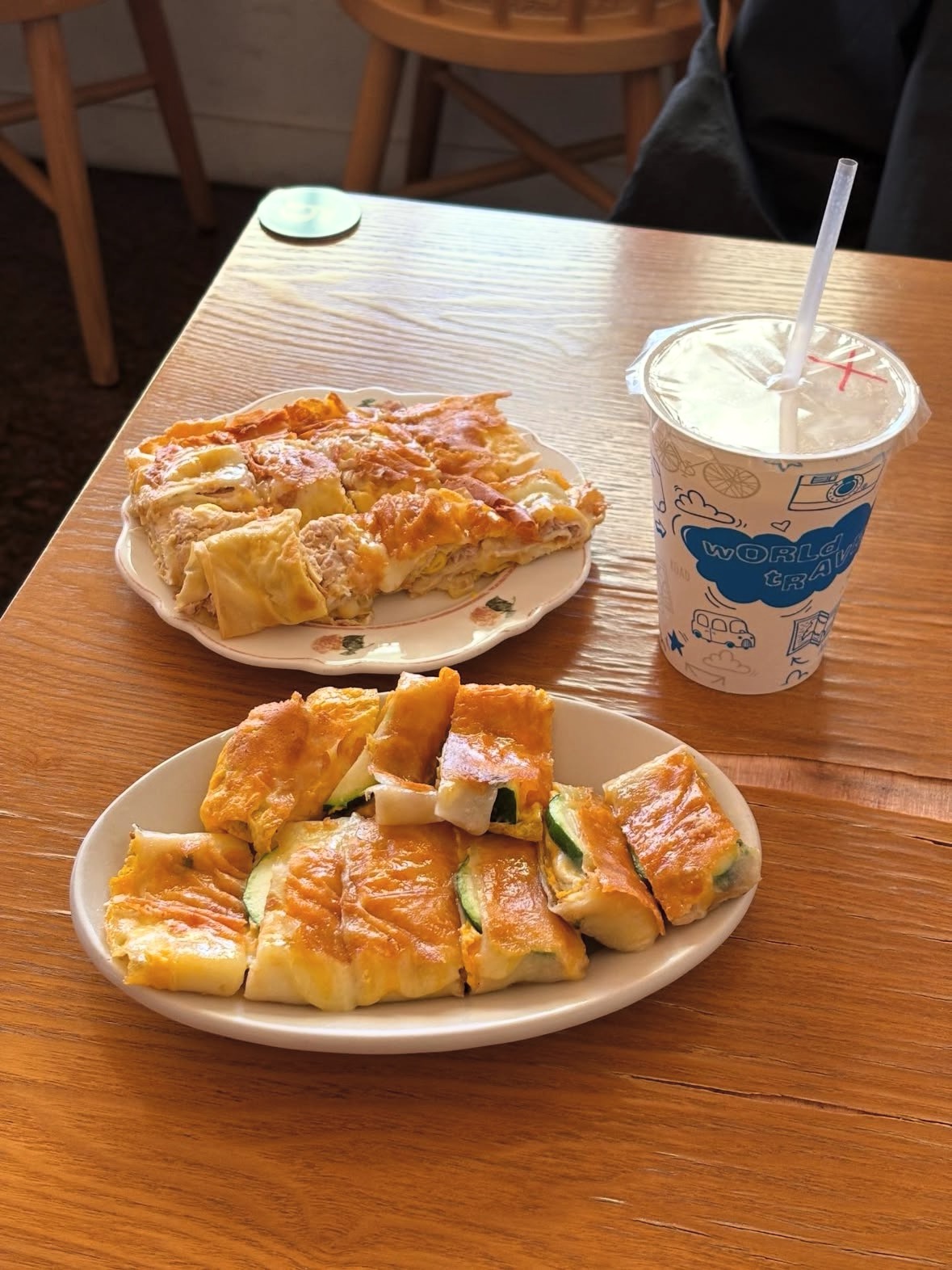
The image shows a delightful Japanese-inspired rolled egg omelette (similar to tamagoyaki or a fusion variation), sliced into bite-sized pieces and served on two plates. One plate features a larger, thicker roll with visible layers of egg enclosing fillings like ham or sausage, cheese (melted or shredded on top with a golden, bubbly finish), and possibly other ingredients, giving it a hearty, casserole-like appearance. The second plate displays thinner, crepe-style rolls wrapped around fresh cucumber slices (and possibly zucchini or other veggies), creating crisp, colorful bites with a lighter, refreshing contrast. Accompanied by a takeaway cup (likely iced tea or a beverage from a travel-themed cafe), this looks like a casual cafe or home-style meal blending savory egg layers, juicy meats, creamy cheese, and crunchy vegetables.
This dish fuses elements of classic Japanese tamagoyaki (sweet-savory rolled omelette) with Korean gyeran mari influences and modern additions like cheese and fresh veggies for extra texture and appeal. It’s perfect as a breakfast, brunch item, bento box filler, snack, or light lunch—high in protein, customizable, and visually appealing when sliced to reveal the layers.
Below is a comprehensive, website-ready recipe expanded for home cooks. It serves 4-6 as a main or side (makes 2 large rolls or multiple smaller ones), with detailed steps, variations, tips, history, nutrition, and serving ideas.
Ingredients
For the egg base (makes enough for 2 medium-large rolls):
- 8-10 large eggs (use 4-5 per roll depending on pan size)
- 4-6 tablespoons dashi stock (or water mixed with 1 teaspoon hondashi/powdered dashi for umami)
- 1-2 tablespoons mirin (for subtle sweetness and shine)
- 1-2 teaspoons soy sauce (light or regular; adjust for saltiness)
- 1 teaspoon sugar (optional, for classic tamagoyaki sweetness)
- ½ teaspoon salt (or to taste)
- ½ teaspoon white pepper or black pepper (optional)
- 1-2 teaspoons sesame oil or neutral oil (for flavor and pan greasing)
For the fillings (mix and match based on preference):
- 100-150g ham, thinly sliced or chopped (or luncheon meat/spam for konbini style)
- 100-150g sausage (cocktail sausages, hot dogs sliced, or Japanese wiener sausages), lightly cooked
- 1 medium zucchini, thinly sliced lengthwise or grated (for moisture and texture)
- 1-2 cucumbers, cut into thin sticks or slices (English or Persian for less seeds)
- 100-150g cheese (shredded cheddar, mozzarella, processed slices, or a mix; for melting)
- Optional extras: finely chopped green onions, carrots (julienned), bell peppers, nori strips, or spinach
For cooking:
- 2-3 tablespoons neutral oil (vegetable, canola, or grapeseed) for the pan
- Butter or extra oil for greasing (helps with rolling)
Tools recommended:
- Rectangular tamagoyaki pan (makiyaki-nabe) if available; otherwise, a 20-25 cm non-stick frying pan or crepe pan
- Chopsticks or fork for beating and rolling
- Spatula (thin and flexible)
- Sharp knife for slicing
Preparation Tips Before Cooking
Success depends on thin, even egg layers and gentle rolling. Use room-temperature eggs for better incorporation. Beat eggs gently—avoid too much air to prevent fluffiness that makes rolling hard.
Slice fillings thinly and uniformly so they don’t tear the egg. Pre-cook meats lightly (pan-fry sausages/ham for 2-3 minutes) to remove excess moisture and prevent sogginess. Pat vegetables dry.
Practice rolling on low-medium heat; high heat browns too fast and cracks layers. Keep the pan lightly oiled between layers—wipe with an oiled paper towel.
Step-by-Step Instructions
- Prepare the egg mixture: In a bowl, crack the eggs and whisk until fully combined but not overly frothy (use chopsticks in a circular motion for Japanese style). Add dashi (or hondashi-water mix), mirin, soy sauce, sugar, salt, and pepper. Strain through a fine sieve for smoother texture (removes chalaza bits). Divide into two bowls if making two rolls.
- Prep fillings: Slice zucchini and cucumber thinly (use a mandoline for evenness). Cut ham/sausage into small pieces or strips. Shred or slice cheese. Have everything ready near the stove.
- Heat the pan: Place pan over medium-low heat. Add ½ teaspoon oil and wipe with oiled paper towel to create a thin film. The pan should be hot but not smoking.
- Cook the first layer: Pour a thin layer of egg mixture (about ¼-⅓ cup) into the pan. Tilt to spread evenly. Let set for 20-40 seconds until edges firm but center is still slightly wet.
- Add fillings (for hearty version): Sprinkle or layer ham/sausage, cheese, zucchini, and green onions on the near side (bottom third). For lighter cucumber version, add cucumber sticks and minimal cheese/meat.
- Roll the first layer: Use chopsticks or spatula to lift the near edge and roll tightly toward the far side. Push the roll to the near side of the pan.
- Add next layers: Re-oil pan lightly. Pour another thin layer of egg, lifting the roll slightly to let egg flow underneath. Let set, add more fillings if desired, then roll again (incorporating previous roll). Repeat 4-6 times until egg mixture is used and roll is thick (about 5-7 cm diameter).
- Shape and finish: For golden top (as in photo), flip roll briefly or broil 1-2 minutes. Or brush with extra mirin/soy for shine. Rest 2-3 minutes on cutting board.
- Slice and serve: Cut into 2-3 cm thick pieces. Arrange cut-side up to show layers. For cheesy version, add extra cheese on top and melt under broiler before slicing.
Serve warm or at room temperature—great cold for bento.
Tips for Perfect Results
- Low heat is key: Prevents burning and allows even cooking/rolling.
- Don’t overfill: Too much causes bursting or uneven rolls.
- Practice makes perfect: First attempts may be irregular—still tasty!
- Make ahead: Roll fully, cool, wrap, and refrigerate up to 2 days. Reheat gently in microwave or pan.
- Pan substitute: Round pan works; shape into log after cooking.
- Texture: For fluffier, add 1 tablespoon milk per 4 eggs. For denser, use less liquid.
Nutritional Information (Approximate per serving, based on 6 servings)
- Calories: 250-350
- Protein: 18-25g (eggs, meat, cheese)
- Carbohydrates: 5-10g (low from veggies/sauces)
- Fat: 18-25g (from eggs, cheese, oil)
- Fiber: 1-2g (from zucchini/cucumber)
High-protein, low-carb option; customizable for keto by skipping sugar/mirin.
History and Cultural Notes
Tamagoyaki (“fried egg”) is a staple in Japanese cuisine since the Edo period, often in bento, sushi sets, or breakfast. Traditional versions are sweet-savory with dashi, mirin, sugar. Korean gyeran mari is similar but more vegetable-focused and savory. Modern cafe/konbini versions add cheese, ham, sausage for fusion appeal—popular in urban Japan and Asian-inspired spots worldwide. Cucumber/zucchini adds freshness, common in light summer variations or low-carb twists.
This recipe captures cafe-style indulgence with layered textures: soft egg, melty cheese, savory meat, crisp veggies.
Variations to Try
- Classic sweet tamagoyaki: Increase sugar/mirin, omit meat/cheese.
- Vegetarian: Use tofu, mushrooms, extra veggies; skip meat.
- Spicy: Add chili flakes, sriracha, or kimchi.
- Seafood: Include shrimp, crab, or smoked salmon.
- Korean-style: More carrots, green onions, seaweed.
- Low-carb crepe version: Make thinner layers, focus on cucumber/zucchini wraps.
Serving Suggestions
- Breakfast: With rice, miso soup, grilled fish.
- Brunch: Alongside salad, fruit, iced coffee/tea.
- Bento: Pack with onigiri, pickled veggies.
- Snack: Slice small, serve with soy dipping sauce.
- Pairings: Green tea, iced lemon tea, or light beer.
This rolled egg omelette is versatile, nutritious, and fun to make—impressive presentation from simple ingredients. Adjust fillings to taste and enjoy the process of layering and rolling!