
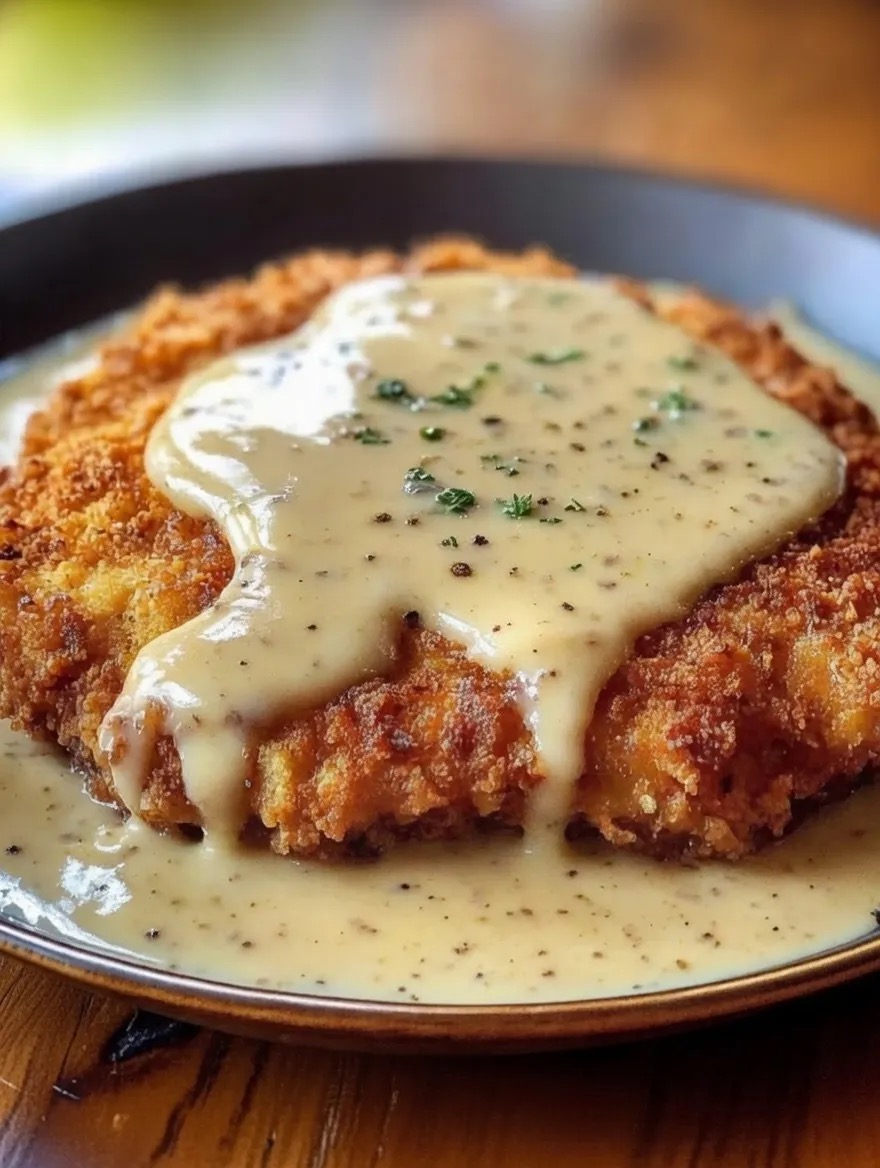
Ingredients (Serves 4)
For the Chicken Fried Steak:
- 4 cube steaks (about 1/3 to 1/2 pound each, roughly 1/2-inch thick; eye of round or top round that’s been mechanically tenderized)
- 1 1/2 cups all-purpose flour (divided for dredging and gravy)
- 1 teaspoon garlic powder
- 1 teaspoon onion powder
- 1 teaspoon paprika (smoked or sweet)
- 1 1/2 teaspoons kosher salt (plus more for seasoning)
- 1 teaspoon freshly ground black pepper (plus extra for gravy)
- 1/2 teaspoon cayenne pepper (optional, for a subtle heat)
- 1/2 teaspoon baking powder (helps create a lighter, crispier crust)
- 2 large eggs
- 1/4 cup whole milk or buttermilk
- 1/2 cup vegetable oil or canola oil (for frying; enough to reach about 1/4-inch depth in the pan)
- Optional: 1 tablespoon unsalted butter (added to oil for extra flavor)
For the Creamy Country Gravy:
- 1/4 cup pan drippings/oil from frying (or reserved seasoned flour mixture)
- 3–4 tablespoons all-purpose flour (from the dredging mix or plain)
- 2–2 1/2 cups whole milk (or a mix of milk and evaporated milk for richer texture)
- 1/2 teaspoon kosher salt (adjust to taste)
- 1 teaspoon freshly ground black pepper (freshly cracked is best for bold flavor)
- Optional: Dash of hot sauce or Worcestershire sauce for depth
Equipment Needed
- Large skillet or cast-iron pan (for frying)
- Shallow dishes or pie plates (for dredging stations)
- Tongs or fork (for handling steaks)
- Wire rack set over a baking sheet (to drain fried steaks)
- Whisk
- Meat mallet (if steaks need extra tenderizing)
Step-by-Step Instructions
1. Prepare the Steaks
Start by patting the cube steaks dry with paper towels. This removes excess moisture, helping the coating adhere better and preventing sogginess during frying. If your cube steaks aren’t pre-tenderized enough (some grocery versions are lightly pounded), place them between two sheets of plastic wrap or parchment paper and gently pound them with a meat mallet to about 1/4-inch thickness. This breaks down tough fibers without tearing the meat.
Season both sides of each steak generously with salt and black pepper. Let them sit at room temperature for 15–20 minutes while you prepare the dredging stations. This allows the seasoning to penetrate and brings the meat closer to even cooking temperature.
2. Set Up the Dredging Stations
Create a classic three-step breading process for the crispiest results:
- Station 1 (Dry Flour Mix): In a shallow dish or pie plate, whisk together 1 1/2 cups all-purpose flour, garlic powder, onion powder, paprika, 1 1/2 teaspoons kosher salt, 1 teaspoon black pepper, cayenne (if using), and baking powder. The baking powder is a small but key addition—it reacts with the moisture to produce tiny air pockets for extra crunch.
- Station 2 (Egg Wash): In another shallow dish, beat the eggs with the 1/4 cup milk or buttermilk until smooth. Buttermilk adds tang and tenderness, mimicking traditional Southern recipes.
- Station 3 (Final Flour): Reserve about 1/2 cup of the seasoned flour mixture in a separate bowl for the gravy later, or simply use the main mix again for the final dredge.
3. Bread the Steaks
Work with one steak at a time to keep things organized:
Dip the seasoned steak into the flour mixture, pressing firmly to coat both sides and edges. Shake off excess flour—this prevents clumping.
Next, dip it into the egg wash, letting excess drip off.
Finally, return it to the flour mixture for a second coating. Press the flour in well, especially around the edges, to create a thick, even crust. Gently shake off any loose flour.
Place the breaded steak on a plate or wire rack and repeat with the remaining pieces. For best results, let the breaded steaks rest for 10–15 minutes. This resting period allows the coating to set and adhere, reducing the chance of it falling off during frying.
4. Fry the Steaks
Heat the oil (and optional butter) in a large cast-iron skillet or heavy-bottomed pan over medium-high heat until it reaches 350°F (use a thermometer for accuracy; too low and the coating absorbs oil, too high and it burns). The oil should be about 1/4-inch deep.
Carefully add 1–2 steaks at a time (don’t overcrowd the pan, as this drops the temperature). Fry for 3–5 minutes per side, until the coating is deep golden brown and crispy. The internal temperature of the steak should reach 160°F for medium doneness, but since cube steak is thin, it cooks quickly—aim for juicy, not overdone.
Use tongs to flip gently, avoiding piercing the coating. Once done, transfer to a wire rack over a baking sheet to drain excess oil and stay crisp. Keep warm in a 200°F oven if frying in batches.
5. Make the Creamy Gravy
Pour off all but 1/4 cup of the hot oil/drippings from the pan (leave the flavorful browned bits—those are gold for gravy). Reduce heat to medium.
Whisk in 3–4 tablespoons of the reserved seasoned flour (or plain flour). Cook, stirring constantly, for 1–2 minutes to form a roux and cook out the raw flour taste.
Gradually pour in the milk while whisking vigorously to prevent lumps. Bring to a gentle simmer, stirring frequently. The gravy will thicken as it cooks—aim for a pourable but creamy consistency, about 5–8 minutes.
Season with salt, plenty of freshly ground black pepper, and optional hot sauce or Worcestershire for extra depth. Taste and adjust; the gravy should be boldly peppery, a hallmark of great country gravy. If it thickens too much, thin with a splash more milk.
6. Serve
Plate the hot chicken fried steaks and generously ladle the gravy over the top. The contrast of crispy coating against silky gravy is irresistible.
Classic sides include creamy mashed potatoes (to soak up extra gravy), buttered green beans, collard greens, biscuits, or corn on the cob. For a full Southern meal, add a side of fried okra or a simple salad.
Tips for Success
- Crispy Coating: Double-dredging and resting are non-negotiable for texture. Avoid pressing too hard when coating to prevent tough spots.
- Oil Temperature: Maintain 325–350°F. If it drops too low, the steaks absorb oil and become greasy.
- Gravy Consistency: Start with less milk and add gradually. It thickens more as it sits.
- Make-Ahead: Bread the steaks ahead and refrigerate up to 4 hours. Fry fresh for best crunch.
- Variations: For extra flavor, add a dash of cayenne to the flour or use buttermilk in the egg wash. Some recipes incorporate cornstarch for even lighter crispiness.
- Storage: Leftovers keep in the fridge for 2–3 days. Reheat steaks in a 375°F oven to crisp up (microwave makes them soggy). Gravy reheats on the stovetop with added milk.
A Bit of History and Cultural Significance
Chicken fried steak has deep roots in Southern and Texan cuisine, often tied to German immigrants who adapted Wiener schnitzel using affordable beef cuts in the late 19th and early 20th centuries. It gained popularity in rural areas where tough beef needed tenderizing and flavorful preparation. By the mid-20th century, it became a diner staple across the South and Midwest, symbolizing hearty, no-fuss home cooking. Today, it’s celebrated in states like Texas and Oklahoma, even featured in official state meals or designated days.
This dish embodies comfort: economical ingredients turned into something special through technique and seasoning. Whether for a weeknight dinner or Sunday supper, chicken fried steak with gravy delivers satisfaction in every bite.