
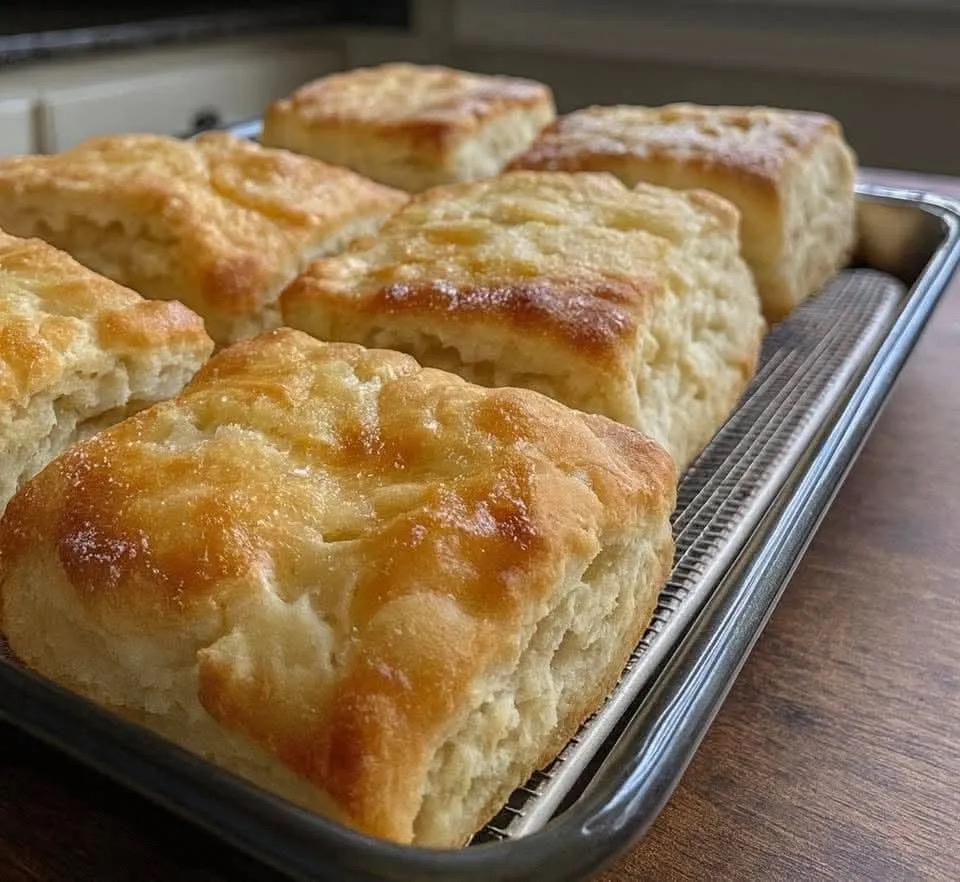
Fluffy Buttery Square Biscuits (Soft, Golden & Homemade Style)
Introduction
Fluffy buttery square biscuits are one of the most comforting baked goods you can make at home. They are soft on the inside, slightly crisp on the outside, and layered with rich buttery flavor in every bite. Unlike traditional round biscuits, square biscuits are easier to cut, require no re-rolling of dough scraps, and bake evenly with minimal effort. This makes them a perfect choice for both beginner bakers and experienced home cooks looking for a quick, reliable recipe.
What makes these biscuits truly special is their texture. The combination of cold butter, baking powder, and buttermilk creates a light, airy structure that rises beautifully in the oven. When baked correctly, the biscuits develop a golden top while staying tender and fluffy inside. Brushing them with melted butter right after baking enhances their flavor and gives them a soft, glossy finish.
These biscuits are extremely versatile. They can be served as a breakfast side, paired with soups and stews, used for sandwiches, or enjoyed simply with butter, jam, or honey. Their neutral flavor allows them to complement both sweet and savory dishes.
This recipe is designed to be simple, reliable, and easy to follow, with detailed explanations to help you understand every step of the process.
Ingredients
To make fluffy buttery square biscuits, you will need the following ingredients:
- 2 cups all-purpose flour
- 1 tablespoon baking powder
- 1 tablespoon sugar (optional, for slight sweetness and better browning)
- 1 teaspoon salt
- 1/2 cup cold butter, cut into small cubes (plus extra for brushing)
- 3/4 cup cold buttermilk
Understanding the Ingredients
Each ingredient plays a specific role in achieving the perfect biscuit texture.
All-Purpose Flour
Flour provides the structure of the biscuits. It forms the base that holds everything together. Using all-purpose flour ensures a balanced texture that is neither too dense nor too soft.
Baking Powder
Baking powder is the main leavening agent. It creates air pockets in the dough, allowing the biscuits to rise and become fluffy. Without it, the biscuits would be flat and dense.
Sugar
Sugar is optional in this recipe. It adds a slight sweetness and helps the biscuits develop a golden-brown color during baking. Even a small amount improves flavor and appearance.
Salt
Salt enhances all the other flavors and balances the richness of the butter. It is essential even in small quantities.
Butter
Cold butter is the key to flaky, layered biscuits. When the butter melts in the oven, it creates steam, which forms pockets of air inside the dough. This is what gives biscuits their soft, layered texture.
Buttermilk
Buttermilk adds moisture, tenderness, and a slight tangy flavor. It also reacts with baking powder to help the biscuits rise more effectively. Cold buttermilk is important to maintain the dough’s temperature and texture.
Equipment Needed
Before starting, prepare the following kitchen tools:
- Large mixing bowl
- Measuring cups and spoons
- Pastry cutter or fork (or hands for mixing)
- Rolling pin
- Sharp knife or dough cutter
- Baking tray
- Parchment paper (optional but recommended)
Preparation Overview
Making biscuits involves a few key stages:
- Mixing dry ingredients
- Cutting in cold butter
- Adding buttermilk
- Forming and folding dough
- Cutting into squares
- Baking until golden
- Brushing with butter
Each step is important for achieving the perfect texture.
Step-by-Step Instructions
Step 1: Prepare the Dry Ingredients
In a large mixing bowl, combine the flour, baking powder, sugar, and salt. Mix thoroughly using a whisk or spoon to ensure even distribution.
This step is important because it ensures that the leavening agent is evenly spread throughout the flour. Uneven mixing can lead to inconsistent rising.
Step 2: Cut in the Cold Butter
Add the cold cubed butter into the flour mixture. Using a pastry cutter, fork, or your fingertips, work the butter into the flour until the mixture resembles coarse crumbs.
You should still see small pieces of butter throughout the dough. These butter pieces are essential for creating flaky layers. Avoid overmixing, as the butter should remain cold and solid.
If the butter begins to soften too much, place the bowl in the refrigerator for a few minutes before continuing.
Step 3: Add the Buttermilk
Slowly pour in the cold buttermilk while gently mixing the dough. Stir just until the dough begins to come together.
Do not overmix. The dough should look slightly shaggy and uneven. Overworking the dough can result in tough biscuits.
If the dough feels too dry, add a small splash of buttermilk. If it feels too sticky, add a light dusting of flour.
Step 4: Form the Dough
Transfer the dough onto a lightly floured surface. Gently bring it together with your hands into a rough rectangle shape.
At this stage, avoid kneading the dough like bread. Instead, press and shape it gently to maintain softness.
Step 5: Create Layers (Folding Technique)
To create flaky layers, fold the dough over itself 2 to 3 times. Press it down gently after each fold.
This folding technique builds layers of butter and dough, which will expand during baking and create a fluffy interior.
Step 6: Roll and Shape the Dough
Roll the dough into a rectangle about 1 to 1.5 inches thick. Try to keep the thickness even so the biscuits bake uniformly.
Square biscuits are easier than round ones because you do not need to re-roll scraps. Simply cut the dough into even squares using a sharp knife or dough cutter.
Step 7: Arrange on Baking Tray
Place the biscuit squares onto a baking tray lined with parchment paper. Leave a small space between each piece to allow for expansion during baking.
For softer sides, you can place them closer together so they rise into each other. For crispier edges, space them apart.
Step 8: Bake the Biscuits
Preheat your oven to a high temperature, typically around 425°F (220°C).
Bake the biscuits for 12 to 15 minutes or until they are golden brown on top and fully risen.
Avoid opening the oven door too early, as this can cause the biscuits to collapse.
Step 9: Brush with Butter
Once the biscuits are removed from the oven, immediately brush the tops with melted butter.
This step adds extra flavor, enhances softness, and gives the biscuits a beautiful glossy finish.
Texture and Flavor Description
Properly baked square biscuits should have:
- A golden, slightly crisp exterior
- A soft, fluffy, layered interior
- A rich buttery aroma
- A light, tender crumb that pulls apart easily
The flavor is mildly savory with a hint of richness from the butter and a subtle tang from the buttermilk. If sugar is added, there will be a gentle sweetness that complements both sweet and savory toppings.
Serving Suggestions
Fluffy buttery square biscuits are extremely versatile and can be served in many ways.
Breakfast Options
- With scrambled eggs and bacon
- Topped with jam, honey, or butter
- As a base for breakfast sandwiches
Lunch or Dinner
- Served with soups like chicken soup or vegetable stew
- Paired with roasted meats or fried chicken
- Used as a side for creamy sauces
Sweet Variations
- Drizzled with honey or maple syrup
- Served with whipped cream and fruit
- Lightly dusted with powdered sugar
Tips for Perfect Biscuits
- Always use cold butter and cold buttermilk
- Do not overmix the dough
- Handle the dough gently to avoid toughness
- Keep butter pieces visible in the dough for flakiness
- Bake at high temperature for proper rise
- Brush with butter immediately after baking
Common Mistakes to Avoid
Overworking the Dough
This leads to dense, hard biscuits instead of light and fluffy ones.
Warm Butter
If the butter melts before baking, the biscuits will not rise properly.
Incorrect Oven Temperature
A low oven temperature prevents proper rise and browning.
Uneven Thickness
Uneven dough leads to uneven baking, with some biscuits overcooked and others undercooked.
Storage and Reheating
These biscuits are best enjoyed fresh, but they can be stored:
- At room temperature for up to 2 days in an airtight container
- In the refrigerator for up to 5 days
- In the freezer for up to 2 months
To reheat, warm them in the oven at low temperature for a few minutes to restore softness.
Variations
Cheddar Biscuits
Add 1 cup shredded cheddar cheese to the dough for a savory twist.
Garlic Herb Biscuits
Mix in garlic powder, parsley, or rosemary for added flavor.
Sweet Biscuits
Increase sugar slightly and serve with fruit or glaze.
Nutritional Overview (Approximate)
- Moderate calories depending on butter quantity
- Contains carbohydrates from flour
- Rich in fats from butter
- Contains small amounts of protein
Frequently Asked Questions
Can I use milk instead of buttermilk?
Yes, but adding a teaspoon of lemon juice or vinegar to milk can help mimic buttermilk.
Why are my biscuits not fluffy?
Most likely causes are overmixing, warm butter, or low oven temperature.
Can I freeze the dough?
Yes, you can freeze cut biscuits and bake them directly from frozen with a slightly longer baking time.
Conclusion
Fluffy buttery square biscuits are a timeless homemade comfort food that combines simplicity with rich, satisfying flavor. With their soft layers, golden crust, and tender crumb, they are perfect for any meal of the day. Once you master the technique of keeping the butter cold and handling the dough gently, you will be able to produce bakery-quality biscuits right in your own kitchen.
This recipe is not only easy and reliable but also highly adaptable, making it a staple worth keeping in your collection for years to come.