
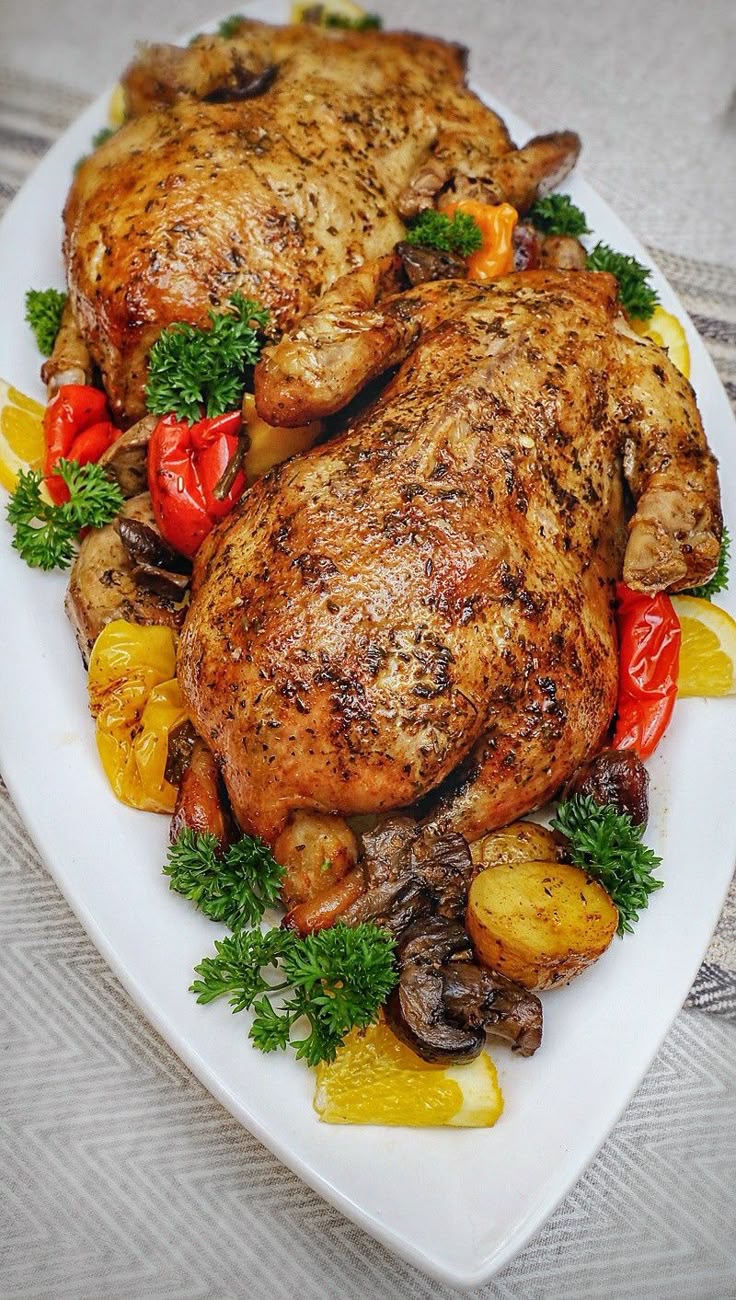
Roasted Chicken with Vegetables (Oven-Roasted Family Style Recipe)
Introduction
Roasted chicken is one of the most timeless and comforting meals in home cooking. It is a dish that brings together simplicity, tradition, and deep flavor in a way few recipes can match. A well-roasted chicken is crispy on the outside, juicy on the inside, and infused with the aroma of herbs, garlic, lemon, and spices. When paired with oven-roasted vegetables, it becomes a complete and satisfying meal suitable for both everyday dinners and special gatherings.
This recipe focuses on a classic whole roasted chicken prepared in the oven at 180°C, slow-roasted to ensure tenderness and rich flavor development. The addition of lemon, garlic, herbs, and vegetables transforms the dish into a balanced one-pan meal that is both practical and delicious.
In this detailed guide, you will learn how to prepare roasted chicken step by step, understand the role of each ingredient, discover seasoning variations, and master techniques that guarantee juicy meat and perfectly cooked vegetables every time.
Why Roasted Chicken Is So Popular
Roasted chicken has remained a staple in many cuisines around the world for several reasons:
First, it is affordable and accessible. A whole chicken can feed a family at a relatively low cost compared to many other protein sources.
Second, it is versatile. You can season it in countless ways, from Mediterranean herbs to spicy marinades or simple salt and pepper combinations.
Third, it is a complete meal when cooked with vegetables. Potatoes, carrots, onions, and other root vegetables absorb the juices from the chicken, creating deep flavor without extra effort.
Finally, roasting is a forgiving cooking method. Unlike frying or grilling, roasting allows even beginners to achieve excellent results with minimal risk.
Ingredients and Their Roles
This recipe uses simple, everyday ingredients that work together to create a balanced flavor profile.
Chicken
A whole chicken is ideal for roasting because it provides both white and dark meat. The skin helps retain moisture while turning golden and crisp in the oven. A chicken weighing between 1.5 kg and 2 kg is ideal for even cooking.
Oil
Oil helps the skin crisp up and prevents dryness. Olive oil is often preferred for its flavor, but vegetable oil also works well. The oil also helps spices stick to the surface of the chicken.
Garlic
Garlic adds depth and aroma. It infuses the meat with a savory richness and complements both lemon and herbs. You can use minced garlic rubbed directly on the chicken or whole cloves placed inside the cavity.
Spices
Spices define the flavor profile of the roasted chicken. Common options include salt, black pepper, paprika, cumin, and a pinch of chili powder. These create a balance of savory, smoky, and slightly spicy notes.
Herbs
Fresh or dried herbs such as thyme, rosemary, oregano, or parsley elevate the dish with a fragrant, earthy aroma. Herbs are essential for giving roasted chicken a restaurant-quality taste.
Lemon
Lemon is a key ingredient that brightens the dish. When placed inside the chicken cavity, it releases steam during roasting, keeping the meat juicy while adding a subtle citrus flavor.
Vegetables
Vegetables such as potatoes, carrots, onions, and zucchini are roasted alongside the chicken. They absorb the flavorful juices, making them tender and delicious while also serving as a complete side dish.
Preparation Overview
Before cooking, preparation is essential. Proper seasoning and arrangement ensure even cooking and rich flavor.
Start by cleaning the chicken thoroughly and patting it dry with paper towels. Removing excess moisture helps the skin crisp better in the oven.
Next, prepare the seasoning mix by combining oil, garlic, salt, pepper, paprika, and herbs. This mixture will be rubbed over the entire chicken, including under the skin if possible for deeper flavor.
The vegetables should be cut into even-sized pieces to ensure they cook uniformly. Potatoes and carrots are ideal because they hold their shape well during roasting.
Step-by-Step Cooking Instructions
Step 1: Season the Chicken
Place the chicken in a large bowl or on a clean surface. Rub it generously with oil and seasoning mixture. Make sure to coat every part, including the wings, thighs, and underside.
For enhanced flavor, gently loosen the skin over the breast and rub some seasoning underneath. This allows the spices to penetrate deeper into the meat.
Let the chicken rest for at least 20 to 30 minutes. If time allows, marinating it for a few hours or overnight will significantly improve the flavor.
Step 2: Add Lemon Inside the Chicken
Cut a lemon in half or use it whole after piercing it with a fork. Place it inside the cavity of the chicken. As the chicken roasts, the lemon releases steam and aroma that keeps the meat moist and flavorful.
You may also add a few garlic cloves and herb sprigs inside the cavity for extra fragrance.
Step 3: Prepare the Vegetables
Arrange chopped vegetables in a roasting tray. Drizzle them with oil and season lightly with salt, pepper, and herbs.
Place the vegetables around the chicken so they cook in the chicken juices. This is what gives them their rich roasted flavor.
Make sure not to overcrowd the tray, as this can cause steaming instead of roasting.
Step 4: Roast at 180°C
Preheat the oven to 180°C. Place the chicken in the center of the tray, surrounded by vegetables.
Roast for approximately 60 to 75 minutes depending on the size of the chicken. A general rule is about 40 minutes per kilogram.
During roasting, you may baste the chicken with its own juices every 20 minutes to enhance moisture and color.
If the skin begins to brown too quickly, lightly cover it with aluminum foil to prevent burning while the inside continues cooking.
The chicken is fully cooked when the internal temperature reaches 75°C and the juices run clear when pierced.
Step 5: Rest Before Serving
Once removed from the oven, allow the chicken to rest for at least 10 to 15 minutes. This step is essential because it allows the juices to redistribute throughout the meat.
Cutting the chicken too early can cause the juices to escape, resulting in dry meat.
After resting, carve the chicken into portions and serve with roasted vegetables.
Tips for Perfect Roasted Chicken
To achieve the best results, consider the following expert tips:
Always dry the chicken thoroughly before seasoning. Moist skin prevents crispiness.
Season generously. A whole chicken requires enough salt and spices to penetrate all layers.
Do not skip resting time after cooking. It is crucial for juiciness.
Use a roasting rack if available to allow air circulation around the chicken.
Avoid overcrowding vegetables to ensure proper caramelization.
Flavor Variations
One of the best things about roasted chicken is how easily it can be adapted to different flavor styles.
Mediterranean Style
Use olive oil, oregano, thyme, garlic, and lemon for a fresh, herbal flavor profile.
Spicy Roasted Chicken
Add chili powder, cayenne pepper, smoked paprika, and a touch of hot sauce for heat.
Butter Garlic Chicken
Replace oil with melted butter and increase garlic for a rich, indulgent flavor.
Herb Garden Style
Use a mix of rosemary, thyme, basil, and parsley for a fragrant and earthy roast.
Common Mistakes to Avoid
Even though roasted chicken is simple, a few mistakes can affect the final result.
One common mistake is under-seasoning, which leads to bland meat. Another is cooking at too high a temperature, which can burn the skin before the inside is cooked.
Skipping the resting stage is also a frequent error that causes dryness.
Finally, using uneven vegetable sizes can result in some pieces being overcooked while others remain undercooked.
Serving Suggestions
Roasted chicken pairs well with many side dishes. You can serve it with fresh salad, rice, mashed potatoes, or crusty bread.
The roasted vegetables included in the tray already provide a complete side, but additional sauces such as garlic yogurt sauce, gravy, or lemon butter sauce can enhance the meal.
For beverages, light options such as iced tea, lemonade, or sparkling water complement the richness of the dish.
Storage and Reheating
Leftover roasted chicken can be stored in an airtight container in the refrigerator for up to three days.
To reheat, place it in the oven at a low temperature (around 160°C) until warmed through. Avoid microwaving for too long, as it can dry out the meat.
Leftover chicken can also be used in sandwiches, salads, wraps, or soups.
Nutritional Value
Roasted chicken is a high-protein meal that provides essential nutrients such as vitamins B6 and B12, iron, and zinc. When paired with vegetables, it becomes a balanced dish containing protein, fiber, and healthy carbohydrates.
Using olive oil and fresh ingredients keeps the dish relatively healthy compared to fried alternatives.
Conclusion
Roasted chicken with vegetables is a classic recipe that combines simplicity with deep, comforting flavor. With just a few basic ingredients—chicken, oil, garlic, spices, herbs, lemon, and vegetables—you can create a complete meal that is both nourishing and satisfying.
By following proper seasoning techniques, controlling oven temperature, and allowing the chicken to rest before serving, you can achieve a perfectly roasted dish every time.
Whether you are cooking for family dinners, holidays, or casual gatherings, this roasted chicken recipe is a reliable choice that never fails to impress.