
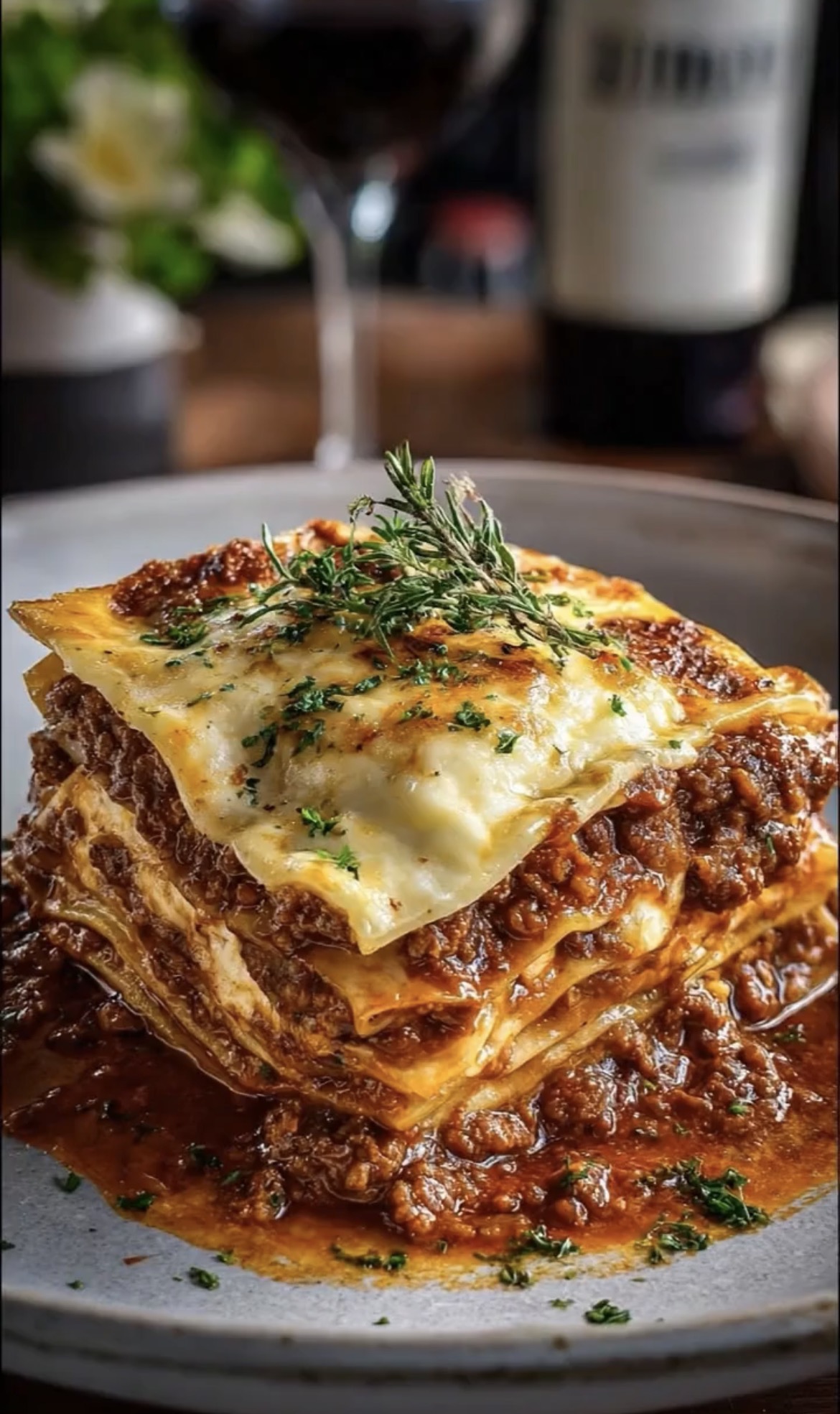
The Ultimate Lasagna alla Bolognese
A Classic Italian Masterpiece with Rich Layers of Flavor
Introduction
Lasagna alla Bolognese is more than just a pasta dish—it is a celebration of tradition, patience, and deeply developed flavor. Originating from the Emilia-Romagna region of Italy, this iconic recipe combines delicate sheets of pasta with a slow-simmered meat ragù and a silky béchamel sauce. The result is a layered dish that is hearty, comforting, and incredibly satisfying.
Unlike simplified versions of lasagna, the authentic Bolognese style focuses on balance rather than excess. There is no overwhelming amount of cheese or overly acidic tomato sauce. Instead, each layer contributes to a harmonious whole: the richness of the meat, the creaminess of the béchamel, and the tenderness of the pasta.
This comprehensive guide will walk you through every detail—from selecting the right ingredients to assembling and baking the perfect lasagna—so you can confidently recreate this classic dish for your website or home kitchen.
Ingredients
The Meat Ragù
- 500 g ground beef (80/20 fat for flavor)
- 250 g ground pork
- 100 g pancetta, finely chopped
- 1 large onion, finely diced
- 1 carrot, finely diced
- 1 celery stalk, finely diced
- 2 tablespoons tomato paste
- 1/2 cup dry wine (white or red)
- 1 cup whole milk
- 500 ml beef stock
- 500 g crushed tomatoes
- Olive oil
- Salt and black pepper
The Béchamel Sauce
- 100 g unsalted butter
- 100 g all-purpose flour
- 1 liter whole milk (warm)
- Salt
- Freshly grated nutmeg (optional but recommended)
Additional Components
- Lasagna sheets (fresh or dried)
- 100–150 g grated Parmesan cheese
Equipment Needed
- Large heavy-bottomed pot or Dutch oven
- Medium saucepan
- Wooden spoon or spatula
- Whisk
- Large baking dish (approximately 9×13 inches)
- Ladle
- Knife and cutting board
Step-by-Step Instructions
Part 1: Preparing the Meat Ragù
Step 1: Build the Flavor Base
Begin by heating a generous drizzle of olive oil in a large pot over medium heat. Add the finely chopped pancetta and cook until it releases its fat and becomes lightly crisp.
Next, add the diced onion, carrot, and celery. This combination, known as soffritto, is essential in Italian cooking. Cook slowly for about 8–10 minutes until the vegetables soften and become fragrant, but do not brown them.
Step 2: Add the Meat
Increase the heat slightly and add the ground beef and pork. Break up the meat with a wooden spoon and cook until it is browned evenly.
Season lightly with salt and black pepper. Avoid over-seasoning at this stage, as the sauce will reduce and intensify later.
Step 3: Incorporate Tomato Paste
Stir in the tomato paste and cook for 2–3 minutes. This step helps caramelize the paste and deepen its flavor, adding richness to the ragù.
Step 4: Deglaze with Wine
Pour in the wine and allow it to simmer until most of the liquid evaporates. This step lifts the flavorful browned bits from the bottom of the pot and adds complexity to the sauce.
Step 5: Add Liquids and Simmer
Pour in the milk and let it cook gently until absorbed. This is a traditional step in Bolognese sauce that softens the acidity of the tomatoes and adds a creamy depth.
Next, add the crushed tomatoes and beef stock. Stir well, reduce the heat to low, and let the sauce simmer gently for at least 1.5 to 2 hours.
Stir occasionally and allow the sauce to thicken slowly. The final texture should be rich, thick, and not overly watery.
Part 2: Preparing the Béchamel Sauce
Step 1: Make the Roux
In a medium saucepan, melt the butter over medium heat. Once melted, add the flour and whisk continuously for about 2–3 minutes to form a smooth paste.
This mixture, known as a roux, should be pale and not browned.
Step 2: Add the Milk
Gradually pour in the warm milk while whisking constantly to prevent lumps from forming.
Continue whisking until the sauce thickens to a smooth, creamy consistency.
Step 3: Season
Add salt and a pinch of freshly grated nutmeg. The nutmeg enhances the flavor of the béchamel without overpowering it.
Remove from heat and set aside.
Part 3: Preparing the Lasagna Sheets
If using dried lasagna sheets, cook them in salted boiling water according to package instructions. Drain and lay them flat on a clean towel to prevent sticking.
If using fresh sheets, they can typically be used directly without pre-cooking.
Part 4: Assembling the Lasagna
Step 1: Prepare the Baking Dish
Lightly grease your baking dish with butter or olive oil.
Spread a thin layer of meat ragù on the bottom. This prevents the pasta from sticking.
Step 2: Begin Layering
Start with a layer of lasagna sheets, followed by:
- A layer of meat ragù
- A layer of béchamel sauce
- A light sprinkle of Parmesan cheese
Repeat this process, building multiple layers.
Step 3: Final Layer
Finish with a top layer of pasta, followed by béchamel sauce and a generous sprinkle of Parmesan.
This top layer will become golden and slightly crisp during baking.
Part 5: Baking
Step 1: Preheat the Oven
Preheat your oven to 180°C (350°F).
Step 2: Bake
Cover the lasagna loosely with foil and bake for 25–30 minutes.
Remove the foil and bake for an additional 15–20 minutes until the top is golden and bubbling.
Step 3: Rest Before Serving
Allow the lasagna to rest for at least 15–20 minutes before slicing.
This step is crucial—it helps the layers set and makes serving easier.
Tips for Perfect Lasagna
Use Quality Ingredients
Because this dish relies on simple components, high-quality meat, tomatoes, and cheese make a noticeable difference.
Take Your Time with the Ragù
The longer the ragù simmers, the richer and more developed the flavor becomes.
Balance the Layers
Avoid overloading any single layer. A balanced distribution ensures every bite has the perfect combination of flavors.
Don’t Skip the Resting Time
Cutting into lasagna too early can cause it to fall apart. Letting it rest ensures clean slices.
Variations
Lighter Version
- Use leaner meat
- Reduce butter in the béchamel
- Add more vegetables
Extra Rich Version
- Add a small amount of cream to the ragù
- Increase Parmesan in each layer
Vegetarian Option
Replace the meat with a mixture of mushrooms, lentils, and vegetables while keeping the béchamel and layering technique the same.
Storage and Reheating
Refrigeration
Store leftovers in an airtight container for up to 3–4 days.
Freezing
Lasagna freezes well. Wrap tightly and freeze for up to 2 months.
Reheating
Reheat in the oven at 160°C (320°F) until warmed through. Cover with foil to prevent drying out.
Serving Suggestions
Lasagna alla Bolognese pairs beautifully with:
- A fresh green salad
- Garlic bread
- Roasted vegetables
For a complete Italian-style meal, serve with a light starter and finish with a simple dessert.
Why This Recipe Works
This recipe succeeds because it respects traditional techniques while remaining accessible:
- The combination of beef and pork creates depth
- Pancetta adds richness and saltiness
- Milk softens the acidity of tomatoes
- Béchamel provides creaminess and balance
- Layering ensures even distribution of flavor
Common Mistakes to Avoid
- Rushing the ragù
- Using too much tomato sauce
- Skipping the béchamel
- Overcooking the pasta sheets
- Not seasoning each component properly
Conclusion
The Ultimate Lasagna alla Bolognese is a dish that rewards patience and attention to detail. While it may take time to prepare, the result is a deeply satisfying meal that embodies comfort and tradition.
Perfect for family gatherings, special occasions, or simply a weekend cooking project, this lasagna delivers rich flavor, beautiful layers, and a timeless appeal that never goes out of style.
Once you master this recipe, it will likely become a cornerstone of your cooking repertoire—one that you return to again and again for its reliability, versatility, and undeniable deliciousness.