
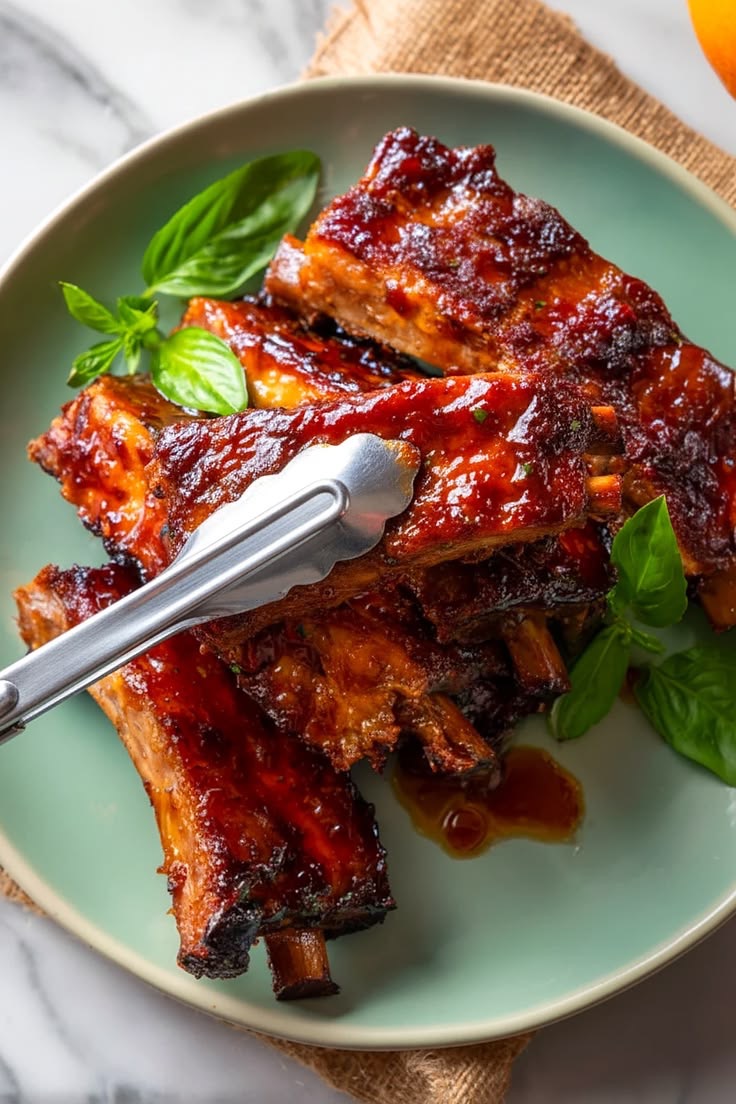
Sticky BBQ Pork Ribs
Also called Oven Baked Baby Back Ribs or Glazed BBQ Ribs, this recipe gives you fall-off-the-bone tender pork ribs with a thick, lacquered barbecue coating. You do not need a smoker or grill. The ribs are dry rubbed, slow roasted until tender, then finished with a sticky honey barbecue glaze that caramelizes under high heat. The meat pulls cleanly from the bone, and the glaze clings in glossy layers.
This recipe serves 4 to 6 people. Total time is about 3 hours, with only 15 minutes of active prep. The low and slow oven method breaks down the collagen in the ribs, making them tender without drying out. Finishing with multiple glaze coats builds that restaurant-style sticky finish you see in the photo.
Why This Recipe Works
Pork ribs have a lot of connective tissue and fat that needs time to break down. Cooking them at 300°F for 2.5 hours gently renders the fat and converts collagen to gelatin. That is what makes them tender. If you cook them too hot, the outside dries before the inside gets tender.
The dry rub does two things. First, the salt penetrates the meat and seasons it throughout. Second, the spices create a flavorful bark on the surface. Wrapping the ribs in foil for most of the cook time traps steam and keeps them moist. Uncovering them at the end lets the surface dry so the glaze can stick and caramelize.
The glaze is added late because BBQ sauce is high in sugar. If you add it too early, the sugar burns before the ribs are cooked. By adding it in the last 20 minutes and broiling, you get deep color and flavor without charring.
Ingredients
Serves 4 to 6
For the Ribs
Pork Baby Back Ribs: 2 racks, about 4 to 5 pounds total. Baby backs are leaner and more tender than spare ribs. They cook faster and fit better in a standard oven. Look for racks with good meat coverage over the bones. Remove the silver skin membrane from the back of the ribs for better texture. Slide a butter knife under the membrane at one end, grip it with a paper towel, and pull it off.
Kosher Salt: 1 tablespoon. Salt is critical for flavor and helps the meat retain moisture.
Black Pepper: 1 teaspoon, freshly ground. Fresh pepper has more bite than pre-ground.
Smoked Paprika: 1 tablespoon. This adds color and a mild smoky flavor even without a smoker. If you only have regular paprika, use it and add ½ teaspoon liquid smoke to the glaze.
Garlic Powder: 1 teaspoon. Garlic powder distributes more evenly than fresh garlic and will not burn during the long cook.
Onion Powder: 1 teaspoon. Adds savory depth to the rub.
Optional Brown Sugar: 1 tablespoon. Add to the rub if you like a sweeter bark. Skip it if your BBQ sauce is already very sweet.
For the BBQ Glaze
BBQ Sauce: 1½ cups. Use a thick, tomato-based sauce. Sweet Baby Ray’s, Stubbs, or a homemade sauce all work. Avoid thin, vinegar-based sauces for this method because they will not coat well.
Honey: 3 tablespoons. Honey makes the glaze sticky and shiny. Maple syrup or brown sugar can substitute.
Apple Cider Vinegar: 1 tablespoon. Acid balances the sweetness and cuts through the richness of the pork.
Worcestershire Sauce: 1 tablespoon. Adds umami and depth. Soy sauce works in a pinch.
Liquid Smoke: 1 teaspoon. Optional, but it gives a real barbecue pit flavor. Use hickory or mesquite. Skip if your rub already has smoked paprika and you do not want more smoke.
Cayenne Pepper: ¼ teaspoon. Optional for heat. Add more if you like spicy ribs.
For Serving
Fresh Basil Leaves: A few sprigs for garnish. Basil is not traditional for BBQ, but it adds color and a fresh note that works with the sweet glaze. Parsley or sliced scallions are classic alternatives.
Equipment You Need
Rimmed baking sheet or roasting pan
Heavy duty aluminum foil
Basting brush
Small saucepan
Instant read thermometer
Sharp knife for cutting between bones
Step by Step Instructions
Prep the Ribs
Preheat the oven to 300°F. Position a rack in the middle of the oven.
Pat the ribs dry with paper towels. Check the bone side of the rack for a thin, shiny membrane. If it is there, remove it. This membrane gets tough when cooked. To remove it, slide a butter knife under the membrane over a bone at one end. Lift it, then grab it with a paper towel and pull. It should come off in one sheet.
In a small bowl, mix 1 tablespoon salt, 1 teaspoon black pepper, 1 tablespoon smoked paprika, 1 teaspoon garlic powder, and 1 teaspoon onion powder. If using brown sugar, add it now.
Place the ribs on a large sheet of foil. Sprinkle the rub evenly over both sides of the ribs. Use your hands to press it in. You want full coverage. Let the ribs sit at room temperature for 20 minutes while the oven heats. This helps the salt start to penetrate.
Slow Roast the Ribs
Wrap each rack tightly in foil. You can wrap them individually or place both on a large piece of foil and fold it into a sealed packet. The goal is to trap steam. Place the foil packets meat side up on a rimmed baking sheet.
Bake for 2.5 hours. Do not open the foil. The ribs are steaming in their own juices and the low heat is breaking down collagen. After 2.5 hours, carefully open one packet. The meat should have pulled back from the bone ends by about ¼ inch, and a fork should slide into the meat with little resistance. If they still feel tough, reseal and bake 30 more minutes.
Make the Glaze
While the ribs are in the last 30 minutes of cooking, combine 1½ cups BBQ sauce, 3 tablespoons honey, 1 tablespoon apple cider vinegar, 1 tablespoon Worcestershire sauce, and 1 teaspoon liquid smoke in a small saucepan. Add cayenne if using.
Warm over medium low heat for 4 to 5 minutes, stirring. You just want to meld the flavors and thin the sauce slightly so it brushes on easily. Do not boil it hard or it will reduce too much. Set aside.
Glaze and Caramelize
Remove the ribs from the oven and increase the oven temperature to 425°F. Carefully open the foil. There will be hot steam and liquid. Drain the liquid from the foil. You can save it to mix with more BBQ sauce for serving, or discard it.
Leave the ribs on the baking sheet, bone side down. Brush a generous layer of glaze over the meat side of the ribs. Be thorough. Get into every crevice.
Return the ribs to the oven, uncovered, for 10 minutes. Remove and brush with another layer of glaze. Bake 10 more minutes.
For the final finish, turn the broiler to high. Broil for 2 to 4 minutes, watching constantly. The sugars will bubble and darken fast. You want caramelized and sticky, not burnt. The edges should look dark and the surface glossy. If any spots blacken too much, pull them out.
Rest and Slice
Let the ribs rest for 10 minutes. This lets the juices redistribute so they do not run out when you cut. Transfer the racks to a cutting board. Slice between the bones into individual ribs or 2 to 3 bone sections.
Arrange on a platter. Brush with any remaining warm glaze or serve it on the side for dipping. Garnish with fresh basil leaves. The basil adds color and a fresh contrast to the rich, sweet meat.
Expert Tips for Perfect Ribs
Remove the Membrane: This is the most important step for tender ribs. The membrane does not break down and stays chewy. Taking it off takes 30 seconds and improves texture.
Low and Slow: 300°F is the sweet spot. At 350°F the ribs cook faster but can dry out. At 275°F they take longer but are even more tender. If you have time, go lower and longer.
Do Not Skip the Wrap: The foil wrap is what makes oven ribs tender. Without it, the surface dries before the inside is done. If you want more bark, unwrap for the last hour of cooking.
Glaze in Layers: Three thin coats are better than one thick coat. Each layer dries and caramelizes, building flavor and texture. If you drown them in sauce at once, it slides off.
Use a Thermometer: Ribs are done when the meat is tender, not at a specific temperature. But if you want a number, look for 190°F to 203°F between the bones. At this range the collagen has melted. They are safe at 145°F, but they will be tough.
Rest Before Cutting: Cutting too soon lets the juices run out. Ten minutes makes a difference in juiciness.
Recipe Variations
Spare Ribs or St. Louis Cut: These are larger and fattier than baby backs. Increase the initial bake time to 3 to 3.5 hours. Everything else stays the same.
Dry Rub Only: Skip the glaze if you prefer Memphis style. After unwrapping, rub with another teaspoon of the spice mix and return to the oven for 20 minutes to set the bark. Serve sauce on the side.
Asian Style Glaze: Replace the BBQ sauce with 1 cup hoisin sauce, 2 tablespoons soy sauce, 2 tablespoons rice vinegar, 2 tablespoons honey, and 1 tablespoon grated ginger. Garnish with sesame seeds and scallions.
Spicy Chipotle: Add 2 minced chipotle peppers in adobo plus 1 tablespoon adobo sauce to the glaze. This adds heat and smoke.
Grill Finish: After the 2.5 hour foil bake, finish the ribs on a medium grill instead of the oven. Grill 4 to 5 minutes per side, brushing with glaze each turn, until charred and sticky.
Make Ahead and Storage
You can do the 2.5 hour bake a day ahead. Cool the wrapped ribs, then refrigerate. The next day, bring them to room temperature for 30 minutes, then glaze and finish in the hot oven. This is great for parties because most of the work is done.
Store leftovers in the fridge for up to 4 days. Wrap them in foil or keep in an airtight container. The glaze will set as they cool.
To reheat, wrap in foil and warm in a 300°F oven for 20 minutes. Unwrap, brush with a little extra sauce, and broil 2 minutes to re-crisp the glaze. You can also reheat in the air fryer at 350°F for 5 to 6 minutes.
Freeze cooked ribs for up to 3 months. Thaw overnight in the fridge before reheating. The texture is best if you freeze them before the final glaze, then add fresh glaze when reheating.
Troubleshooting
Ribs Are Tough: They need more time. Tough ribs are undercooked. Wrap them back up and bake 30 more minutes. Collagen breaks down with time and low heat, not just temperature.
Ribs Are Dry: The oven was too hot, they were not wrapped well, or they were overcooked. Next time, check the seal on the foil and keep the temp at 300°F. Serve dry ribs with extra warm sauce.
Glaze Burned: The broiler was too close or you walked away. Broil on the middle rack and watch constantly. Sugar burns fast. If it burns, scrape off the worst parts and brush with fresh glaze.
Glaze Is Watery: Your BBQ sauce was thin, or the ribs were too wet when you glazed. Pat the ribs dry after unwrapping, and simmer the glaze 2 to 3 minutes longer to thicken it before brushing.
No Smoke Flavor: Without a smoker you need to add it. Use smoked paprika in the rub and liquid smoke in the glaze. Or finish the ribs on a charcoal grill for 5 minutes.
Frequently Asked Questions
Should I boil ribs before baking?
No. Boiling leaches flavor into the water and makes the texture mealy. The foil wrap method steams them gently in their own juices, which keeps flavor in the meat.
Can I make this in a slow cooker?
Yes. Cut the racks into 3 to 4 bone sections to fit. Rub them, place in the slow cooker, and cook on low for 6 to 7 hours. Remove, brush with glaze, and broil to finish. They will not have as much bark but will be very tender.
How do I know when ribs are done?
Use the bend test. Pick up the rack with tongs from the middle. If it bends and the surface cracks, they are done. Also, the meat should have pulled back from the bone ends, and a toothpick should slide in with little resistance.
Can I use boneless country style ribs?
Yes, but they are actually pork shoulder and not true ribs. Bake them covered at 300°F for 2 hours, then glaze and finish uncovered for 20 minutes. They will not have bones but the flavor is similar.
What is the difference between baby back and spare ribs?
Baby backs are from the upper rib cage near the loin. They are shorter, leaner, and more tender. Spare ribs are from the belly, larger, and fattier. Spare ribs take longer to cook but have more flavor. Both work with this method.
Serving Suggestions
Classic sides for BBQ ribs include creamy coleslaw, cornbread, baked beans, mac and cheese, and potato salad. The acidity in coleslaw cuts the rich, sweet glaze. For something lighter, serve with a cucumber tomato salad or grilled corn.
For drinks, a cold lager, sweet tea, or bourbon lemonade pairs well. The ribs are rich, so you want something crisp or acidic to balance them.
If you have leftovers, pull the meat from the bones and use it for sandwiches, nachos, or mixed into mac and cheese. The meat is already seasoned and glazed, so it needs very little to make a great next-day meal.
Final Thoughts
Oven baked ribs are the easiest way to get barbecue flavor at home without special equipment. The method is simple. Season, wrap, bake low and slow, then glaze and broil. The hardest part is waiting 3 hours while your kitchen smells amazing.
Once you master this technique, you can change the rub and glaze to any flavor profile you like. The core method of low heat, wrapped, then high heat with glaze, works every time. Make these for game day, a summer cookout, or a Sunday dinner. They look impressive and taste like you spent all day at a smoker.