
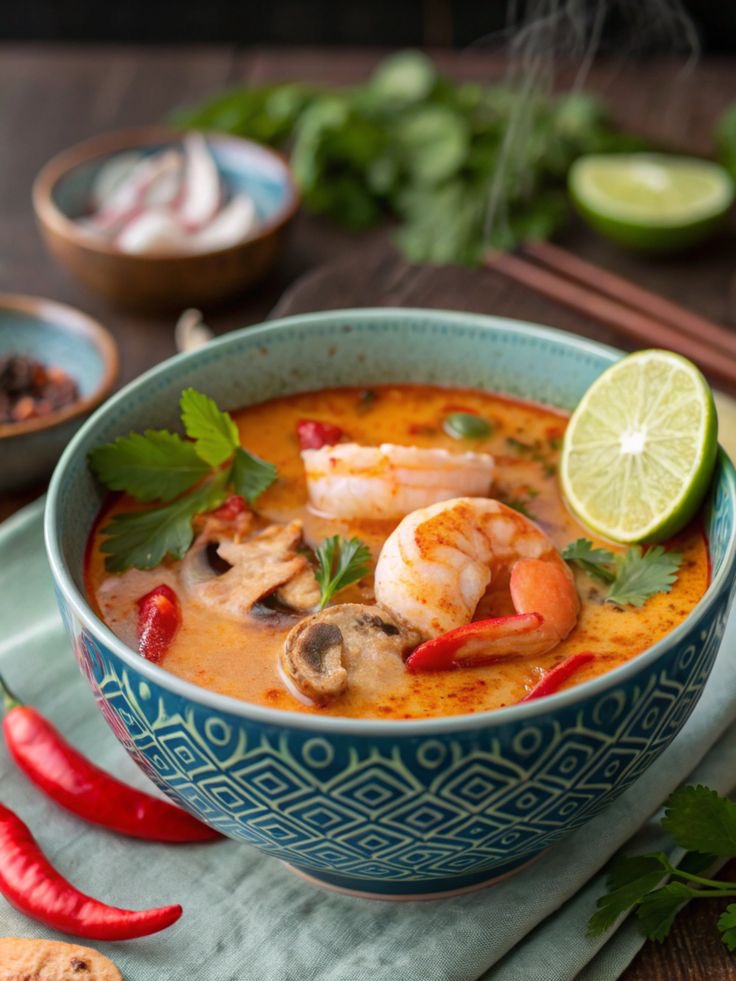
Tom Yum Goong
Introduction
Tom Yum Goong is one of the most famous and iconic Thai soups, known worldwide for its bold, aromatic, and perfectly balanced flavor profile. It is a hot and sour soup that combines spicy chilies, tangy lime, fragrant herbs, and succulent shrimp into a dish that is both refreshing and deeply satisfying. This soup is a staple of Thai cuisine and represents the harmony of flavors that defines the country’s culinary tradition.
What makes Tom Yum Goong so special is its complexity despite its simplicity. Each ingredient plays a specific role in building layers of flavor. The lemongrass, kaffir lime leaves, and galangal provide a fragrant base, while chili peppers add heat. Fish sauce contributes saltiness and depth, and lime juice brings brightness and acidity. The shrimp adds sweetness and protein, while mushrooms and tomatoes add texture and balance.
This comprehensive guide will take you through everything you need to know to prepare authentic Tom Yum Goong at home. From understanding the ingredients to mastering the cooking process, you will learn how to create a soup that is both traditional and delicious.
Ingredients
Main Ingredients
- 300 grams shrimp, peeled and deveined
- 200 grams mushrooms, sliced
- 10–12 cherry tomatoes, halved
- 4 cloves garlic, crushed
- 1 small onion, sliced
- 2 stalks lemongrass, cut and bruised
- 5–6 kaffir lime leaves
- 3–4 slices galangal
- 3–5 chili peppers, crushed
- 2 tablespoons fish sauce
- 2 tablespoons lime juice
- 1 teaspoon sugar
- 1 liter water or chicken broth
- Fresh cilantro for garnish
- Optional: 1/2 cup coconut milk
Understanding the Ingredients
Shrimp
Shrimp is the star protein of Tom Yum Goong. It adds natural sweetness and a delicate seafood flavor. Fresh shrimp is preferred, as it enhances the overall taste of the soup.
Lemongrass
Lemongrass provides a citrusy aroma that forms the foundation of the soup’s fragrance. It is essential for achieving authentic Thai flavor.
Kaffir Lime Leaves
These leaves contribute a distinct citrus fragrance that is unique and irreplaceable. They are often torn or bruised to release their oils.
Galangal
Galangal is similar to ginger but has a sharper, more peppery flavor. It adds depth and warmth to the soup base.
Chili Peppers
Chili peppers provide heat and spice. The level of spiciness can be adjusted depending on preference.
Fish Sauce
Fish sauce is a key ingredient in Thai cooking. It adds saltiness and umami, giving the soup its savory backbone.
Lime Juice
Lime juice provides acidity and brightness, balancing the heat and richness of the soup.
Mushrooms
Mushrooms add texture and absorb the flavorful broth, making each bite more satisfying.
Cherry Tomatoes
Tomatoes add slight sweetness and acidity, enhancing the overall balance of flavors.
Garlic and Onion
These aromatics build depth and richness in the soup base.
Coconut Milk (Optional)
Coconut milk creates a creamy version of Tom Yum, known as Tom Yum Nam Khon. It softens the heat and adds richness.
Equipment Needed
- Large pot
- Knife
- Cutting board
- Ladle
- Strainer (optional)
- Serving bowls
Preparing the Ingredients
Begin by preparing all ingredients. Peel and devein the shrimp, slice the mushrooms, and halve the cherry tomatoes. Bruise the lemongrass by lightly smashing it to release its aroma. Tear the kaffir lime leaves and slice the galangal.
Crush the garlic and chili peppers to release their flavors. Slice the onion thinly.
Having all ingredients ready before cooking ensures a smooth and efficient process.
Building the Soup Base
In a large pot, bring water or chicken broth to a boil.
Add lemongrass, kaffir lime leaves, galangal, garlic, onion, and chili peppers. Allow these aromatics to simmer for several minutes. This step is crucial as it infuses the broth with deep, aromatic flavors.
The kitchen will begin to fill with a fragrant, citrusy aroma that is characteristic of Tom Yum soup.
Adding Vegetables
Add the mushrooms and cherry tomatoes to the simmering broth. Cook for a few minutes until the mushrooms soften slightly and the tomatoes begin to release their juices.
These ingredients add texture, color, and balance to the soup.
Cooking the Shrimp
Add the shrimp to the pot. Cook until they turn pink and opaque. This usually takes only a few minutes.
Be careful not to overcook the shrimp, as they can become rubbery.
Seasoning the Soup
Add fish sauce and sugar to the broth. Stir well to combine.
Taste the soup and adjust the seasoning as needed. The balance of salty, sour, spicy, and slightly sweet flavors is essential in Tom Yum Goong.
Finally, add lime juice just before serving to preserve its fresh acidity.
Optional Coconut Milk Version
For a creamier variation, add coconut milk after the shrimp is cooked. Stir gently to combine.
This version softens the heat and creates a richer, more velvety texture.
Final Adjustments
Taste the soup one final time and adjust seasoning if necessary. Add more lime juice for acidity, fish sauce for saltiness, or chili for heat.
Remove the lemongrass, galangal, and kaffir lime leaves if desired before serving, as they are not typically eaten.
Serving the Soup
Ladle the hot soup into bowls and garnish with fresh cilantro. Serve immediately while hot.
Tom Yum Goong is best enjoyed fresh, as the flavors are most vibrant right after cooking.
Texture and Flavor Profile
Tom Yum Goong is known for its bold and dynamic flavor profile. The broth is light yet intensely aromatic. It delivers a balance of sourness from lime juice, saltiness from fish sauce, heat from chilies, and fragrance from herbs.
The shrimp adds a sweet, tender bite, while mushrooms and tomatoes provide softness and depth. Each spoonful offers a complex and satisfying combination of flavors.
Tips for Success
- Use fresh herbs for the best aroma
- Do not overcook shrimp
- Adjust spice level to personal preference
- Add lime juice at the end for freshness
- Simmer aromatics long enough to develop flavor
Variations
Creamy Tom Yum Goong
Add coconut milk for a richer, milder version.
Extra Spicy Version
Increase the number of chili peppers for a stronger heat.
Seafood Mix
Add squid, mussels, or fish for a mixed seafood version.
Vegetarian Version
Replace shrimp with tofu and use vegetable broth.
Storage and Reheating
Store leftover soup in the refrigerator for up to two days. Reheat gently over low heat. Avoid boiling, as this can affect the texture of the shrimp and herbs.
Serving Suggestions
Tom Yum Goong pairs well with steamed jasmine rice or can be enjoyed on its own as a light meal. It is often served as part of a larger Thai meal with other dishes.
Nutritional Overview
This soup is relatively light and nutritious. It provides protein from shrimp, vitamins from vegetables and herbs, and minimal fat unless coconut milk is added.
Conclusion
Tom Yum Goong is a masterpiece of Thai cuisine, celebrated for its bold flavors and aromatic complexity. It brings together spicy, sour, salty, and savory elements in perfect harmony.
By following this guide, you can recreate an authentic version of this famous soup at home. Whether served as an appetizer or a main dish, Tom Yum Goong delivers a powerful and unforgettable culinary experience.Tom Yum Goong
Introduction
Tom Yum Goong is one of the most famous and iconic Thai soups, known worldwide for its bold, aromatic, and perfectly balanced flavor profile. It is a hot and sour soup that combines spicy chilies, tangy lime, fragrant herbs, and succulent shrimp into a dish that is both refreshing and deeply satisfying. This soup is a staple of Thai cuisine and represents the harmony of flavors that defines the country’s culinary tradition.
What makes Tom Yum Goong so special is its complexity despite its simplicity. Each ingredient plays a specific role in building layers of flavor. The lemongrass, kaffir lime leaves, and galangal provide a fragrant base, while chili peppers add heat. Fish sauce contributes saltiness and depth, and lime juice brings brightness and acidity. The shrimp adds sweetness and protein, while mushrooms and tomatoes add texture and balance.
This comprehensive guide will take you through everything you need to know to prepare authentic Tom Yum Goong at home. From understanding the ingredients to mastering the cooking process, you will learn how to create a soup that is both traditional and delicious.
Ingredients
Main Ingredients
- 300 grams shrimp, peeled and deveined
- 200 grams mushrooms, sliced
- 10–12 cherry tomatoes, halved
- 4 cloves garlic, crushed
- 1 small onion, sliced
- 2 stalks lemongrass, cut and bruised
- 5–6 kaffir lime leaves
- 3–4 slices galangal
- 3–5 chili peppers, crushed
- 2 tablespoons fish sauce
- 2 tablespoons lime juice
- 1 teaspoon sugar
- 1 liter water or chicken broth
- Fresh cilantro for garnish
- Optional: 1/2 cup coconut milk
Understanding the Ingredients
Shrimp
Shrimp is the star protein of Tom Yum Goong. It adds natural sweetness and a delicate seafood flavor. Fresh shrimp is preferred, as it enhances the overall taste of the soup.
Lemongrass
Lemongrass provides a citrusy aroma that forms the foundation of the soup’s fragrance. It is essential for achieving authentic Thai flavor.
Kaffir Lime Leaves
These leaves contribute a distinct citrus fragrance that is unique and irreplaceable. They are often torn or bruised to release their oils.
Galangal
Galangal is similar to ginger but has a sharper, more peppery flavor. It adds depth and warmth to the soup base.
Chili Peppers
Chili peppers provide heat and spice. The level of spiciness can be adjusted depending on preference.
Fish Sauce
Fish sauce is a key ingredient in Thai cooking. It adds saltiness and umami, giving the soup its savory backbone.
Lime Juice
Lime juice provides acidity and brightness, balancing the heat and richness of the soup.
Mushrooms
Mushrooms add texture and absorb the flavorful broth, making each bite more satisfying.
Cherry Tomatoes
Tomatoes add slight sweetness and acidity, enhancing the overall balance of flavors.
Garlic and Onion
These aromatics build depth and richness in the soup base.
Coconut Milk (Optional)
Coconut milk creates a creamy version of Tom Yum, known as Tom Yum Nam Khon. It softens the heat and adds richness.
Equipment Needed
- Large pot
- Knife
- Cutting board
- Ladle
- Strainer (optional)
- Serving bowls
Preparing the Ingredients
Begin by preparing all ingredients. Peel and devein the shrimp, slice the mushrooms, and halve the cherry tomatoes. Bruise the lemongrass by lightly smashing it to release its aroma. Tear the kaffir lime leaves and slice the galangal.
Crush the garlic and chili peppers to release their flavors. Slice the onion thinly.
Having all ingredients ready before cooking ensures a smooth and efficient process.
Building the Soup Base
In a large pot, bring water or chicken broth to a boil.
Add lemongrass, kaffir lime leaves, galangal, garlic, onion, and chili peppers. Allow these aromatics to simmer for several minutes. This step is crucial as it infuses the broth with deep, aromatic flavors.
The kitchen will begin to fill with a fragrant, citrusy aroma that is characteristic of Tom Yum soup.
Adding Vegetables
Add the mushrooms and cherry tomatoes to the simmering broth. Cook for a few minutes until the mushrooms soften slightly and the tomatoes begin to release their juices.
These ingredients add texture, color, and balance to the soup.
Cooking the Shrimp
Add the shrimp to the pot. Cook until they turn pink and opaque. This usually takes only a few minutes.
Be careful not to overcook the shrimp, as they can become rubbery.
Seasoning the Soup
Add fish sauce and sugar to the broth. Stir well to combine.
Taste the soup and adjust the seasoning as needed. The balance of salty, sour, spicy, and slightly sweet flavors is essential in Tom Yum Goong.
Finally, add lime juice just before serving to preserve its fresh acidity.
Optional Coconut Milk Version
For a creamier variation, add coconut milk after the shrimp is cooked. Stir gently to combine.
This version softens the heat and creates a richer, more velvety texture.
Final Adjustments
Taste the soup one final time and adjust seasoning if necessary. Add more lime juice for acidity, fish sauce for saltiness, or chili for heat.
Remove the lemongrass, galangal, and kaffir lime leaves if desired before serving, as they are not typically eaten.
Serving the Soup
Ladle the hot soup into bowls and garnish with fresh cilantro. Serve immediately while hot.
Tom Yum Goong is best enjoyed fresh, as the flavors are most vibrant right after cooking.
Texture and Flavor Profile
Tom Yum Goong is known for its bold and dynamic flavor profile. The broth is light yet intensely aromatic. It delivers a balance of sourness from lime juice, saltiness from fish sauce, heat from chilies, and fragrance from herbs.
The shrimp adds a sweet, tender bite, while mushrooms and tomatoes provide softness and depth. Each spoonful offers a complex and satisfying combination of flavors.
Tips for Success
- Use fresh herbs for the best aroma
- Do not overcook shrimp
- Adjust spice level to personal preference
- Add lime juice at the end for freshness
- Simmer aromatics long enough to develop flavor
Variations
Creamy Tom Yum Goong
Add coconut milk for a richer, milder version.
Extra Spicy Version
Increase the number of chili peppers for a stronger heat.
Seafood Mix
Add squid, mussels, or fish for a mixed seafood version.
Vegetarian Version
Replace shrimp with tofu and use vegetable broth.
Storage and Reheating
Store leftover soup in the refrigerator for up to two days. Reheat gently over low heat. Avoid boiling, as this can affect the texture of the shrimp and herbs.
Serving Suggestions
Tom Yum Goong pairs well with steamed jasmine rice or can be enjoyed on its own as a light meal. It is often served as part of a larger Thai meal with other dishes.
Nutritional Overview
This soup is relatively light and nutritious. It provides protein from shrimp, vitamins from vegetables and herbs, and minimal fat unless coconut milk is added.
Conclusion
Tom Yum Goong is a masterpiece of Thai cuisine, celebrated for its bold flavors and aromatic complexity. It brings together spicy, sour, salty, and savory elements in perfect harmony.
By following this guide, you can recreate an authentic version of this famous soup at home. Whether served as an appetizer or a main dish, Tom Yum Goong delivers a powerful and unforgettable culinary experience.