
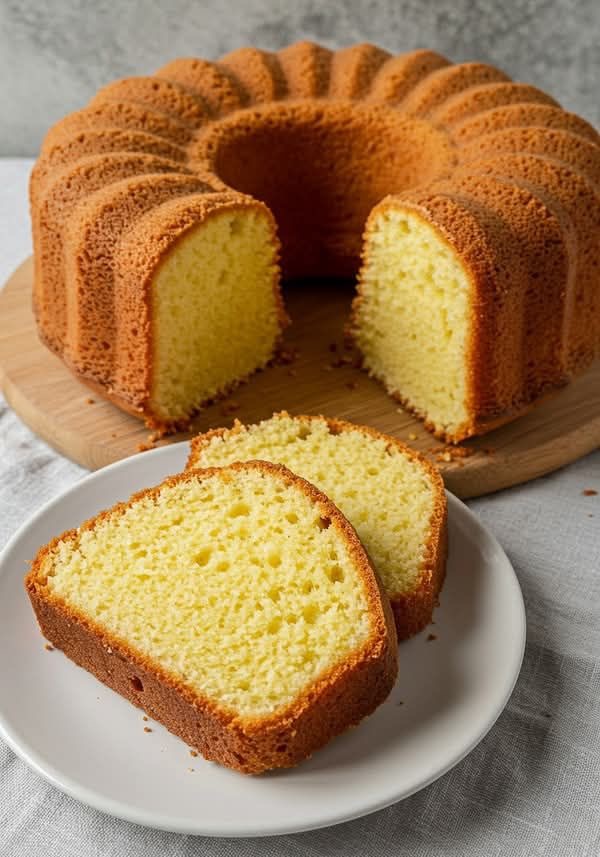
Vanilla Bundt Cake (Bakery-Style Detailed Recipe Guide)
Vanilla Bundt Cake is one of the most elegant and timeless desserts in home baking. Known for its rich flavor, moist crumb, and beautiful ring-shaped presentation, it is a cake that works for almost any occasion. Whether served at family gatherings, holidays, birthdays, or simply with coffee, this cake delivers a perfect balance of simplicity and indulgence.
This guide explains how to make a soft, buttery, and flavorful vanilla Bundt cake with professional-level results. It also covers ingredient functions, baking techniques, troubleshooting, variations, and storage tips in detail.
Introduction to Vanilla Bundt Cake
The Bundt cake is not defined by its ingredients but by its shape. It is baked in a Bundt pan, which gives it a distinctive ring design with ridges that create an elegant presentation without requiring decoration skills. Vanilla Bundt cake is one of the most popular versions because it highlights pure vanilla flavor and buttery richness.
What makes this cake special is its texture. A perfect Bundt cake is:
- Moist but not heavy
- Dense enough to hold shape yet soft inside
- Rich in buttery vanilla flavor
- Golden on the outside with a tender crumb
Unlike layered cakes, Bundt cakes require minimal decoration, making them ideal for both beginners and experienced bakers who want a reliable dessert.
Ingredients and Their Roles
Understanding each ingredient is essential for achieving the best texture and flavor.
All-purpose flour
Flour provides structure to the cake. It forms the base of the batter and determines the crumb. Too much flour will make the cake dry, while too little will make it collapse.
Sugar
Sugar is responsible for sweetness and moisture. It also helps create a soft texture by trapping air during the creaming process.
Eggs
Eggs bind all ingredients together. They add richness, stability, and help the cake rise. Room-temperature eggs work best for smooth mixing.
Butter
Butter is the heart of flavor in a Bundt cake. It provides richness and softness. Using unsalted butter allows better control over flavor balance.
Milk
Milk adds moisture and helps create a smooth batter. It also contributes to a tender crumb.
Vanilla extract
Vanilla is the key flavor element. High-quality vanilla extract or pure vanilla bean extract greatly improves taste.
Baking powder
This is the leavening agent that helps the cake rise evenly and become fluffy without becoming airy like sponge cake.
Salt
Salt enhances all other flavors and balances sweetness.
Sour cream
Sour cream adds richness, moisture, and a slight tang. It makes the cake soft and prevents dryness.
Powdered sugar (optional glaze)
Powdered sugar is used for a simple glaze or dusting. It adds sweetness and a decorative finish.
Equipment Needed
To prepare a perfect Vanilla Bundt Cake, you will need:
- Bundt cake pan (standard 10–12 cup capacity)
- Mixing bowls (large and medium)
- Electric mixer or whisk
- Spatula
- Measuring cups and spoons
- Cooling rack
- Toothpick or skewer for testing doneness
Proper equipment ensures even baking and easy removal of the cake from the pan.
Preparing the Bundt Pan
One of the most important steps in Bundt cake baking is preparing the pan correctly. Bundt pans have intricate designs, which can cause sticking if not properly greased.
To prepare the pan:
- Generously grease every corner of the pan with butter or oil.
- Lightly dust with flour, ensuring full coverage.
- Tap out excess flour.
Alternatively, you can use baking spray with flour for convenience. Proper preparation ensures the cake releases cleanly after baking.
Step-by-Step Instructions
Step 1: Preheat the oven
Preheat your oven to 175°C (350°F). Proper preheating ensures even baking and helps the cake rise correctly from the beginning.
Step 2: Prepare dry ingredients
In a bowl, sift together:
- All-purpose flour
- Baking powder
- Salt
Sifting helps remove lumps and evenly distributes the leavening agent.
Step 3: Cream butter and sugar
In a large mixing bowl, beat softened butter and sugar together until light and fluffy. This process usually takes 3 to 5 minutes using an electric mixer.
This step is important because it incorporates air into the batter, which helps create a soft texture.
Step 4: Add eggs
Add eggs one at a time, mixing well after each addition. This ensures the batter remains stable and smooth.
If the mixture looks slightly curdled, it will come together once dry ingredients are added.
Step 5: Add vanilla and sour cream
Mix in vanilla extract and sour cream until fully combined. This adds moisture and enhances flavor depth.
Step 6: Combine wet and dry ingredients
Add the dry ingredients in batches, alternating with milk. Begin and end with dry ingredients.
For example:
- Add one-third flour mixture
- Add half milk
- Repeat until finished
Mix gently to avoid overworking the batter.
Step 7: Final mixing
Use a spatula to scrape the sides of the bowl and ensure everything is evenly combined. Do not overmix at this stage, as it can make the cake dense.
Step 8: Pour into Bundt pan
Pour the batter evenly into the prepared Bundt pan. Smooth the top lightly with a spatula. Tap the pan gently on the counter to release air bubbles.
Step 9: Bake
Bake for 45 to 60 minutes, depending on your oven. The cake is done when:
- A toothpick inserted in the center comes out clean
- The top is golden brown
- The cake slightly pulls away from the sides
Avoid opening the oven too early, as this may cause the cake to collapse.
Step 10: Cooling process
Allow the cake to cool in the pan for 15 to 20 minutes. Then carefully invert it onto a cooling rack.
Do not remove it too early, or it may break. Do not leave it too long, or it may stick.
Vanilla Bundt Cake Tips for Success
Use room temperature ingredients
Cold ingredients do not mix evenly and can affect texture.
Do not overmix
Overmixing creates a dense and tough cake.
Grease the pan properly
This is critical for Bundt cakes due to their shape.
Measure ingredients accurately
Even small measurement errors can affect structure.
Check oven temperature
An inaccurate oven can lead to underbaked or dry cake.
Common Problems and Solutions
Cake sticks to pan
Cause: Insufficient greasing
Solution: Grease thoroughly and dust with flour or use baking spray
Cake is dry
Cause: Overbaking or too much flour
Solution: Check baking time early and measure flour correctly
Cake is dense
Cause: Overmixing or not enough air during creaming
Solution: Cream butter and sugar properly and mix gently
Cake sinks in the middle
Cause: Underbaking or opening oven too early
Solution: Bake fully and avoid disturbing oven temperature
Uneven texture
Cause: Poor mixing or cold ingredients
Solution: Ensure all ingredients are properly combined and at room temperature
Variations of Vanilla Bundt Cake
1. Lemon Vanilla Bundt Cake
Add lemon zest and a light lemon glaze for a fresh citrus flavor.
2. Chocolate Swirl Bundt Cake
Swirl cocoa batter into vanilla batter for a marbled effect.
3. Almond Vanilla Bundt Cake
Replace part of the vanilla extract with almond extract for a nutty aroma.
4. Cinnamon Vanilla Bundt Cake
Add cinnamon to the dry ingredients for a warm, spiced version.
5. Glazed Vanilla Bundt Cake
Top with a simple powdered sugar glaze for added sweetness and decoration.
Serving Suggestions
Vanilla Bundt Cake is versatile and can be served in many ways:
- With tea or coffee
- As a dessert with whipped cream
- With fresh berries
- Lightly dusted with powdered sugar
- Drizzled with vanilla or chocolate glaze
It is suitable for breakfast, dessert, or celebration cakes.
Storage Instructions
Proper storage keeps the cake fresh and moist:
- Room temperature: up to 3 days in an airtight container
- Refrigerator: up to 5–6 days
- Freezer: up to 2 months (wrap tightly in plastic wrap and foil)
To serve after freezing, thaw at room temperature.
Nutritional Overview (Approximate per slice)
- Calories: Moderate to high
- Fat: High due to butter
- Carbohydrates: High from flour and sugar
- Protein: Moderate from eggs and dairy
- Sugar: Moderate to high
This is a rich dessert best enjoyed in moderation.
Final Thoughts
Vanilla Bundt Cake is a classic dessert that combines elegance with simplicity. Its rich buttery flavor and soft texture make it a favorite for all occasions. While the recipe is straightforward, success depends on technique: properly creaming butter and sugar, careful mixing, and correct baking time.
Once mastered, this cake becomes a reliable recipe you can customize endlessly. Whether you keep it simple or enhance it with glazes and flavors, it always delivers a satisfying homemade result.