
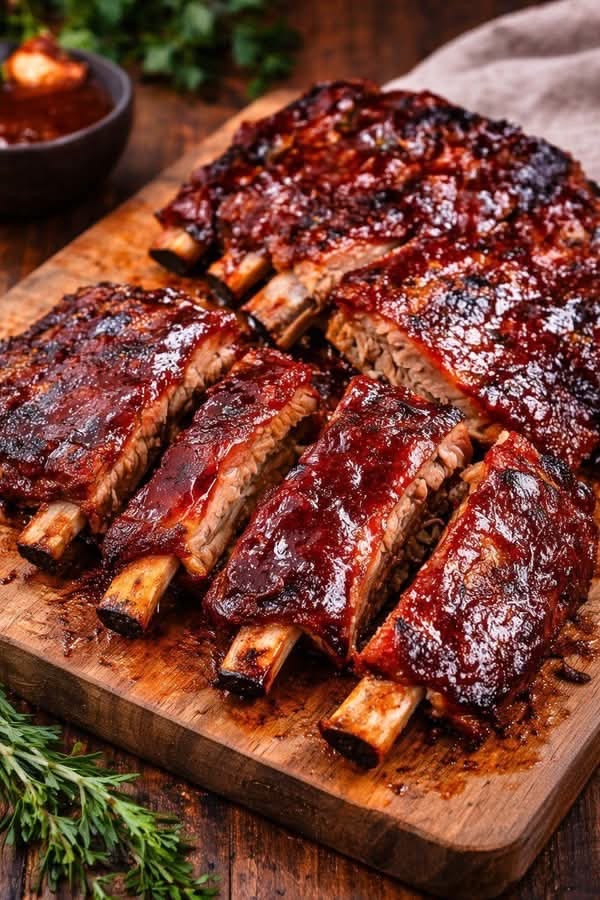
BBQ St. Louis Style Ribs
There is something unforgettable about a rack of perfectly cooked St. Louis style ribs. The rich aroma of smoky barbecue, the deep caramelized crust, and the tender meat that pulls cleanly from the bone make this classic dish one of the most loved barbecue recipes in the world. St. Louis style ribs are known for their uniform shape, generous marbling, and incredible flavor, making them ideal for slow cooking and smoking. Whether you are preparing them for a summer cookout, a family dinner, or a weekend barbecue gathering, these ribs deliver restaurant-quality results right at home.
This recipe combines a flavorful dry rub with a sticky homemade barbecue glaze that creates layers of smoky, sweet, tangy, and savory flavor. Slow cooking allows the meat to become tender while still maintaining enough texture for the perfect bite. The final coating of barbecue sauce, butter, and honey gives the ribs a glossy finish and irresistible taste.
If you have never made St. Louis style ribs before, this recipe will guide you through every important step, from selecting the ribs to seasoning, cooking, glazing, and serving. The process may take time, but the results are worth every minute.
What Are St. Louis Style Ribs?
St. Louis style ribs come from spare ribs that have been trimmed into a rectangular shape. This cut removes the rib tips and excess cartilage, creating a cleaner presentation and more even cooking. Compared to baby back ribs, St. Louis ribs contain more fat and connective tissue, which means they become incredibly juicy and flavorful when cooked low and slow.
The meat on St. Louis ribs has a rich pork flavor that pairs beautifully with smoky barbecue seasonings. Because of their flat shape, they are easier to cook evenly and are often preferred by barbecue enthusiasts and pitmasters.
Ingredients
For the Ribs
- 2 racks St. Louis style pork ribs
- 2 tablespoons olive oil
- 1 tablespoon salt
- 1 tablespoon black pepper
- 2 tablespoons paprika
- 1 tablespoon garlic powder
- 1 tablespoon onion powder
- 1 tablespoon chili powder
- 1 tablespoon brown sugar
For the Barbecue Glaze
- 1 cup barbecue sauce
- 2 tablespoons butter
- 2 tablespoons honey
- 2 tablespoons apple cider vinegar
Choosing the Best Ribs
The quality of the ribs makes a huge difference in the final result. When shopping for St. Louis style ribs, look for racks that have:
- Good marbling throughout the meat
- Even thickness from end to end
- Fresh pink color
- Minimal exposed bone
- A balanced layer of fat
Avoid ribs that look dry or have large areas where the bones are exposed. Fresh ribs generally produce better texture and flavor than previously frozen ribs, although frozen ribs can still work well if thawed properly.
Preparing the Ribs
Before seasoning the ribs, they need a little preparation. Start by placing the racks on a cutting board with the bone side facing upward. On the back of the ribs, you will notice a thin membrane covering the bones. Removing this membrane is important because it helps the seasoning penetrate better and improves the texture.
To remove the membrane:
- Slide a butter knife under one edge of the membrane.
- Lift it gently until you can grip it with a paper towel.
- Pull slowly until the membrane peels away completely.
Once the membrane is removed, trim any excess fat from the ribs. Do not remove all the fat because it helps keep the meat moist during cooking.
Pat the ribs dry with paper towels before adding the seasoning.
Making the Dry Rub
The dry rub is what creates the flavorful crust on the outside of the ribs. This recipe uses a balanced blend of spices that complement the pork perfectly.
In a small bowl, combine:
- Salt
- Black pepper
- Paprika
- Garlic powder
- Onion powder
- Chili powder
- Brown sugar
Paprika gives the ribs a beautiful red color and smoky sweetness. Garlic and onion powder build savory depth, while chili powder adds gentle heat. Brown sugar helps caramelize the surface and creates a sticky bark as the ribs cook.
Seasoning the Ribs
Rub the ribs lightly with olive oil first. The oil helps the spices stick evenly and promotes better browning.
Generously coat both sides of the ribs with the dry rub mixture. Press the seasoning into the meat rather than simply sprinkling it on top.
For the best flavor, let the ribs rest after seasoning. You can leave them at room temperature for 30 minutes or refrigerate them for several hours. Many barbecue cooks prefer seasoning the ribs overnight because it allows the flavors to penetrate deeply into the meat.
Cooking Methods
St. Louis style ribs can be cooked in several ways:
- Smoker
- Charcoal grill
- Gas grill
- Oven
The key is low and slow cooking. High heat can dry out the meat before the connective tissue has time to break down.
The ideal cooking temperature is around 225°F to 250°F.
Smoking the Ribs
Smoking is the traditional method and produces the deepest flavor.
Best Wood for Smoking
Popular wood choices include:
- Hickory
- Applewood
- Cherry
- Oak
- Pecan
Fruit woods such as apple and cherry provide a slightly sweet smoke, while hickory delivers a stronger traditional barbecue flavor.
Setting Up the Smoker
Preheat the smoker to 225°F. Add the wood chips or chunks according to your smoker’s instructions.
Place the ribs bone-side down on the smoker grates. Make sure there is space between the racks so the smoke can circulate evenly.
Close the lid and maintain a steady temperature throughout the cooking process.
The 3-2-1 Method
Many barbecue enthusiasts use the famous 3-2-1 method for ribs. This technique helps create tender and juicy results.
First Stage: Smoke
Cook the ribs uncovered for 3 hours. During this stage, the smoke flavor develops and the dry rub forms a bark on the outside.
You can lightly spray the ribs every hour with apple cider vinegar to keep them moist.
Second Stage: Wrap
After 3 hours, wrap the ribs tightly in foil. Add small pieces of butter, honey, and a splash of apple cider vinegar before sealing the foil.
Return the wrapped ribs to the smoker for 2 more hours. Wrapping traps steam and softens the connective tissue, making the meat tender.
Third Stage: Sauce
Remove the ribs from the foil carefully because hot steam will escape.
Brush the ribs generously with barbecue sauce and return them to the smoker uncovered for 1 more hour. This final stage allows the sauce to thicken and caramelize beautifully.
Oven Method
If you do not have a smoker, the oven method still produces delicious ribs.
Instructions
- Preheat the oven to 300°F.
- Place the seasoned ribs on a foil-lined baking sheet.
- Cover tightly with foil.
- Bake for about 2 1/2 to 3 hours until tender.
For the glaze:
- Combine barbecue sauce, butter, honey, and apple cider vinegar in a saucepan.
- Heat gently until smooth.
Remove the foil from the ribs, brush with glaze, and return to the oven uncovered for 20 to 30 minutes until sticky and caramelized.
For extra char, broil the ribs for a few minutes at the end.
Grill Method
Grilling adds excellent smoky flavor even without a smoker.
Indirect Heat Setup
Arrange the coals or burners so one side of the grill is hot and the other side is cooler. The ribs should cook over indirect heat rather than directly over flames.
Maintain a temperature between 225°F and 250°F.
Cook the ribs slowly with the lid closed. Add wood chips in a smoker box or foil packet for additional smoke flavor.
Making the Barbecue Glaze
The glaze is what transforms the ribs into sticky barbecue perfection.
In a saucepan over low heat, combine:
- Barbecue sauce
- Butter
- Honey
- Apple cider vinegar
Stir until smooth and glossy.
The butter enriches the sauce, honey adds sweetness and shine, while vinegar balances the richness with acidity.
You can use your favorite store-bought barbecue sauce or make your own homemade version.
Homemade Barbecue Sauce Option
If you want a fully homemade recipe, this easy sauce works perfectly.
Ingredients
- 1 cup ketchup
- 1/4 cup brown sugar
- 2 tablespoons honey
- 2 tablespoons apple cider vinegar
- 1 tablespoon Worcestershire sauce
- 1 teaspoon paprika
- 1 teaspoon garlic powder
- 1/2 teaspoon black pepper
Mix everything in a saucepan and simmer for 10 to 15 minutes until thickened.
This sauce creates a sweet and tangy flavor that pairs beautifully with pork ribs.
How to Know When the Ribs Are Done
Perfect ribs should be tender but not falling apart completely.
Here are signs the ribs are ready:
- The meat pulls back slightly from the bones
- A toothpick slides easily into the meat
- The ribs bend when lifted with tongs
- The internal temperature reaches around 195°F to 203°F
Avoid overcooking because the meat can become mushy.
Resting the Ribs
After cooking, let the ribs rest for 10 to 15 minutes before slicing.
Resting allows the juices to redistribute throughout the meat, keeping the ribs moist and flavorful.
Cut between the bones using a sharp knife and serve immediately.
Serving Suggestions
BBQ St. Louis style ribs pair well with many classic side dishes.
Popular options include:
- Coleslaw
- Cornbread
- Mac and cheese
- Baked beans
- Potato salad
- Grilled corn
- Pickles
- French fries
The rich smoky flavor of the ribs balances perfectly with creamy or tangy side dishes.
Tips for the Best Ribs
Maintain Consistent Temperature
Temperature control is one of the most important parts of barbecue cooking. Large temperature swings can affect tenderness and moisture.
Do Not Rush
Ribs need time for the connective tissue to break down properly. Cooking them too quickly results in tough meat.
Use Enough Seasoning
Pork benefits from bold seasoning. Do not be afraid to coat the ribs generously.
Wrap Carefully
When wrapping in foil, seal tightly so moisture stays inside.
Apply Sauce at the End
Adding sauce too early can cause burning because of the sugar content.
Common Mistakes to Avoid
Skipping the Membrane Removal
Leaving the membrane on can create a chewy texture and block seasoning from penetrating the meat.
Cooking Over Direct Heat
Direct flames can burn the outside before the inside becomes tender.
Using Too Much Smoke
Too much wood smoke can create a bitter flavor. Moderate smoke produces the best balance.
Overcooking
Ribs should still have structure. Completely falling-apart meat often means the ribs are overcooked.
Storage and Reheating
Refrigerating
Store leftover ribs in an airtight container in the refrigerator for up to 4 days.
Freezing
Wrap the ribs tightly in foil and place them in freezer bags. Freeze for up to 3 months.
Reheating
To keep the ribs moist:
- Place them in a baking dish.
- Add a splash of apple cider vinegar or barbecue sauce.
- Cover with foil.
- Heat at 300°F until warmed through.
Avoid microwaving for long periods because it can dry out the meat.
Flavor Variations
One of the best things about barbecue ribs is how customizable they are.
Spicy Version
Add cayenne pepper or hot sauce to the dry rub and glaze.
Sweet Version
Increase the brown sugar and honey for extra sweetness.
Smoky Version
Use smoked paprika and hickory wood for deeper smoke flavor.
Tangy Version
Add extra apple cider vinegar or mustard to the sauce.
Why St. Louis Style Ribs Are So Popular
Barbecue lovers appreciate St. Louis style ribs because they offer:
- Rich flavor
- Excellent texture
- Even cooking
- Beautiful presentation
- Great meat-to-bone ratio
Their balanced fat content keeps them juicy throughout long cooking sessions, making them ideal for smoking and grilling.
Perfect Occasions for BBQ Ribs
These ribs are perfect for:
- Summer cookouts
- Family dinners
- Game day parties
- Holiday gatherings
- Backyard barbecues
- Weekend smoking sessions
They are impressive enough for guests while still being comforting and satisfying.
Final Thoughts
BBQ St. Louis style ribs are a true barbecue classic that combines smoky flavor, tender meat, and sticky caramelized sauce into one unforgettable dish. While they take time and patience to prepare, the cooking process itself is enjoyable and rewarding. From the spice rub to the slow smoking and glossy glaze, every step builds layers of flavor that make these ribs irresistible.
Whether you cook them in a smoker, on a grill, or in the oven, the secret is simple: low heat, slow cooking, and plenty of seasoning. Once you master this recipe, you will have a reliable barbecue favorite that everyone will request again and again.
Serve the ribs hot with your favorite sides, extra barbecue sauce, and plenty of napkins. One bite of these smoky, juicy St. Louis style ribs will show exactly why they remain one of the most iconic barbecue dishes ever made.