
Introduction
Sourdough Starter is a naturally fermented mixture of flour and water used to make homemade sourdough bread and other baked goods. Unlike commercial yeast, a sourdough starter relies on wild yeast and beneficial bacteria naturally present in flour and the environment, creating bread with a unique flavor, chewy texture, and beautiful rise.
Making a starter from scratch is simple and rewarding, requiring only a few ingredients and a little patience.
Origin and Cultural Significance
Sourdough is one of the oldest forms of bread making, dating back thousands of years. Before commercial yeast became widely available, bakers relied on natural fermentation to make dough rise.
Across cultures, sourdough has been valued for its flavor, preservation qualities, and connection to traditional baking. Many bakers continue the tradition by maintaining starters that are shared, named, and passed down through generations.
Ingredients
Main Ingredients
- ½ cup (60g) whole wheat flour or bread flour
- ½ cup (120g) room-temperature water
Daily Feeding Ingredients
- Equal parts flour and water by weight
Servings
Makes enough starter for multiple bread recipes.
Optional Additions
- Rye flour for faster fermentation
- Bread flour for strength
- Whole grain flour for more flavor
- Filtered water if tap water affects fermentation
Tips for Success
- Use a clean glass jar with room for the starter to grow.
- Keep starter at room temperature while building it.
- Feed regularly to maintain an active starter.
- Look for bubbles and a pleasant sour smell.
- Use a kitchen scale for more consistent results.
- Avoid using metal containers for long-term storage.
- Patience is key—new starters often take several days.
Instructions
Day 1: Start the Starter
In a clean jar, mix:
- ½ cup flour
- ½ cup water
Stir until no dry flour remains.
Cover loosely and leave at room temperature for 24 hours.
Day 2–3: Begin Feeding
You may see small bubbles.
Discard about half of the starter.
Add:
- ½ cup flour
- ½ cup water
Mix well.
Repeat every 24 hours.
Day 4–7: Build Strength
Continue feeding daily.
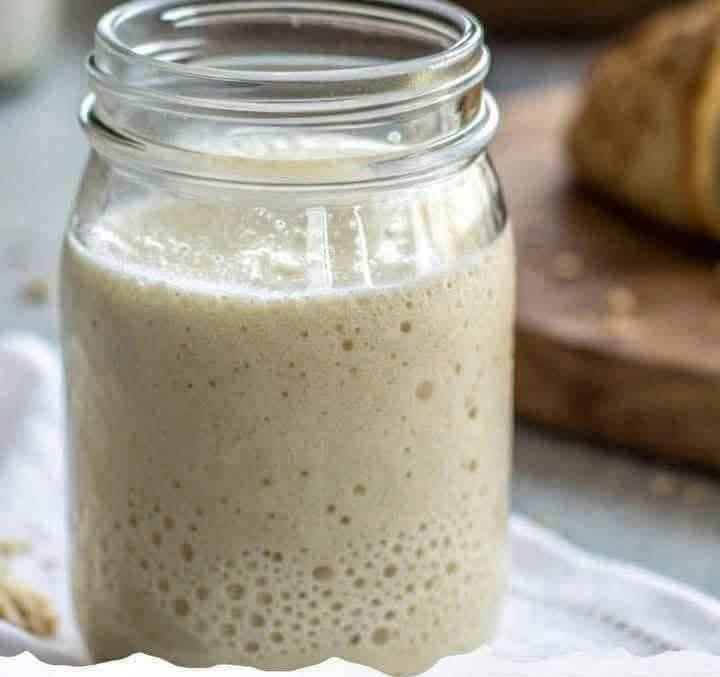
A healthy starter should:
- Double in size after feeding
- Have visible bubbles
- Smell pleasantly tangy
- Look airy inside
Step 8: Ready to Use
When the starter consistently rises after feeding, it is ready for baking.
Use it in sourdough bread recipes or store in the refrigerator with regular feedings.
Description
Sourdough Starter is a living culture that creates naturally leavened bread with a distinctive tangy flavor and chewy texture. With simple ingredients and regular care, a homemade starter can last for years and become a reliable part of your baking routine.
Nutritional Information
Approximate Values Per Serving (Starter Only)
- Calories: 50–80
- Protein: 2–3g
- Carbohydrates: 10–15g
- Fat: 0–1g
- Fiber: 1–3g
- Sugar: 0–1g
Values vary depending on flour type and feeding ratio.
Conclusion
Sourdough Starter is more than just an ingredient—it is a traditional baking practice built on patience and natural fermentation. Once established, it opens the door to delicious homemade breads, pancakes, crackers, and more.
Recommendation
Use sourdough starter for:
- Sourdough bread
- Pancakes
- Waffles
- Pizza dough
- Crackers
- Cinnamon rolls
- Sandwich bread
For best results, keep a small amount of starter alive and feed it regularly so it is always ready for baking.
Embracing Healthful Indulgence
Traditional sourdough baking celebrates simple ingredients and mindful preparation. The fermentation process adds depth of flavor and connects modern baking with centuries of homemade food traditions.