
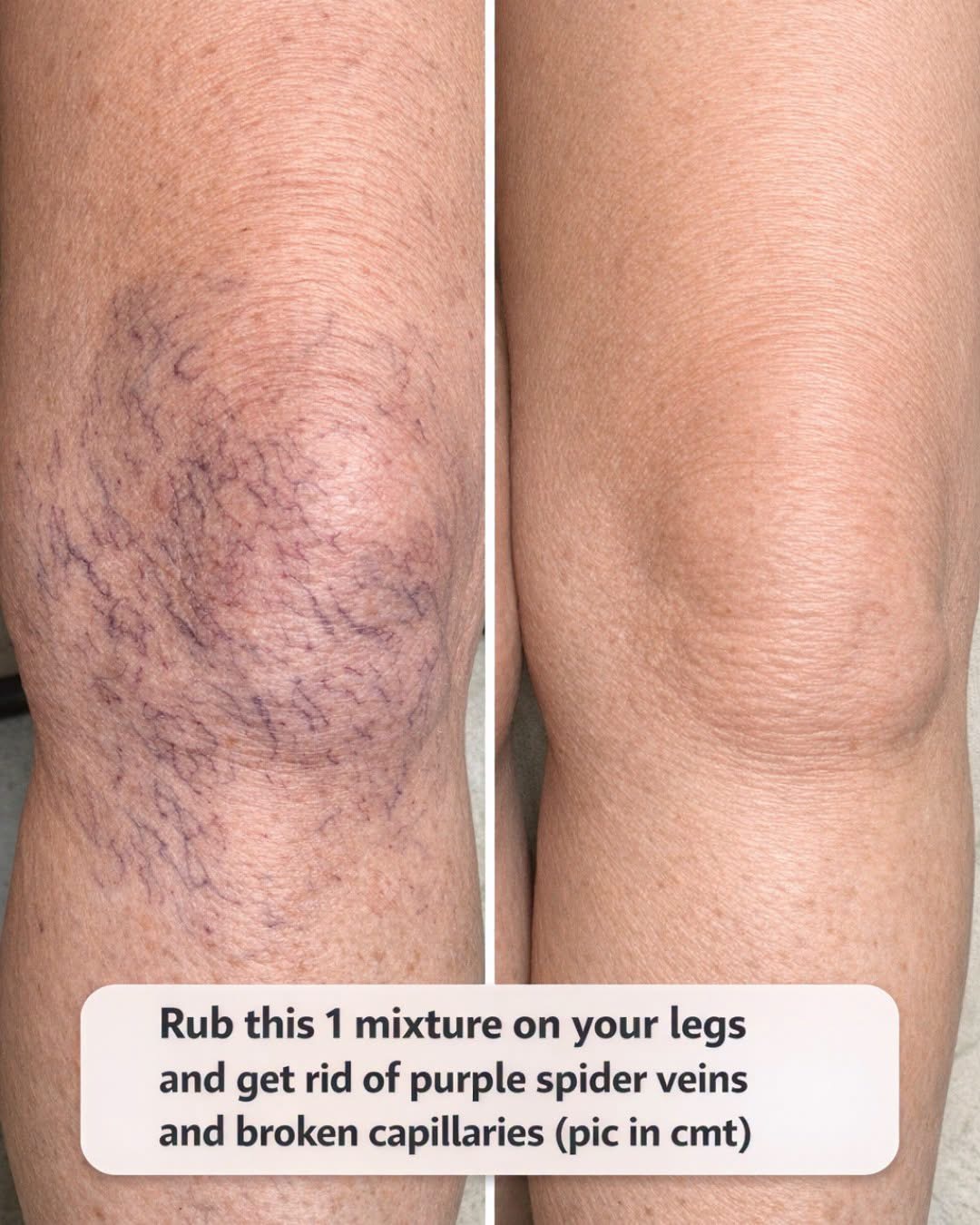
Spider veins are those small red, purple, or bluish blood vessels that appear close to the surface of the skin. They often look like tiny branches, webs, or networks and are especially common on the legs.
A viral photo may claim that rubbing a simple homemade mixture onto your legs can make these veins disappear. While the before-and-after pictures can certainly look convincing, it is important to understand what spider veins actually are and what treatments are proven to reduce their appearance.
What Are Spider Veins?
Spider veins, medically called telangiectasias, are small visible blood vessels near the surface of the skin. They are different from larger varicose veins, which can become swollen and raised.
Spider veins are usually harmless and are often mainly a cosmetic concern. However, some people may also experience aching, heaviness, or discomfort in the legs when they have underlying vein problems.
Why Do Spider Veins Appear?
There isn’t always one single cause.
Spider veins can become more noticeable because of:
- Genetics and family history
- Aging
- Pregnancy and hormonal changes
- Spending long periods sitting or standing
- Previous injury to the area
- Sun exposure
- Changes in the veins and their valves
When the tiny valves inside veins become weaker, blood can flow backward and collect in the vein. Over time, the vessel can become more visible through the skin.
Can Rubbing a Homemade Mixture Remove Them?
This is where viral social-media posts can be misleading.
There is no good medical evidence that rubbing a homemade mixture onto the skin can permanently eliminate established spider veins. A mixture may moisturize the skin or temporarily change how the skin looks, but that is different from actually closing or removing a blood vessel.
Spider veins are part of the circulatory system beneath the skin, so simply rubbing something onto the surface generally cannot reproduce the medical processes used to close those vessels.
That doesn’t mean every home-care method is useless. Healthy habits can support circulation and may help reduce symptoms or lower the chance of developing additional vein problems, but existing spider veins generally require specific treatment if someone wants them removed.
What Can You Do at Home?
If spider veins aren’t causing symptoms and you’re mainly concerned about their appearance, you don’t necessarily need treatment.
However, several habits can support healthy circulation:
1. Keep Moving
Walking and regular exercise help the muscles in your legs assist blood flow back toward the heart.
2. Avoid Sitting or Standing for Long Periods
If you have to sit for a long time, getting up and walking around regularly can help. The American Academy of Dermatology recommends taking breaks from prolonged sitting or standing.
3. Elevate Your Legs
Raising your legs when resting can help reduce pressure and swelling in the lower legs.
4. Consider Compression Stockings
Compression stockings can help improve blood flow and reduce swelling in the legs. However, they do not make existing spider veins disappear. The appropriate compression level and fit are important, so it’s best to get professional advice when needed.
What Treatments Actually Reduce Spider Veins?
If you’re looking for a treatment that specifically targets visible spider veins, there are established medical options.
Sclerotherapy
Sclerotherapy is one of the most commonly used treatments for spider veins.
A healthcare professional injects a solution into the affected vein. The solution irritates the vein wall, causing it to close. Over time, the treated vessel fades and becomes less visible.
Spider veins often begin fading within several weeks, although multiple treatments may sometimes be necessary.
Laser Treatment
Laser treatment uses focused light energy to target the visible blood vessel. The vessel is damaged and gradually fades without requiring an injection.
The number of treatments depends on the size, number, and location of the veins.
Don’t Ignore New or Unusual Leg Changes
Most spider veins are not dangerous. However, not every red or purple mark on the leg is a spider vein.
If a vein becomes painful, swollen, warm, suddenly changes appearance, or you develop significant swelling in one leg, it is important to have it evaluated rather than assuming it is simply a cosmetic issue.
A healthcare professional can determine whether you’re dealing with ordinary spider veins, varicose veins, or another condition.
The Bottom Line
Those viral “one mixture removes spider veins” claims may look impressive, but a homemade skin mixture shouldn’t be presented as a proven way to permanently erase spider veins.
For general leg health, regular movement, avoiding prolonged sitting or standing, elevating the legs, and appropriate compression can be useful. For actually reducing established spider veins, treatments such as sclerotherapy and laser therapy have much stronger medical support.
If you’re considering treatment, getting the veins examined first is the safest approach because the right treatment depends on the type and extent of the veins.