
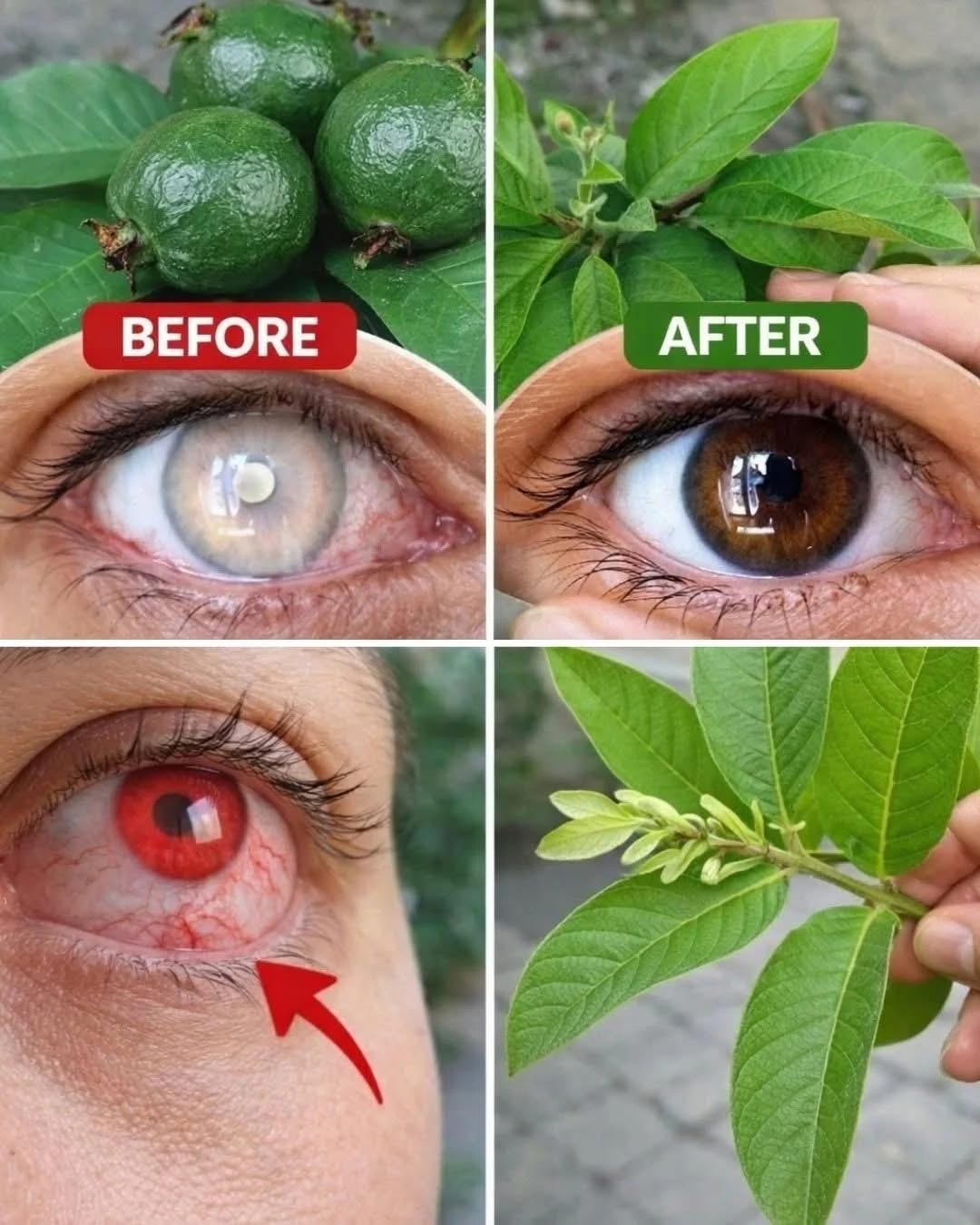
Guava is a familiar fruit in many parts of the world, and its leaves have also been used traditionally in various home remedies. Social media posts sometimes go much further, claiming that guava leaves can change eye color, remove redness, or dramatically improve vision.
These claims can be eye-catching, but they should be approached with caution. There is no good scientific evidence that guava fruit or guava leaves can permanently change a person’s natural eye color or treat serious eye conditions.
What Is Guava?
Guava is a tropical fruit from the Psidium guajava plant. The fruit provides nutrients such as vitamin C, fiber, and various plant compounds.
Guava leaves contain additional compounds, including polyphenols and flavonoids, which have been investigated in laboratory and preliminary research.
This has led to interest in their traditional uses, but laboratory findings should not automatically be interpreted as proof that a home remedy can treat an eye disease.
Can Guava Change Your Eye Color?
No.
A person’s natural eye color is largely determined by the amount and distribution of melanin in the iris. Drinking guava tea, eating guava, or applying guava leaves does not have a proven ability to turn one eye color into another.
The dramatic “before and after” eye images commonly used in viral posts can also be misleading. Lighting, camera settings, image editing, contact lenses, and differences in pupil size can make eyes appear substantially different.
What About Red or Irritated Eyes?
Red eyes can have many causes, including:
- Allergies
- Dry eyes
- Irritation
- Lack of sleep
- Contact lens problems
- Infection
- Injury
- Inflammation
Because some causes require medical treatment, putting homemade preparations, plant extracts, or juices directly into the eye is not recommended.
The eye is extremely sensitive, and non-sterile substances can introduce bacteria or other contaminants and potentially cause an infection or damage the cornea.
Could Guava Be Part of a Healthy Diet?
Absolutely.
Eating whole guava can be a nutritious addition to a balanced diet. Its vitamin C, fiber, and antioxidant compounds contribute to overall nutrition.
Rather than treating guava as a medicine for the eyes, think of it as one nutritious food that can contribute to a healthy diet.
A Safer Way to Use Guava Leaves
Guava leaves are traditionally prepared in some cultures as a tea. If you choose to consume guava-leaf tea, use properly identified, clean leaves and avoid treating it as a replacement for prescribed medication or medical care.
Most importantly, keep homemade guava preparations away from the eyes unless a qualified eye-care professional specifically recommends a sterile, medically appropriate product.
When Red Eyes Need Medical Attention
Seek prompt medical care if eye redness is accompanied by:
- Significant eye pain
- Blurred or reduced vision
- Strong sensitivity to light
- Injury or chemical exposure
- Severe swelling
- Pus or substantial discharge
- A feeling that something is stuck in the eye
- Sudden changes in vision
These symptoms can indicate a condition that shouldn’t be treated with a home remedy.
The Bottom Line
Guava and guava leaves are interesting plants with a long history of traditional use, and guava fruit can certainly be part of a healthy diet. However, there is no reliable evidence that guava leaves change eye color, cure red eyes, or restore damaged vision.
If your eyes suddenly look red or your vision changes, it’s much safer to find the cause rather than experimenting with homemade mixtures.