
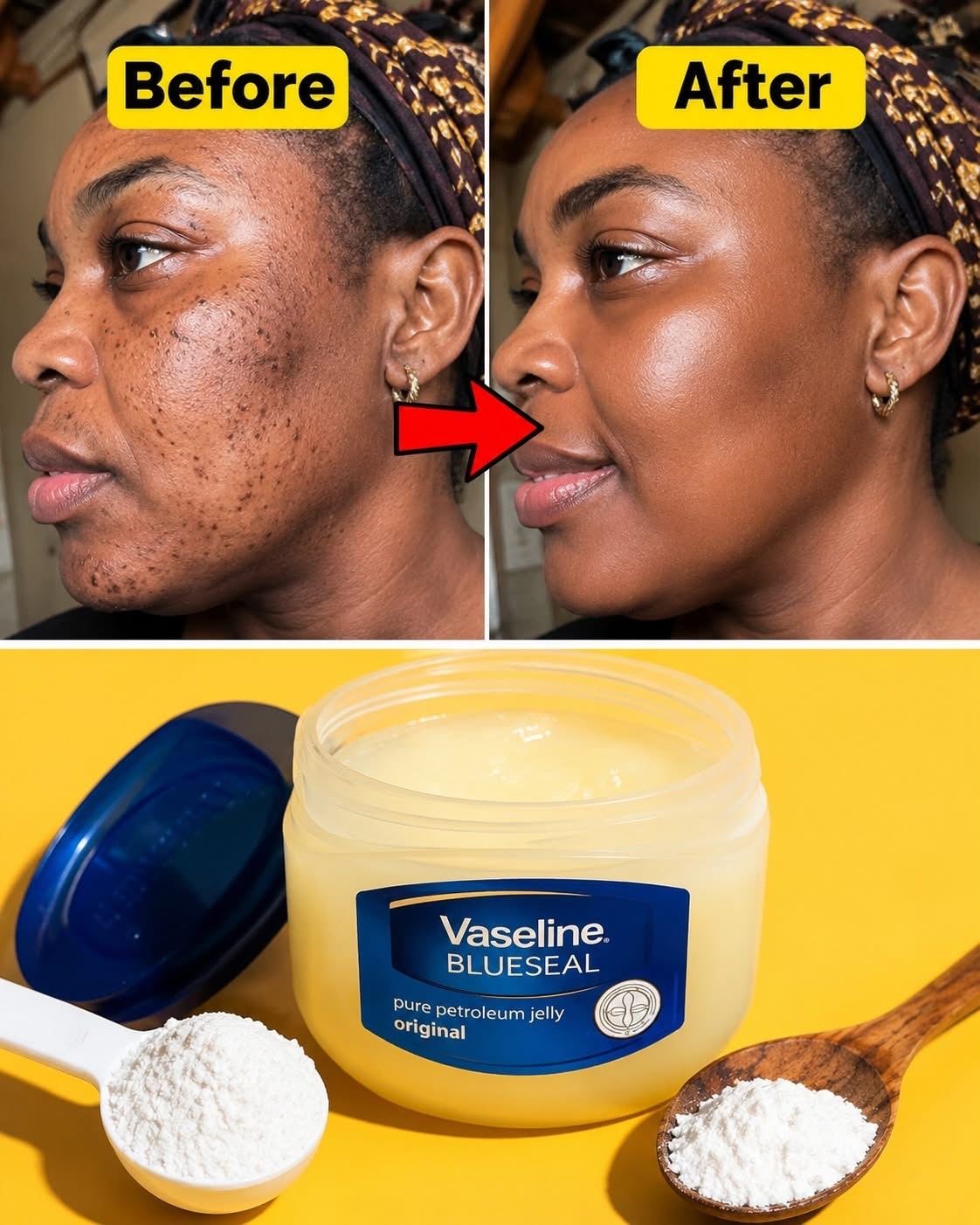
Skin tags are small, soft growths of skin that commonly appear around the neck, underarms, eyelids, groin, or other areas where skin rubs against skin or clothing. Because they can be noticeable or irritating, many people search for simple home remedies that promise to make them disappear overnight.
One viral method combines petroleum jelly with a white powder, claiming that the mixture can dry out and remove skin tags while you sleep.
But there is an important distinction between soothing a skin tag and actually removing it.
Can Petroleum Jelly Remove a Skin Tag?
Petroleum jelly is an effective skin protectant and moisturizer. It creates a barrier that helps reduce water loss and protects irritated skin.
However, petroleum jelly does not have a proven ability to make a skin tag fall off overnight.
Applying it may make the surrounding skin feel softer and reduce friction, but it doesn’t destroy the tissue forming the skin tag.
This is why dramatic “before and after” pictures online shouldn’t automatically be taken as evidence that a particular homemade mixture caused the result.
What About Mixing Petroleum Jelly With Baking Soda?
You may see recipes recommending petroleum jelly mixed with baking soda and applied directly to a skin tag.
There isn’t good clinical evidence that this combination safely removes skin tags.
Baking soda is alkaline and can irritate the skin, particularly when used repeatedly or left on for prolonged periods. Irritation can lead to redness, burning, dryness, or even a chemical-type skin injury.
So although the recipe may sound harmless because both ingredients are common household products, “natural” or homemade does not necessarily mean safe.
Why You Shouldn’t Try to Cut It Off Yourself
Some people attempt to remove skin tags by cutting, tying, burning, or freezing them at home.
This can cause:
- Bleeding
- Infection
- Scarring
- Skin damage
- Pain
- Delayed healing
There’s also another important concern: not every skin growth is actually a skin tag.
A mole, wart, cyst, or another type of skin lesion can sometimes look similar. Removing an unidentified growth yourself could delay proper diagnosis.
What Is the Safest Way to Remove a Skin Tag?
If a skin tag is bothering you cosmetically or repeatedly catches on clothing or jewelry, a healthcare professional can usually remove it quickly.
Common professional methods include:
Cryotherapy
The growth is frozen using a specialized medical technique, causing it to gradually disappear.
Snip Removal
A clinician can remove a small skin tag using sterile medical instruments.
Electrosurgery
Heat or electrical energy can be used to remove the growth.
The appropriate method depends on the size, location, and appearance of the lesion.
When Should You Get It Checked?
Don’t assume every new growth is a harmless skin tag.
It’s particularly important to have it evaluated if the growth:
- Suddenly changes in size or color
- Bleeds without obvious injury
- Becomes painful
- Develops an unusual shape
- Grows rapidly
- Has an irregular appearance
- Keeps crusting or forming a sore
A healthcare professional can determine whether it really is a skin tag before recommending removal.
If You Already Have a Skin Tag
If it isn’t painful or bothersome, you don’t necessarily need to remove it at all.
Keep the area clean, avoid repeatedly rubbing or pulling the growth, and don’t apply harsh household chemicals or acids to it.
If friction is the problem, a bland moisturizer or petroleum jelly can help reduce irritation of the surrounding skin—but it should be viewed as skin protection, not a skin-tag removal treatment.
The Bottom Line
The idea of applying petroleum jelly and another household ingredient before bed and waking up without a skin tag is an appealing viral beauty tip, but there is no reliable evidence that petroleum jelly can remove skin tags overnight.
Petroleum jelly can help protect and moisturize the skin, but an established skin tag generally requires time and, when removal is desired, a medically appropriate procedure.
Before trying to destroy a skin growth at home, make sure you know what you’re treating. A quick evaluation by a healthcare professional is much safer than risking burns, infection, scarring, or removing something that isn’t actually a skin tag.