
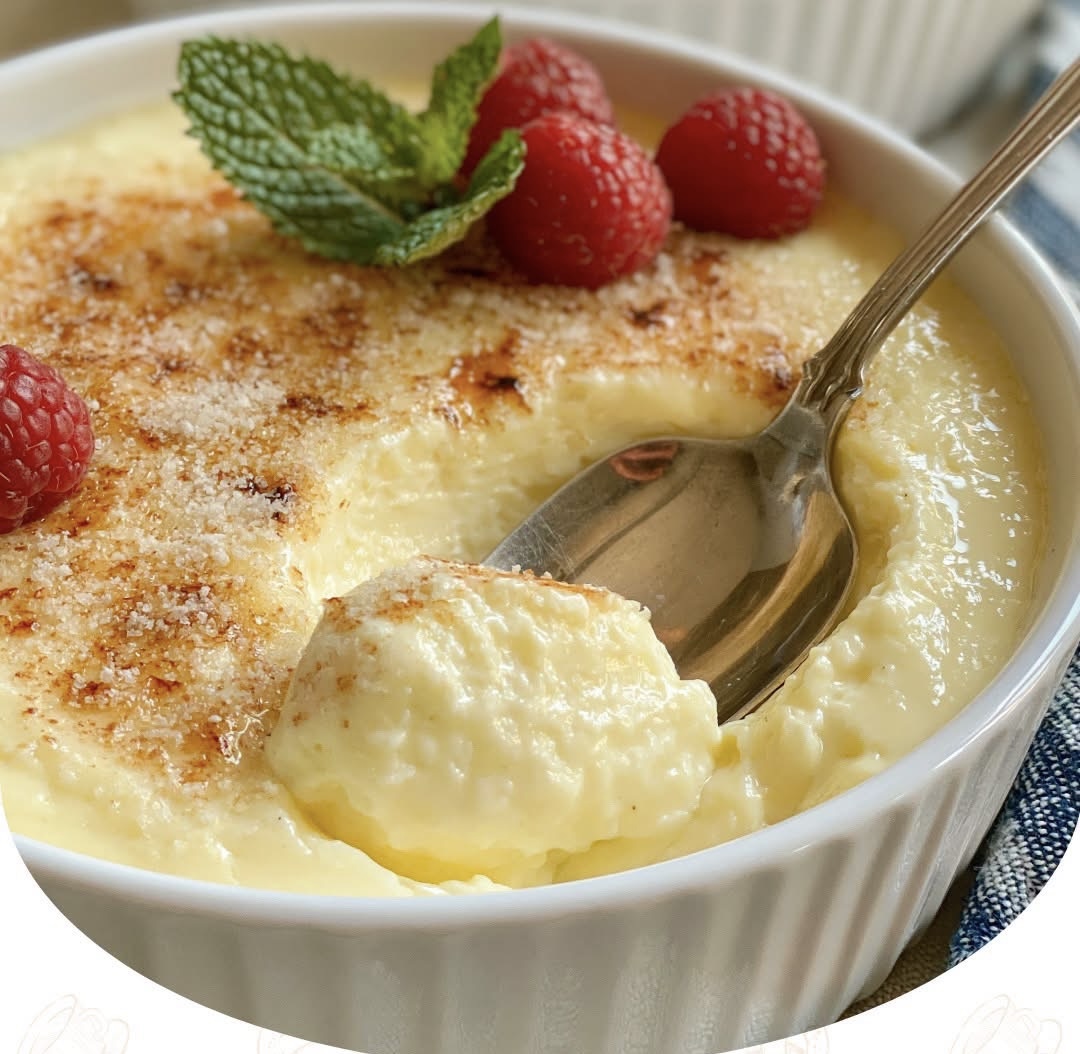
There’s something wonderfully comforting about classic homemade custard. Smooth, creamy, rich, and delicately flavored with vanilla, it’s one of those simple recipes that can turn an ordinary dessert into something truly special.
Made with just a handful of basic ingredients, homemade custard is delicious served warm over cakes, pies, puddings, fruit, or simply enjoyed by the spoonful.
Why You’ll Love This Custard
- Rich and creamy texture
- Made with simple ingredients
- Naturally flavored with vanilla
- Much more delicious than many store-bought versions
- Perfect served warm or chilled
- Great with cakes, pies, fruit, and puddings
Ingredients
- 2 cups (480 ml) whole milk
- ½ cup (120 ml) heavy cream
- 4 large egg yolks
- ½ cup (100 g) granulated sugar
- 2 tablespoons cornstarch
- 1 teaspoon vanilla extract
- Pinch of salt
- 1 tablespoon unsalted butter
How to Make Classic Homemade Custard
1. Warm the Milk and Cream
Pour the milk and heavy cream into a medium saucepan.
Heat over medium-low heat until the mixture is hot and steaming, but do not let it boil.
Remove from the heat.
2. Whisk the Egg Yolks
In a separate bowl, whisk together the egg yolks, sugar, cornstarch, and salt.
Continue whisking until the mixture becomes smooth and slightly lighter in color.
3. Temper the Eggs
This is the most important step for smooth custard.
Slowly pour a small amount of the hot milk mixture into the egg mixture while whisking constantly.
Gradually add more of the warm milk, continuing to whisk.
This gently raises the temperature of the eggs without scrambling them.
4. Return Everything to the Pan
Pour the mixture back into the saucepan.
Place it over low to medium-low heat.
Cook while whisking constantly, making sure to scrape the bottom and corners of the pan.
After several minutes, the custard will begin to thicken.
5. Add the Vanilla and Butter
Once the custard is thick enough to coat the back of a spoon, remove it from the heat.
Stir in the vanilla extract and butter until completely smooth.
6. Strain for an Extra-Smooth Texture
For an especially silky custard, pour it through a fine-mesh sieve into a clean bowl.
This removes any tiny bits of cooked egg that may have formed.
7. Serve
For warm custard, serve immediately over your favorite dessert.
For chilled custard, cover the surface directly with plastic wrap to prevent a skin from forming, then refrigerate until cold.
How Thick Should Custard Be?
The consistency depends on how you plan to use it.
For pouring over desserts, it should be smooth and pourable, similar to a thick cream.
For filling pastries or cakes, you can cook it slightly longer for a thicker consistency.
Remember that custard will become thicker as it cools.
Tips for Perfect Custard
Keep the heat low.
High heat can cause the eggs to scramble.
Whisk constantly.
This helps prevent lumps and keeps the bottom from sticking.
Don’t boil the custard.
Gentle cooking produces a much smoother texture.
Use fresh eggs.
Egg yolks provide the richness and help thicken the custard.
Strain it if necessary.
A fine-mesh sieve can rescue the texture and give you an exceptionally smooth finished custard.
Easy Variations
Vanilla Bean Custard
For an even deeper vanilla flavor, simmer the milk with the seeds from one vanilla bean.
Lemon Custard
Add a little finely grated lemon zest to the warm milk for a bright citrus flavor.
Chocolate Custard
Whisk a few tablespoons of unsweetened cocoa powder into the dry ingredients, or add melted chocolate after the custard thickens.
Cinnamon Custard
Add ½ teaspoon of ground cinnamon for a warm, cozy flavor that’s especially delicious with baked apples.
What to Serve With Homemade Custard
This custard is incredibly versatile. Try it with:
- Apple pie
- Bread pudding
- Pound cake
- Fruit crumble
- Sticky toffee pudding
- Chocolate cake
- Fresh berries
- Roasted or poached fruit
- Pancakes and waffles
You can also serve it simply with sliced bananas, strawberries, or peaches.
How to Store Custard
Allow the custard to cool, then cover it and refrigerate.
Homemade custard is best enjoyed within 2–3 days.
If the custard becomes too thick after refrigeration, whisk in a small amount of milk to loosen it before serving.
Frequently Asked Questions
Can I make custard without cornstarch?
Yes. Egg yolks can thicken custard on their own, although cornstarch makes the recipe more forgiving and helps create a thicker, more stable texture.
Why did my custard become lumpy?
The eggs may have cooked too quickly. This usually happens when the mixture gets too hot or isn’t whisked enough.
Straining the custard through a fine sieve can often improve the texture.
Can I use milk instead of heavy cream?
Yes. The custard will still work with whole milk alone, but using cream gives it a richer and more luxurious texture.
Can I serve it cold?
Absolutely. Chilled custard makes a wonderful dessert filling or topping for fruit and cakes.
Final Thoughts
Classic Homemade Custard is proof that a few simple ingredients can create something incredibly delicious. The combination of creamy milk, rich egg yolks, sugar, and vanilla produces a silky sauce that’s perfect for almost any dessert.