
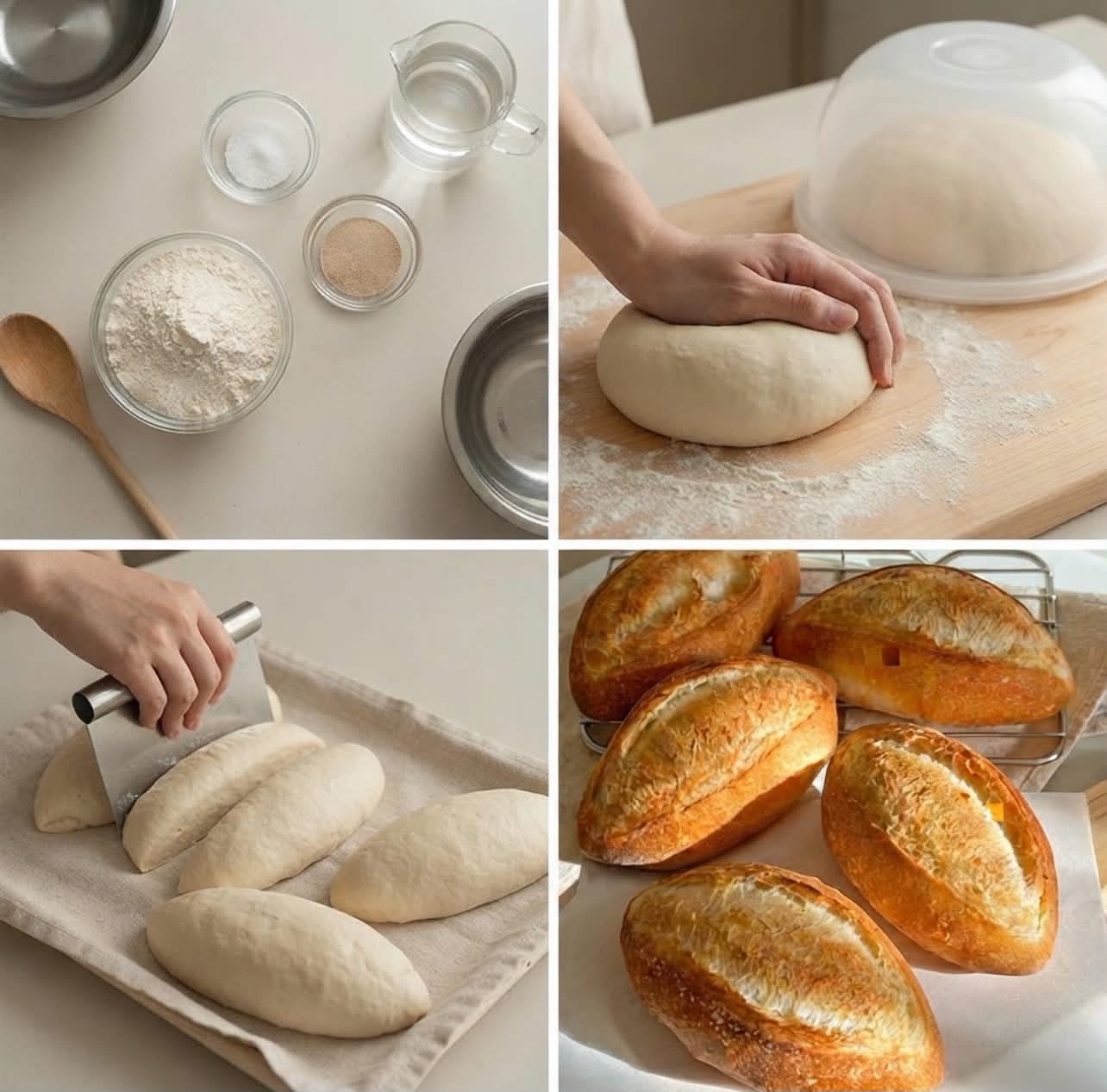
There’s nothing quite like the smell of freshly baked French bread filling the kitchen. With a crisp, golden crust and a soft, airy center, this classic homemade bread is surprisingly simple to make with just a few basic ingredients.
Whether you serve it alongside soup, use it for sandwiches, or simply tear off a warm piece and spread it with butter, this French bread is a recipe worth keeping.
Why You’ll Love This French Bread
- Crisp, golden crust
- Soft and airy inside
- Simple pantry ingredients
- No complicated equipment required
- Perfect for sandwiches and dinner
- Delicious fresh from the oven
- Makes your kitchen smell amazing
Ingredients
- 4 cups (500 g) all-purpose or bread flour
- 1 ½ cups (360 ml) warm water
- 2 ¼ teaspoons active dry yeast
- 1 tablespoon granulated sugar
- 1 ½ teaspoons salt
- 2 tablespoons olive oil or melted butter
How to Make French Bread
1. Activate the Yeast
Pour the warm water into a large mixing bowl.
Add the yeast and sugar and stir gently.
Let the mixture sit for 5–10 minutes, until it becomes slightly foamy.
The water should be warm to the touch, not hot.
2. Make the Dough
Add the olive oil and salt.
Gradually add the flour, mixing until a shaggy dough forms.
Turn the dough onto a lightly floured surface and knead for approximately 8–10 minutes, until smooth and elastic.
If the dough is extremely sticky, add a little more flour, one tablespoon at a time. Avoid adding too much because a slightly soft dough produces a lighter loaf.
3. Let the Dough Rise
Place the dough in a lightly oiled bowl.
Cover with a clean kitchen towel or plastic wrap.
Let it rise in a warm, draft-free place for about 1–1½ hours, or until doubled in size.
4. Shape the Loaves
Gently punch down the dough to release excess air.
Transfer it to a lightly floured surface and divide it into two equal pieces.
Roll each piece into a long loaf, approximately 12–14 inches long.
Place the loaves on a parchment-lined baking sheet, leaving enough space between them.
5. Let Them Rise Again
Cover the shaped loaves loosely and let them rest for another 30–45 minutes.
They should become noticeably puffy.
6. Score the Bread
Using a very sharp knife or bread lame, make several diagonal cuts across the top of each loaf.
These cuts allow the bread to expand properly during baking and give it the traditional French-bread appearance.
7. Create Steam
Preheat the oven to 450°F (230°C).
For a crispier crust, place an empty metal baking pan on the bottom rack while the oven preheats.
When you put the bread in the oven, carefully add a little hot water to the empty pan to create steam.
Be cautious when adding water because the steam will be very hot.
8. Bake
Place the loaves in the oven and bake for approximately 20–25 minutes, or until the crust is deeply golden brown.
The bread should sound hollow when tapped on the bottom.
For an especially crisp crust, leave the bread in the turned-off oven with the door slightly open for a few additional minutes.
9. Cool Before Slicing
Transfer the loaves to a wire rack.
Allow them to cool for at least 20–30 minutes before slicing.
Although it’s tempting to cut into a hot loaf immediately, allowing it to cool helps the interior finish setting properly.
Tips for Perfect French Bread
Don’t Add Too Much Flour
A dough that is slightly soft and elastic will generally produce a lighter interior than a stiff dough.
Knead Well
Proper kneading develops gluten, which gives the bread structure and helps create that chewy texture.
Give It Time to Rise
Don’t rush the rising process. The dough should visibly increase in size before shaping.
Use Steam
Steam helps keep the crust flexible during the first part of baking, contributing to a crisp, attractive crust.
Don’t Slice It Too Early
Freshly baked bread continues to set as it cools. Waiting makes the slices cleaner and the texture better.
Easy Variations
Garlic French Bread
Brush the baked loaf with melted butter mixed with minced garlic and parsley.
Herb French Bread
Add dried rosemary, thyme, or Italian seasoning to the dough.
Cheesy French Bread
Top the baked loaf with shredded Parmesan or mozzarella and return it to the oven until melted.
Honey French Bread
Replace the sugar with honey for a slightly different flavor.
Whole Wheat Version
Replace up to half of the all-purpose flour with whole-wheat flour. You may need a little additional water depending on the flour.
How to Serve French Bread
Fresh French bread is wonderful with:
- Butter
- Garlic butter
- Soups
- Stews
- Pasta
- Roasted meats
- Salads
- Cheese
- Dips
It also makes excellent garlic bread, croutons, bruschetta, and sandwiches.
How to Store It
French bread is best enjoyed the day it is baked.
Keep the cooled loaf at room temperature in a paper bag or bread container for approximately 1–2 days.
Avoid refrigerating bread unless necessary, as refrigeration can make it stale more quickly.
For longer storage, wrap the completely cooled loaf tightly and freeze it for up to several months. Thaw at room temperature and warm briefly in the oven before serving.
Frequently Asked Questions
Can I make this bread without a stand mixer?
Absolutely. This recipe can be kneaded entirely by hand.
Why isn’t my bread crust crispy?
Insufficient steam, a lower oven temperature, or storing the bread in a sealed plastic bag while warm can all affect the crust.
Can I make one large loaf instead of two?
Yes. Shape the entire dough into one large loaf, but expect a longer baking time. Check the center carefully before removing it from the oven.
Can I prepare the dough the night before?
Yes. The dough can be refrigerated after the first rise. Bring it out, shape it, allow it to become puffy again, and then bake.
Final Thoughts
This French Bread is a simple homemade classic with everything you want from a fresh loaf: a beautifully crisp golden crust, a soft and airy center, and that irresistible aroma that only comes from bread baking in the oven.