
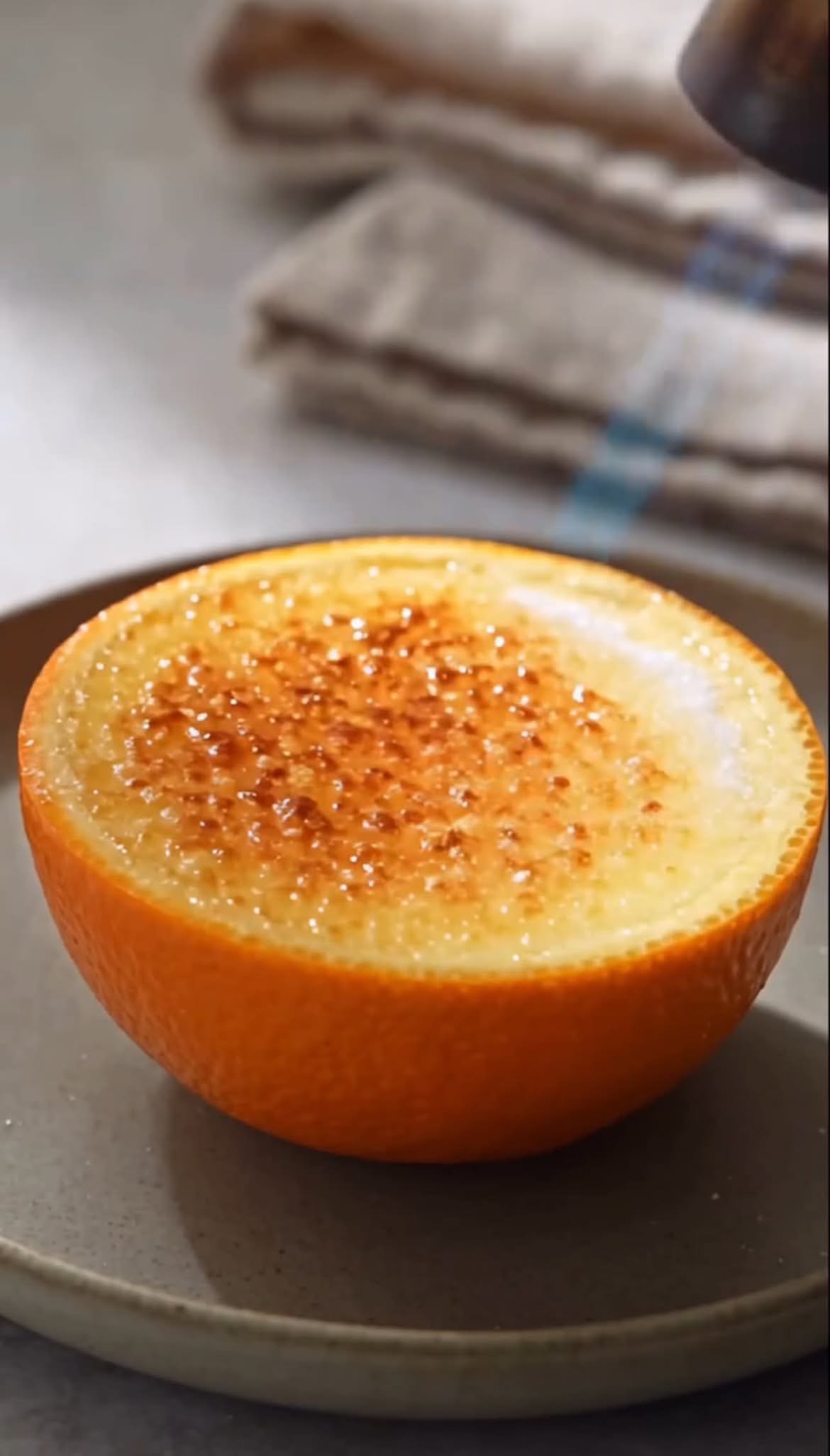
This Orange Crème Brûlée is a beautiful twist on the classic French dessert. Instead of serving the silky vanilla custard in a traditional ramekin, the creamy citrus custard is baked right inside an orange half and finished with a thin layer of caramelized sugar.
The result is rich and creamy on the inside, crisp and crackly on top, with a bright orange aroma running through every bite. It looks impressive, but the recipe is surprisingly simple.
Why You’ll Love This Dessert
- Creamy, silky custard
- Fresh orange flavor
- Crisp caramelized sugar topping
- Beautiful individual presentation
- No complicated decorating required
- Perfect for dinner parties and holidays
- A fun alternative to traditional crème brûlée
Ingredients
For the Orange Custard
- 4 large oranges
- 2 cups heavy cream
- 5 large egg yolks
- 1/3 cup granulated sugar
- 1 teaspoon vanilla extract
- 1 tablespoon finely grated orange zest
- 2 tablespoons fresh orange juice
- Pinch of salt
For the Caramelized Topping
- 4–6 tablespoons granulated sugar
How to Make Orange Crème Brûlée
1. Prepare the Oranges
Wash and dry the oranges thoroughly.
Cut each orange in half crosswise.
Using a small spoon, carefully scoop out the fruit and membranes, leaving the orange peel intact.
Try not to puncture the bottom or sides of the peel.
Reserve the orange flesh for juice, fruit salad, or another recipe.
2. Stabilize the Orange Halves
Place the orange halves cut-side up in a baking dish.
If they wobble, nestle them into small pieces of aluminum foil or use a muffin pan to help keep them upright.
The orange shells need to remain level while the custard bakes.
3. Warm the Cream
Pour the heavy cream into a saucepan.
Add the orange zest and heat over medium-low heat until the cream is hot and steaming, but do not let it boil.
Remove from the heat and allow it to sit for about 5 minutes so the orange flavor can infuse into the cream.
4. Prepare the Egg Mixture
In a bowl, whisk together the egg yolks, sugar, vanilla, and salt.
Whisk until the mixture becomes smooth and slightly lighter in color.
5. Temper the Eggs
Slowly pour the warm cream into the egg mixture while whisking constantly.
Add the orange juice and continue whisking until everything is well combined.
Adding the warm cream gradually prevents the egg yolks from scrambling.
For an especially smooth custard, strain the mixture through a fine-mesh sieve.
6. Fill the Orange Shells
Carefully pour the custard into each orange half.
Fill them nearly to the top, leaving just a small amount of space.
7. Create a Water Bath
Pour hot water into the baking dish around the orange halves.
The water should come about halfway up the sides of the orange shells.
A water bath helps the custard cook gently and evenly.
8. Bake
Carefully transfer the dish to a preheated 325°F (165°C) oven.
Bake for approximately 30–40 minutes, depending on the size of the oranges.
The custard should be set around the edges while still having a slight jiggle in the center.
Don’t wait for the custard to become completely firm in the oven.
9. Cool Completely
Carefully remove the orange halves from the water bath.
Allow them to cool to room temperature, then refrigerate for at least 2–3 hours, preferably overnight.
The custard will continue to firm as it chills.
Caramelizing the Sugar
This is the part that gives crème brûlée its signature crackly topping.
1. Add the Sugar
Once the custard is completely cold, gently blot any moisture from the surface if necessary.
Sprinkle approximately 1 tablespoon of granulated sugar evenly over each custard.
Use a thin, even layer rather than a thick pile of sugar.
2. Torch the Sugar
Use a kitchen torch to caramelize the sugar.
Move the flame continuously over the surface until the sugar melts and turns deep golden brown.
Allow the caramelized topping to cool for a minute or two so it becomes crisp.
3. Serve
Serve the Orange Crème Brûlée immediately after the sugar has hardened.
Garnish with a little fresh orange zest or a small piece of orange peel if desired.
Tips for Perfect Orange Crème Brûlée
Choose Firm Oranges
Use oranges with firm, sturdy skins. They are easier to hollow out and less likely to collapse during baking.
Don’t Boil the Cream
Boiling the cream can affect the texture and makes tempering the eggs more difficult.
Strain the Custard
Straining removes any small pieces of cooked egg or orange zest and produces an exceptionally smooth custard.
Don’t Overbake
The center should still have a gentle wobble when the custards come out of the oven. Overbaking can produce a rubbery texture.
Chill Thoroughly
The custard needs enough time to cool and set before you add the caramelized sugar.
Caramelize Just Before Serving
Moisture from the refrigerator can soften the caramel topping, so torch the sugar shortly before serving.
Easy Variations
Vanilla Orange Crème Brûlée
Increase the vanilla and reduce the orange zest slightly for a more balanced vanilla-citrus flavor.
Chocolate Orange
Add a small amount of finely chopped dark chocolate to the warm cream and stir until melted before combining it with the eggs.
Blood Orange Crème Brûlée
Use blood oranges for a deeper citrus flavor and beautiful color.
Orange and Cinnamon
Infuse the cream with a small cinnamon stick along with the orange zest.
Grand Marnier Style
For an adults-only variation, a small amount of orange liqueur can be added to the custard. The alcohol will not necessarily cook off completely, so this version isn’t suitable for children.
Serving Ideas
Serve these individual desserts with:
- Fresh orange zest
- Fresh berries
- Thin orange slices
- Whipped cream
- Dark chocolate shavings
- A small mint leaf
- A cup of espresso or coffee
The contrast between the cold, creamy custard and the crisp caramel topping makes this dessert especially satisfying.
Storage
The baked custards can be covered and refrigerated for up to 2–3 days.
For the best texture, wait to caramelize the sugar until just before serving.
Once the sugar has been torched, the topping is best enjoyed immediately because refrigerator moisture can gradually soften the caramel.
Frequently Asked Questions
Can I make this without a kitchen torch?
Yes. Place the chilled custards under a very hot broiler for a short time until the sugar caramelizes. Watch them closely because the sugar can burn quickly.
Can I use regular ramekins?
Absolutely. If you don’t want to use orange shells, divide the custard among small ramekins and bake them in a water bath.
Why is my custard watery?
It may be underbaked, or the oranges may have released excess juice into the custard. Make sure the orange shells are well drained after being hollowed out and bake until the edges are set with only a slight center jiggle.
Can I prepare it the day before?
Yes. In fact, making the custards the day before works very well. Keep them refrigerated and caramelize the sugar shortly before serving.
Final Thoughts
Orange Crème Brûlée turns a classic French dessert into something even more eye-catching. The creamy custard is infused with fresh orange, while the caramelized sugar creates that irresistible crisp shell.