
Artisan Sourdough Bread
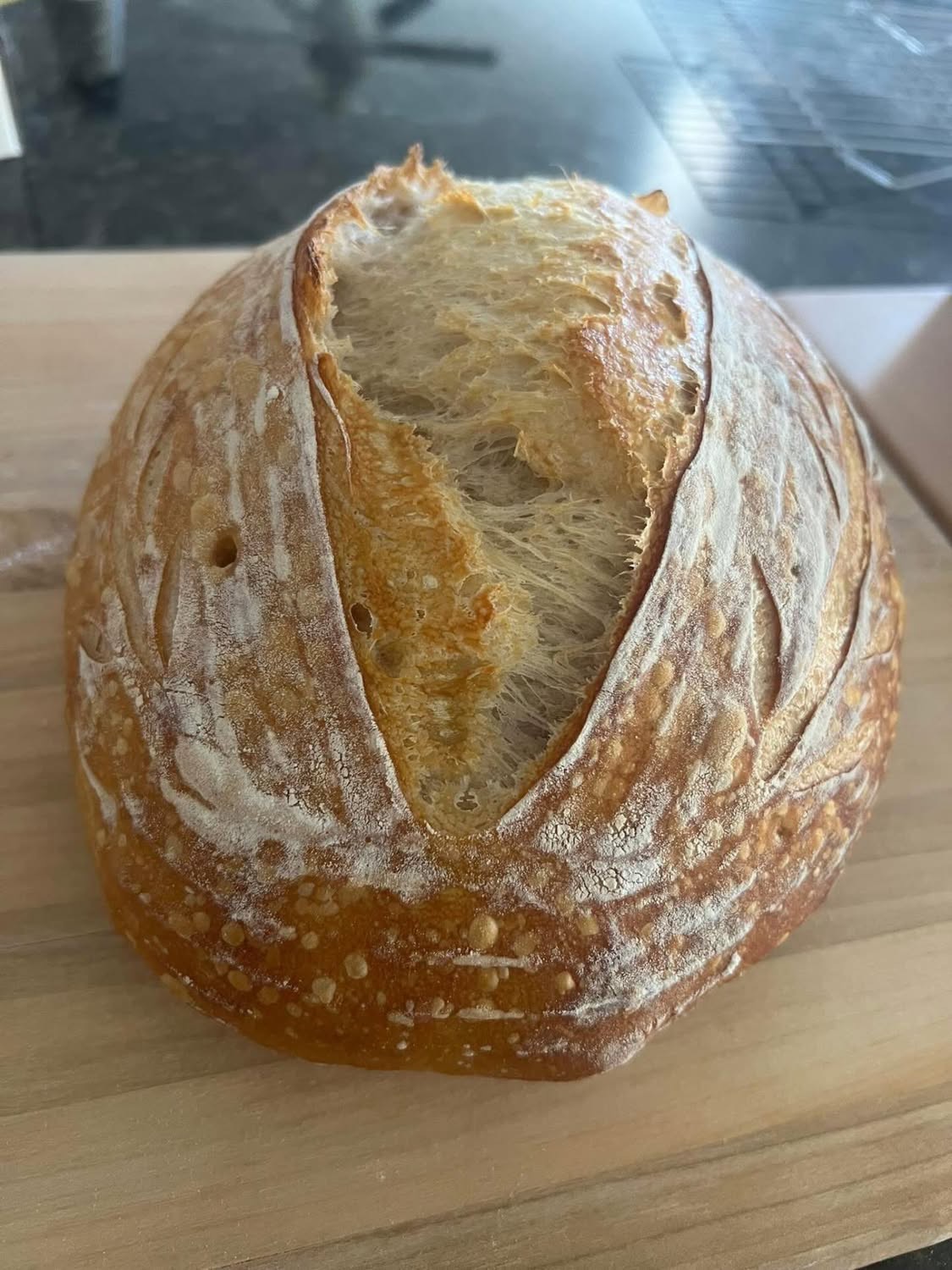
Few baked goods are as satisfying and timeless as a loaf of freshly baked artisan sourdough bread. With its crisp, golden crust, airy interior, and complex tangy flavor, sourdough bread represents one of the oldest and most traditional forms of baking. The loaf shown above is a classic example of rustic sourdough: beautifully blistered crust, deep scoring, and an open crumb that shows proper fermentation and skilled baking.
Unlike many modern breads that rely on commercial yeast, sourdough bread uses a natural fermentation process driven by wild yeast and beneficial bacteria. This fermentation not only creates the signature sour flavor but also improves texture, digestibility, and shelf life.
Although sourdough bread may appear intimidating at first, the process becomes simple and rewarding once you understand the basic techniques. With patience, quality ingredients, and attention to detail, anyone can bake a loaf that rivals bread from a professional bakery.
This comprehensive guide explains every step of the sourdough process, from preparing the starter to shaping and baking the final loaf. By the end, you will understand not only how to make sourdough bread but also why each step is important.
What Makes Sourdough Bread Special
Sourdough bread differs from standard yeast breads in several important ways.
First, sourdough relies on a natural starter rather than commercial yeast. A sourdough starter is a fermented mixture of flour and water that contains wild yeast and beneficial bacteria. These microorganisms feed on the sugars in the flour and produce carbon dioxide, which makes the dough rise.
Second, sourdough fermentation happens more slowly than commercial yeast fermentation. This slower process allows the dough to develop deeper flavor and stronger gluten structure.
Third, sourdough bread often has a crisp crust and chewy interior with irregular air pockets known as an open crumb. These characteristics are highly valued in artisan baking.
Finally, the natural acids produced during fermentation help preserve the bread and improve digestibility.
Ingredients
500 g bread flour
350 g water
100 g active sourdough starter
10 g salt
These four simple ingredients combine to create a complex and flavorful loaf.
Understanding Each Ingredient
Bread Flour
Bread flour contains a higher protein content than all-purpose flour. This protein forms gluten when mixed with water, giving the dough strength and elasticity.
Strong gluten development is essential for trapping the gas produced during fermentation, which creates the airy crumb typical of artisan sourdough bread.
Water
Water hydrates the flour and activates gluten formation. It also dissolves nutrients that feed the yeast and bacteria in the starter.
Hydration levels influence the final texture of the bread. Higher hydration doughs produce a more open crumb but can be more difficult to handle.
Sourdough Starter
The starter is the heart of sourdough baking. It contains wild yeast and lactic acid bacteria that naturally ferment the dough.
An active starter should be bubbly, slightly tangy in aroma, and capable of doubling in size after feeding.
Using a healthy starter ensures good rise, flavor, and texture.
Salt
Salt strengthens gluten structure and enhances flavor. It also slows fermentation slightly, allowing better control over dough development.
Although salt may seem like a small addition, it plays an essential role in balancing the flavor of sourdough bread.
Equipment Needed
Mixing bowl
Kitchen scale
Bench scraper
Proofing basket or bowl lined with cloth
Dutch oven or heavy baking pot
Sharp knife or bread lame for scoring
Cooling rack
Using proper tools makes the process easier and improves the final results.
Step 1: Feeding the Sourdough Starter
Before making the dough, your sourdough starter must be active and ready.
Feed the starter about 4 to 6 hours before baking. Mix equal parts flour and water with a portion of your existing starter.
For example:
50 g starter
50 g flour
50 g water
Allow the mixture to sit at room temperature until it becomes bubbly and doubles in size.
This indicates the yeast and bacteria are active and ready to ferment the dough.
Step 2: Mixing the Dough
In a large bowl, combine the flour and water. Mix until no dry flour remains.
At this stage the dough will look rough and shaggy. This is normal.
Cover the bowl and let the dough rest for 30 to 45 minutes. This resting stage is called autolyse.
Autolyse allows the flour to absorb water and begins gluten formation naturally, improving the dough’s texture and elasticity.
Step 3: Adding Starter and Salt
After the autolyse period, add the active sourdough starter and salt to the dough.
Mix thoroughly by hand until both ingredients are fully incorporated.
The dough will feel sticky at first but will gradually become smoother as you mix.
Step 4: Bulk Fermentation
Bulk fermentation is the stage where the dough rises and develops flavor.
Cover the bowl and let the dough ferment at room temperature for 4 to 5 hours.
During this time you will strengthen the dough through a process called stretch and fold.
Stretch and Fold Technique
Every 30 minutes during the first two hours of fermentation, perform a stretch and fold.
To do this:
- Wet your hands to prevent sticking.
- Grab one side of the dough.
- Stretch it upward gently.
- Fold it over the center.
- Rotate the bowl and repeat on all sides.
This process strengthens the gluten network and helps the dough hold its shape.
After several rounds, the dough will become smoother and more elastic.
How to Know When Bulk Fermentation Is Complete
By the end of fermentation the dough should:
Increase in volume by about 50 percent
Feel lighter and airy
Show bubbles on the surface
Hold its shape when gently lifted
These signs indicate the dough has fermented properly.
Step 5: Pre-Shaping the Dough
Lightly flour a work surface and turn the dough out of the bowl.
Use a bench scraper to gently shape the dough into a loose round.
Let the dough rest uncovered for 20 to 30 minutes. This rest period allows the gluten to relax before final shaping.
Step 6: Final Shaping
After resting, shape the dough into a tight round loaf.
Pull the edges of the dough toward the center while rotating it on the work surface.
This creates surface tension, which helps the loaf hold its shape during baking.
Place the shaped dough seam-side up in a floured proofing basket or bowl lined with a cloth.
Step 7: Cold Proofing
Cover the dough and place it in the refrigerator overnight.
Cold fermentation slows the yeast activity and allows deeper flavor development.
This step also makes the dough easier to score and bake the next day.
Cold proofing usually lasts between 8 and 16 hours.
Step 8: Preparing the Oven
Place a Dutch oven with its lid inside the oven.
Preheat the oven to 250°C (480°F) for at least 45 minutes.
Preheating ensures the baking vessel is extremely hot, which helps the bread rise quickly during the first minutes of baking.
Step 9: Scoring the Dough
Remove the dough from the refrigerator and gently turn it onto parchment paper.
Use a sharp blade to score the top of the loaf.
Scoring controls how the bread expands during baking and creates the beautiful split visible on artisan loaves.
A single deep slash down the center is one of the most common scoring patterns.
Step 10: Baking the Bread
Carefully place the dough into the hot Dutch oven.
Cover with the lid and return it to the oven.
Bake for 20 minutes with the lid on. This traps steam, allowing the bread to expand and form a thin crust.
After 20 minutes, remove the lid and continue baking for another 20 to 25 minutes.
The bread should become deep golden brown with a crisp crust.
How to Know When the Bread Is Done
The loaf is ready when:
The crust is dark golden brown
The bottom sounds hollow when tapped
Internal temperature reaches about 96°C (205°F)
Proper baking ensures the crumb inside is fully cooked and airy.
Cooling the Bread
Transfer the baked bread to a cooling rack.
Allow it to cool for at least one hour before slicing.
Although it may be tempting to cut into the bread immediately, cooling allows the crumb structure to fully set.
Cutting too early can make the interior gummy.
The Perfect Sourdough Texture
A well-baked sourdough loaf should have several defining characteristics.
The crust should be crisp and slightly blistered.
The interior crumb should be light with irregular holes formed during fermentation.
The flavor should be balanced with subtle tanginess, mild sweetness from the wheat, and rich toasted notes from the crust.
Common Mistakes and How to Avoid Them
Weak Starter
If the starter is not active enough, the bread will not rise properly.
Always feed your starter before baking and ensure it doubles in size before use.
Under Fermentation
If fermentation is too short, the bread will be dense.
Allow enough time for the dough to develop bubbles and increase in volume.
Over Fermentation
Too much fermentation can weaken the gluten structure and cause the dough to collapse.
Watch the dough carefully and learn to recognize the signs of readiness.
Insufficient Heat
Sourdough requires a very hot oven to create oven spring and crust development.
Always preheat your oven thoroughly.
Variations
Once you master the basic sourdough recipe, you can experiment with different flavors.
Add roasted garlic or herbs for savory bread.
Mix in olives or sun-dried tomatoes for Mediterranean-style loaves.
Use whole wheat or rye flour for deeper flavor and nutritional value.
Seeds such as sesame, sunflower, or flax can add texture and complexity.
Storage
Fresh sourdough bread keeps well for several days.
Store it at room temperature in a bread bag or wrapped in a clean cloth.
Avoid sealing it in plastic, as this softens the crust.
For longer storage, slice the bread and freeze it. Frozen slices can be toasted directly from the freezer.
Serving Ideas
Sourdough bread is incredibly versatile.
It pairs beautifully with butter, olive oil, or soft cheeses.
It makes excellent sandwiches thanks to its strong structure.
It can also be toasted and topped with avocado, eggs, or smoked salmon.
The deep flavor of sourdough also complements soups, salads, and hearty stews.
Final Thoughts
Baking sourdough bread is both an art and a science. The process requires patience and attention, but the reward is a loaf with remarkable flavor, texture, and character.
From the slow fermentation of the starter to the dramatic oven spring during baking, every stage contributes to the final result.
The loaf pictured above demonstrates what makes sourdough so beloved: a crackling crust, beautiful natural scoring, and a soft interior crumb that pulls apart in delicate strands.
With practice, you will learn to read the dough, adjust fermentation times, and develop your own baking rhythm. Over time, each loaf becomes better than the last.
Few kitchen experiences are as satisfying as removing a freshly baked sourdough loaf from the oven, hearing the crust crackle as it cools, and slicing into bread that you created from nothing more than flour, water, salt, and time.
Once you master this recipe, homemade artisan sourdough bread may become a regular and rewarding part of your baking routine.