
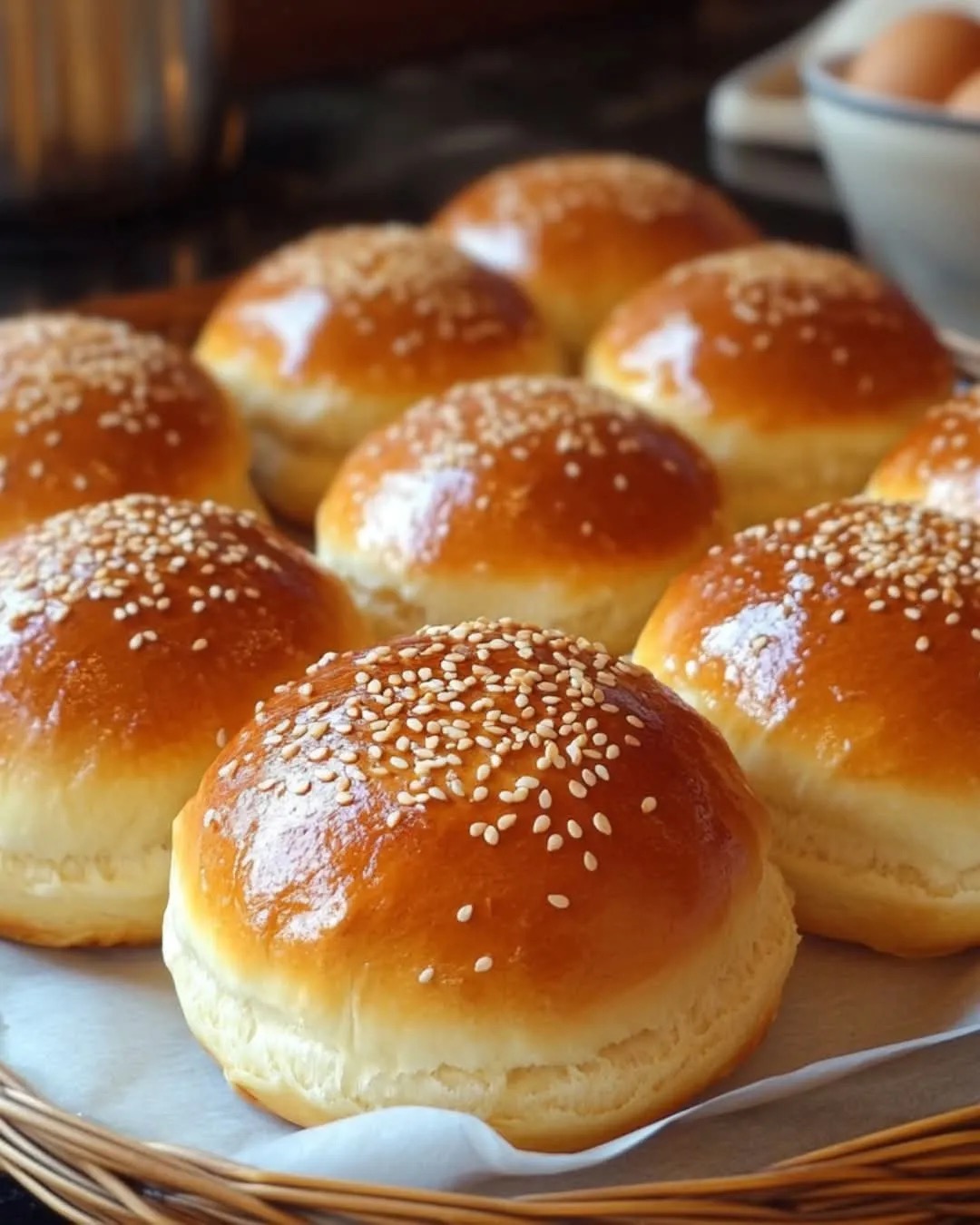
Soft and Fluffy Homemade Burger Buns Recipe
There is something deeply satisfying about making burger buns from scratch. The aroma of freshly baked bread filling your kitchen, the soft golden tops brushed with egg wash and sprinkled with sesame seeds, and the tender crumb that holds your burger together without falling apart all combine to elevate a simple meal into something special.
While store-bought buns are convenient, homemade burger buns offer superior texture, flavor, and freshness. They are soft yet sturdy, slightly sweet, rich from butter and egg, and perfectly balanced to complement any burger filling.
This comprehensive guide will walk you through everything you need to know to master homemade burger buns: ingredients, techniques, kneading methods, proofing tips, shaping techniques, baking instructions, storage advice, troubleshooting, and variations.
Why Make Burger Buns from Scratch?
Homemade burger buns are:
- Softer and fresher than store-bought
- Free from preservatives
- Customizable in size and flavor
- More flavorful and balanced
- Perfect for burgers, sandwiches, and sliders
The subtle sweetness from sugar, richness from butter and egg, and tenderness from milk create a bakery-quality bun that holds up beautifully to juicy burgers.
Ingredients
- 2 ½ cups all-purpose flour
- 2 tablespoons sugar
- 1 teaspoon salt
- 2 teaspoons instant yeast
- 2 tablespoons butter, softened
- ¾ cup warm milk
- 1 large egg
- Sesame seeds for topping
Understanding the Ingredients
Each ingredient plays an important role in achieving soft, fluffy, and well-structured burger buns.
All-Purpose Flour
All-purpose flour provides structure through gluten formation. It strikes a balance between softness and strength, making it ideal for burger buns. Bread flour may also be used if you prefer a slightly chewier texture.
Sugar
Sugar does more than sweeten the dough. It:
- Feeds the yeast
- Helps with browning
- Enhances flavor
- Contributes to softness
The amount used in this recipe creates a subtle sweetness without overpowering savory fillings.
Salt
Salt balances flavor and strengthens gluten structure. Without salt, bread tastes flat and lacks structure.
Instant Yeast
Instant yeast is convenient because it does not require proofing before mixing. It activates quickly and produces reliable results.
If using active dry yeast, dissolve it in the warm milk first and allow it to bloom for 5 to 10 minutes before mixing.
Butter
Butter enriches the dough, creating tenderness and flavor. It also contributes to the soft crumb typical of classic burger buns.
Use softened butter to ensure even incorporation.
Warm Milk
Milk adds richness, softness, and slight sweetness. The fat in milk contributes to a tender crumb.
Milk temperature should be warm but not hot, ideally between 100°F and 110°F. Hot liquid can kill yeast.
Egg
Egg adds:
- Structure
- Richness
- Color
- Soft texture
It also enhances browning during baking.
Sesame Seeds
Sesame seeds add texture and classic burger bun appearance. They are optional but recommended for traditional presentation.
Equipment Needed
- Large mixing bowl
- Measuring cups and spoons
- Stand mixer with dough hook (optional)
- Baking sheet
- Parchment paper
- Clean kitchen towel
- Pastry brush
Step-by-Step Instructions
Step 1: Combine Dry Ingredients
In a large bowl, whisk together:
- Flour
- Sugar
- Salt
- Instant yeast
Mixing dry ingredients first ensures even distribution of yeast and salt.
Step 2: Add Wet Ingredients
Add to the bowl:
- Warm milk
- Egg
- Softened butter
Mix with a wooden spoon or dough hook attachment until a rough dough forms.
Step 3: Knead the Dough
Turn the dough onto a lightly floured surface and knead for 8 to 10 minutes until smooth and elastic.
If using a stand mixer, knead with a dough hook on medium speed for about 6 to 8 minutes.
The dough should be:
- Soft but not sticky
- Smooth
- Slightly tacky to the touch
If dough is too sticky, add a tablespoon of flour at a time. Avoid adding too much flour, as this can result in dense buns.
Step 4: First Rise
Place the dough in a lightly greased bowl. Cover with a clean towel or plastic wrap.
Allow it to rise in a warm place for 1 to 1 ½ hours, or until doubled in size.
A warm, draft-free environment is ideal for rising.
Step 5: Divide and Shape
Punch down the dough gently to release air.
Turn it onto a lightly floured surface and divide into 6 to 8 equal portions, depending on desired size.
Shape each portion into a smooth ball by:
- Tucking edges underneath
- Rotating against the counter to create surface tension
Place buns on a parchment-lined baking sheet, spaced at least 2 inches apart.
Flatten slightly with your palm to create classic burger bun shape.
Step 6: Second Rise
Cover shaped buns loosely with a towel and allow to rise for 30 to 45 minutes until puffy.
They should expand noticeably but still hold their shape.
Step 7: Prepare for Baking
Preheat oven to 375°F.
Optional: Beat one egg with a tablespoon of milk to create an egg wash. Brush gently over tops of buns.
Sprinkle sesame seeds evenly over the tops.
Step 8: Bake
Bake for 15 to 18 minutes, or until:
- Tops are golden brown
- Internal temperature reaches about 190°F
Avoid overbaking to maintain softness.
Step 9: Cool
Remove from oven and transfer to a wire rack.
Allow buns to cool completely before slicing to prevent squishing.
Tips for Perfect Burger Buns
- Do not over-flour the dough
- Knead until properly elastic
- Allow full rise times
- Flatten before second rise
- Avoid overbaking
Texture and Flavor Profile
These burger buns are:
- Soft and pillowy
- Slightly sweet
- Rich but not heavy
- Strong enough to hold juicy burgers
The interior crumb is fine and tender, while the exterior is lightly golden and delicate.
Variations
Whole Wheat Burger Buns
Replace up to half of the all-purpose flour with whole wheat flour. Add an extra tablespoon of milk if needed.
Brioche-Style Buns
Add one extra egg and an additional tablespoon of butter for richer buns.
Potato Burger Buns
Replace 1/4 cup of flour with mashed potato for ultra-soft texture.
Slider Buns
Divide dough into 12 smaller portions for mini buns.
Make-Ahead Instructions
You can prepare the dough in advance.
After the first rise:
- Punch down
- Cover tightly
- Refrigerate overnight
Allow dough to return to room temperature before shaping.
Freezing Instructions
Burger buns freeze well.
To freeze:
- Cool completely
- Wrap individually
- Store in freezer-safe bag
Freeze up to 2 months.
Thaw at room temperature or warm gently in oven.
Storage
Store at room temperature in airtight container for up to 3 days.
Avoid refrigeration, which can dry out bread.
Common Mistakes to Avoid
Dense Buns
Caused by:
- Too much flour
- Under-kneading
- Insufficient rise
Flat Buns
Caused by:
- Over-proofing
- Too much yeast
- Weak gluten development
Pale Tops
Ensure proper oven temperature and use egg wash for browning.
Frequently Asked Questions
Can I use plant-based milk?
Yes. Unsweetened almond or oat milk works well.
Can I make these dairy-free?
Replace butter with plant-based butter and use non-dairy milk.
Can I double the recipe?
Yes. Double all ingredients and divide accordingly.
Serving Ideas
These buns are perfect for:
- Classic beef burgers
- Chicken sandwiches
- Pulled pork
- Veggie burgers
- Breakfast sandwiches
Lightly toast before serving for added texture.
Final Thoughts
Homemade burger buns transform an ordinary meal into something truly special. With simple ingredients and straightforward techniques, you can create soft, golden buns that rival any bakery.
Once you experience the texture and flavor of freshly baked buns, it becomes difficult to return to store-bought options. Whether for weekend cookouts, weeknight dinners, or special gatherings, these burger buns deliver consistent, satisfying results.
Master this recipe, and you will always have the foundation for the perfect burger.