
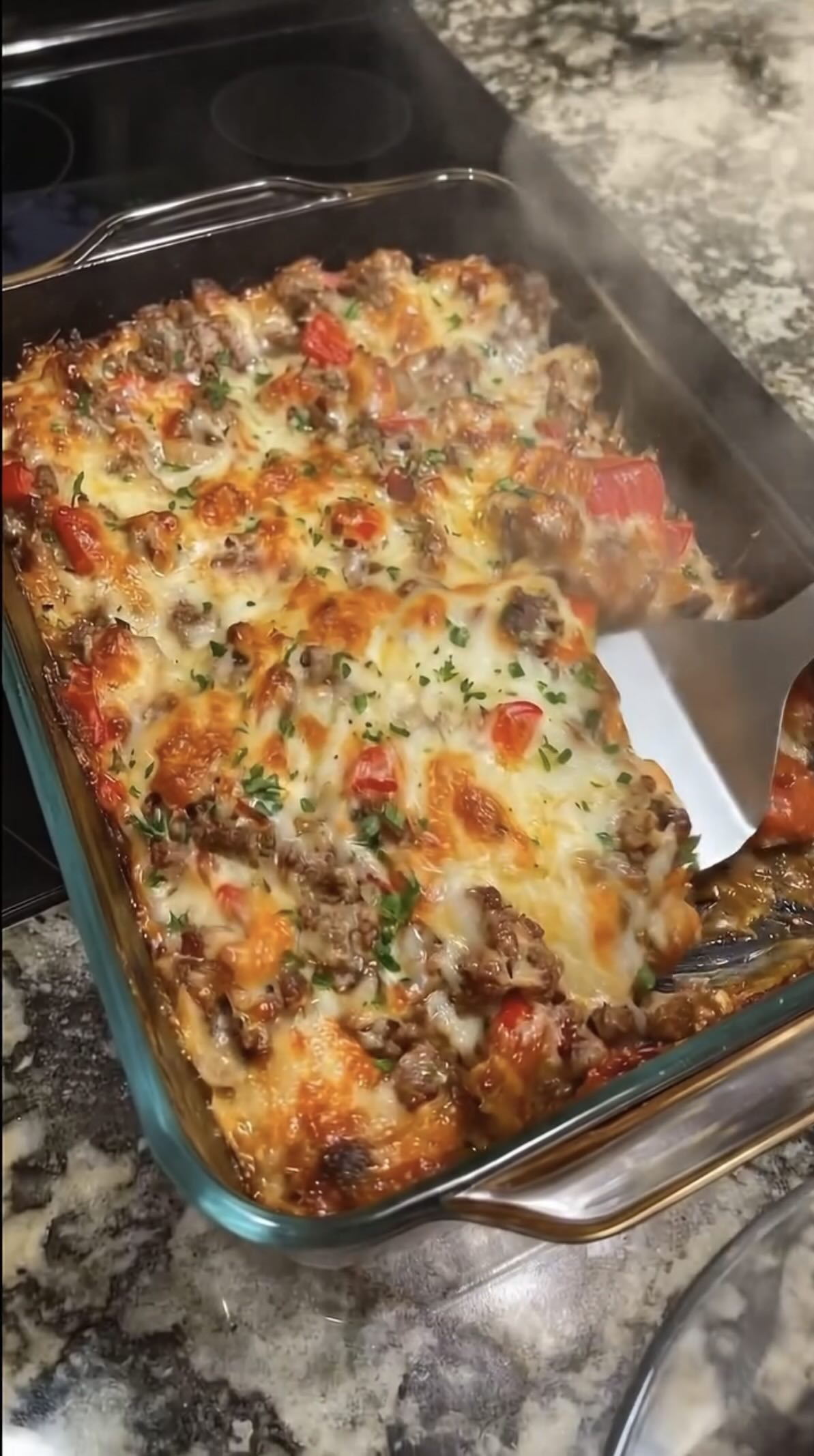
Philly Cheesesteak Casserole
Few comfort foods are as iconic and crave-worthy as a Philly cheesesteak. Juicy beef, caramelized onions, tender peppers, and melty cheese tucked into a warm roll is a combination that has stood the test of time. This Philly Cheesesteak Casserole takes all the bold, savory flavors you love and transforms them into a hearty, family-friendly baked dish that’s perfect for busy weeknights, meal prep, potlucks, or cozy weekend dinners.
Instead of sandwich rolls, this version uses pasta as the base, soaking up a rich, beefy broth and creamy cheese sauce. The result is a satisfying casserole that delivers the essence of a classic cheesesteak in every bite—comforting, filling, and irresistibly good.
This recipe is designed to be approachable for home cooks of all skill levels, while still delivering deep flavor and a restaurant-quality result. Whether you are feeding a crowd or planning leftovers for the week, this casserole is a reliable go-to that never disappoints.
Why You’ll Love This Philly Cheesesteak Casserole
This casserole brings together everything people love about Philly cheesesteaks, but in a format that is easier to serve, store, and reheat. Here’s why it deserves a permanent spot in your recipe rotation:
- It’s a complete meal in one dish with pasta, beef, vegetables, and cheese
- It feeds a crowd and reheats beautifully
- It’s customizable with different cheeses, vegetables, or proteins
- It delivers rich, savory flavor without complicated techniques
- It’s perfect for make-ahead meals and leftovers
If you love comfort food with bold flavors and minimal fuss, this recipe checks every box.
Ingredients
Pasta Base
- 1/2 pound small shell pasta
- 32 ounces beef stock
- 32 ounces water
Beef and Vegetables
- 1 pound beef sirloin, flank steak, or shaved steak, thinly sliced
- 2 tablespoons butter
- 1 tablespoon olive oil
- 1 large yellow onion, thinly sliced
- 1 green bell pepper, thinly sliced
- 1 red bell pepper, thinly sliced
- 8 ounces mushrooms, sliced (optional but recommended)
- 3 cloves garlic, minced
Seasonings
- 1 teaspoon salt, or to taste
- 1/2 teaspoon black pepper
- 1 teaspoon Worcestershire sauce
- 1/2 teaspoon paprika
- 1/2 teaspoon onion powder
- 1/2 teaspoon garlic powder
Cheese Sauce
- 2 tablespoons all-purpose flour
- 1 1/2 cups whole milk
- 8 ounces cream cheese, softened
- 1 1/2 cups shredded provolone cheese
- 1 cup shredded mozzarella cheese
- Optional: 1/2 cup shredded cheddar or Monterey Jack for extra richness
Topping (Optional)
- Additional shredded provolone or mozzarella cheese
- Fresh parsley, finely chopped
Ingredient Notes and Substitutions
Pasta
Small shell pasta works especially well in this casserole because it traps the sauce inside each piece, creating flavorful bites throughout the dish. Other good options include rotini, penne, elbow macaroni, or cavatappi.
Beef
Thinly sliced beef is key for achieving that classic cheesesteak texture. Sirloin and flank steak are ideal, but shaved steak from the butcher counter is the easiest option. If slicing yourself, freeze the beef for 20 to 30 minutes first to make thin slicing easier.
Cheese
Provolone is the traditional choice for Philly cheesesteaks, offering a mild, creamy melt. Mozzarella adds stretch and richness, while cream cheese creates a luscious sauce that binds everything together. If you prefer a sharper flavor, white American cheese or a mild cheddar can be substituted.
Step-by-Step Instructions
Step 1: Cook the Pasta
In a large pot, combine the beef stock and water. Bring to a boil over high heat. Add the shell pasta and cook according to package instructions until just al dente. The pasta will continue cooking in the oven, so avoid overcooking.
Drain the pasta and set it aside.
Step 2: Prepare the Beef
Season the sliced beef with salt, pepper, garlic powder, and onion powder. Toss to coat evenly.
Heat olive oil and 1 tablespoon of butter in a large skillet over medium-high heat. Add the beef in a single layer, working in batches if necessary. Cook for 2 to 3 minutes per side, just until browned. Remove the beef from the skillet and set aside.
Step 3: Sauté the Vegetables
In the same skillet, add the remaining tablespoon of butter. Add the onions, bell peppers, and mushrooms. Cook over medium heat, stirring occasionally, until the vegetables are soft and lightly caramelized, about 8 to 10 minutes.
Add the minced garlic and cook for another 30 seconds until fragrant. Stir in Worcestershire sauce and paprika. Remove from heat.
Step 4: Make the Cheese Sauce
In a medium saucepan over medium heat, melt butter and whisk in the flour. Cook for 1 minute to remove the raw flour taste.
Slowly whisk in the milk, stirring constantly to avoid lumps. Cook until the mixture thickens, about 3 to 5 minutes.
Reduce heat to low and add cream cheese, stirring until fully melted and smooth. Add shredded provolone and mozzarella, stirring until the sauce is creamy and uniform.
Season with salt and pepper to taste.
Step 5: Assemble the Casserole
Preheat the oven to 375°F.
In a large mixing bowl, combine the cooked pasta, beef, sautéed vegetables, and cheese sauce. Stir until everything is evenly coated.
Transfer the mixture to a greased 9×13-inch baking dish. Sprinkle additional cheese over the top if desired.
Step 6: Bake
Cover the casserole loosely with foil and bake for 20 minutes. Remove the foil and bake for an additional 10 to 15 minutes, until the top is bubbly and lightly golden.
Remove from the oven and let rest for 10 minutes before serving.
Serving Suggestions
This Philly Cheesesteak Casserole is rich and hearty, so simple sides work best:
- Crisp green salad with a light vinaigrette
- Roasted broccoli or green beans
- Garlic bread or dinner rolls
- Steamed vegetables for balance
For an authentic touch, serve with pickles or banana peppers on the side.
Make-Ahead and Storage Tips
Make Ahead
You can assemble the casserole up to 24 hours in advance. Cover tightly and refrigerate. When ready to bake, add 10 to 15 minutes to the covered baking time.
Refrigeration
Store leftovers in an airtight container in the refrigerator for up to 4 days.
Freezing
This casserole freezes well. Let it cool completely, then wrap tightly and freeze for up to 3 months. Thaw overnight in the refrigerator before reheating.
Reheating
Reheat individual portions in the microwave or warm the entire casserole in the oven at 350°F until heated through.
Variations and Customizations
Low-Carb Version
Swap the pasta for sautéed cauliflower florets or zucchini noodles for a low-carb alternative.
Chicken Cheesesteak Casserole
Replace beef with thinly sliced chicken breast or thighs. Cook thoroughly before assembling.
Spicy Version
Add sliced jalapeños, crushed red pepper flakes, or a dash of hot sauce to the cheese sauce.
Extra Cheesy
Mix in white American cheese or Cheez Whiz-style cheese sauce for a more traditional Philly flavor profile.
Common Mistakes to Avoid
- Overcooking the pasta before baking
- Using thick cuts of beef instead of thin slices
- Skipping the rest time after baking, which helps the casserole set
- Overbaking, which can dry out the dish
Frequently Asked Questions
Can I use ground beef instead of sliced steak?
Yes, ground beef can be used, but the texture will be different from a traditional cheesesteak.
What cheese is most authentic for Philly cheesesteaks?
Provolone, white American, and Cheez Whiz are the most traditional options.
Can I make this gluten-free?
Yes. Use gluten-free pasta and substitute cornstarch for flour in the cheese sauce.
Final Thoughts
Philly Cheesesteak Casserole is the perfect fusion of classic sandwich flavors and comforting baked pasta. It’s rich without being overwhelming, indulgent yet practical, and flexible enough to adapt to your family’s preferences. Whether you’re feeding a hungry crowd or looking for a cozy dinner that delivers big flavor with minimal stress, this recipe delivers every time.
Once you try it, this casserole is likely to become a regular in your kitchen—just like the iconic sandwich that inspired it.