
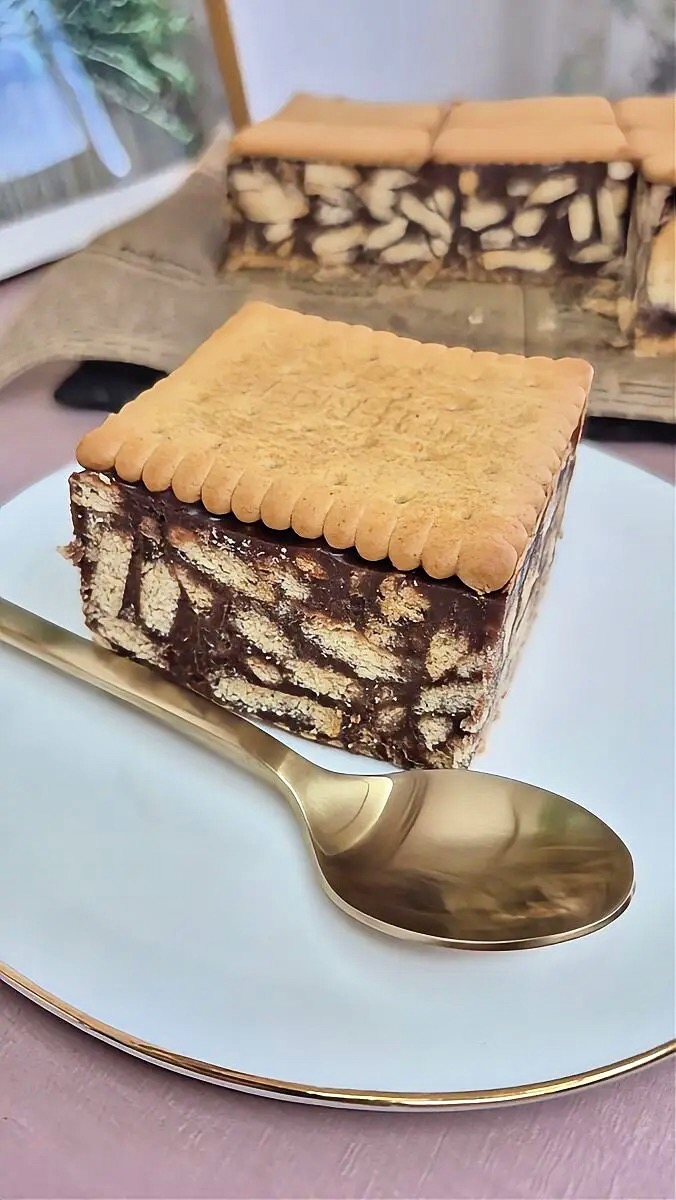
Chocolate Biscuit Cake (No-Bake Chocolate Biscuit Slice)
Introduction
Chocolate Biscuit Cake is one of those timeless desserts that instantly evokes comfort, nostalgia, and indulgence. Known in many households as a “lazy cake,” “no-bake chocolate cake,” or simply “biscuit chocolate slice,” this dessert is beloved across cultures for its simplicity, rich chocolate flavor, and satisfying texture. It requires no oven, no complicated techniques, and no advanced baking skills—yet the result looks elegant, slices beautifully, and tastes like a decadent chocolate confection.
The cake shown in the image is a classic version: layers of crushed tea biscuits suspended in a glossy chocolate mixture, topped with a neat biscuit layer that adds structure and visual appeal. Each slice reveals a marbled interior where crunchy biscuit pieces contrast perfectly with the smooth, fudgy chocolate base. This dessert is ideal for everyday treats, special occasions, family gatherings, or as a make-ahead dessert for busy schedules.
In this comprehensive guide, you will learn everything you need to know to prepare the perfect Chocolate Biscuit Cake—from ingredient selection and step-by-step instructions to variations, storage tips, troubleshooting, and presentation ideas. Whether you are making it for the first time or refining your technique, this recipe will help you achieve a professional, bakery-quality result at home.
Why This Chocolate Biscuit Cake Recipe Works
This recipe is carefully balanced to ensure:
- A rich chocolate flavor without being overly sweet
- A firm yet tender texture that slices cleanly
- Even distribution of biscuit pieces throughout the cake
- A smooth, glossy finish that looks beautiful on a dessert table
Because it is a no-bake recipe, it is also:
- Perfect for warm climates
- Ideal for beginner cooks
- Easy to prepare ahead of time
- Customizable with different flavors and add-ins
Ingredients Overview
Before starting, it is important to understand the role of each ingredient. This helps ensure success and allows you to make substitutions confidently if needed.
Main Ingredients
Tea Biscuits or Plain Cookies
These form the structure of the cake. Digestive biscuits, petit beurre, rich tea biscuits, or any plain, lightly sweet cookie works well. Avoid very soft cookies, as they may dissolve too much in the chocolate mixture.
Dark Chocolate
High-quality dark chocolate provides depth and richness. A cocoa content between 50% and 70% is ideal. Milk chocolate can be used, but the cake will be sweeter.
Unsalted Butter
Butter gives the cake its smooth, melt-in-the-mouth texture and helps the chocolate mixture set firmly once chilled.
Sweetened Condensed Milk
This ingredient adds sweetness and creaminess while helping bind the mixture together. It also contributes to the cake’s soft, fudgy consistency.
Cocoa Powder
Cocoa powder enhances the chocolate flavor and balances the sweetness. Use unsweetened cocoa powder for best results.
Vanilla Extract
Vanilla adds warmth and rounds out the chocolate flavor.
Optional Ingredients
- Chopped nuts such as almonds, hazelnuts, or walnuts
- Raisins or dried fruit
- Shredded coconut
- Espresso powder for deeper chocolate flavor
Ingredients List
For the Chocolate Biscuit Cake
- 300 g plain tea biscuits or petit beurre cookies
- 200 g dark chocolate, chopped
- 150 g unsalted butter
- 1 cup (300 g) sweetened condensed milk
- 3 tablespoons unsweetened cocoa powder
- 1 teaspoon vanilla extract
For the Biscuit Topping
- 6–8 whole tea biscuits, depending on pan size
Equipment Needed
- Medium saucepan
- Heatproof bowl (if melting chocolate over a double boiler)
- Silicone spatula or wooden spoon
- Large mixing bowl
- Loaf pan or square baking pan
- Parchment paper or plastic wrap
- Measuring cups and spoons
Step-by-Step Instructions
Step 1: Prepare the Pan
Line your loaf pan or square pan with parchment paper, leaving some overhang on the sides. This will make it easier to lift the cake out once it has set. Press the paper into the corners to ensure a smooth shape.
Step 2: Break the Biscuits
Place the biscuits in a large bowl and break them into irregular pieces using your hands. Aim for a mix of medium and small chunks. Do not crush them into crumbs—the texture of the cake depends on visible biscuit pieces.
Set aside the whole biscuits for the topping.
Step 3: Melt the Chocolate and Butter
In a medium saucepan over low heat, combine the butter and chopped dark chocolate. Stir gently and continuously until both are fully melted and smooth. Be careful not to overheat, as chocolate can scorch easily.
Alternatively, melt the butter and chocolate in a heatproof bowl set over a saucepan of simmering water.
Step 4: Add Cocoa and Condensed Milk
Once the chocolate mixture is smooth, sift in the cocoa powder and stir until fully incorporated. Add the sweetened condensed milk and vanilla extract. Mix well until the mixture becomes thick, glossy, and uniform.
Remove from heat.
Step 5: Combine with Biscuits
Pour the warm chocolate mixture over the broken biscuits. Using a spatula, gently fold everything together until all biscuit pieces are evenly coated. Work carefully to avoid breaking the biscuits too much.
Step 6: Transfer to the Pan
Spoon the mixture into the prepared pan. Press it down firmly using the back of a spoon or spatula to remove air pockets and ensure an even surface.
Step 7: Add the Biscuit Topping
Arrange the whole biscuits neatly on top of the chocolate mixture, pressing them gently so they adhere. This layer will become the base when the cake is unmolded, creating a clean, decorative finish.
Step 8: Chill Until Set
Cover the pan with plastic wrap and refrigerate for at least 4–6 hours, or preferably overnight. The cake should be completely firm before slicing.
Unmolding and Slicing
Once fully set, lift the cake out of the pan using the parchment paper overhang. Place it on a cutting board and slice with a sharp knife. For clean cuts, wipe the knife with a warm, damp cloth between slices.
Texture and Flavor Profile
This Chocolate Biscuit Cake has a dense yet tender texture. The chocolate layer is rich and fudgy, while the biscuit pieces provide crunch and structure. The top biscuit layer adds a pleasant contrast and makes each slice visually appealing.
The flavor is deeply chocolatey, balanced by the mild sweetness of the biscuits and condensed milk. It is indulgent without being overpowering.
Variations and Flavor Ideas
Milk Chocolate Version
Replace dark chocolate with milk chocolate for a sweeter, creamier result. Reduce condensed milk slightly if desired.
Nutty Chocolate Biscuit Cake
Add ½ cup chopped nuts to the biscuit mixture for extra crunch and flavor.
Orange Chocolate Biscuit Cake
Add 1 teaspoon orange zest to the chocolate mixture for a citrus note that pairs beautifully with chocolate.
Coffee Chocolate Biscuit Cake
Stir in 1 teaspoon instant espresso powder to intensify the chocolate flavor.
Coconut Chocolate Biscuit Cake
Mix in shredded coconut or use coconut biscuits for a tropical twist.
Serving Suggestions
- Serve chilled for clean slices and a firm texture
- Pair with fresh berries for contrast
- Add a light dusting of cocoa powder before serving
- Serve with whipped cream or vanilla ice cream for a more elaborate dessert
Storage Instructions
Refrigerator
Store the cake in an airtight container in the refrigerator for up to 7 days.
Freezer
Wrap the cake tightly in plastic wrap and foil, then freeze for up to 2 months. Thaw overnight in the refrigerator before serving.
Troubleshooting Tips
Cake Too Soft
This usually means it needs more chilling time or the chocolate-to-butter ratio was off. Chill longer and ensure measurements are accurate.
Cake Too Hard
This can happen if too much chocolate or too little butter is used. Let the cake sit at room temperature for 10 minutes before slicing.
Greasy Texture
Use high-quality chocolate and unsalted butter. Overheating the mixture can also cause separation.
Frequently Asked Questions
Can I make this cake without condensed milk?
Yes, but condensed milk provides sweetness and structure. You can substitute with heavy cream and sugar, but the texture will change slightly.
Is this cake suitable for children?
Yes, it contains no alcohol and can be made with milk chocolate for a milder flavor.
Can I use flavored biscuits?
Yes, but choose flavors that complement chocolate, such as vanilla or coconut.
Why This Cake Is Perfect for Any Occasion
Chocolate Biscuit Cake is versatile, elegant, and universally loved. It requires minimal effort yet delivers maximum flavor and visual appeal. Whether served as a casual family dessert or dressed up for a celebration, it never fails to impress.
Its no-bake nature makes it ideal year-round, especially when you want a dessert without turning on the oven. With endless customization options, this cake can be adapted to suit any taste or occasion.
Final Thoughts
This Chocolate Biscuit Cake recipe is a true classic for a reason. It is simple, reliable, and incredibly satisfying. With its rich chocolate base, crunchy biscuit pieces, and clean, structured slices, it is a dessert that looks as good as it tastes.
By following this detailed guide, you can confidently prepare a Chocolate Biscuit Cake that is perfect in texture, flavor, and presentation—ready to be featured proudly on any recipe website or shared with family and friends.