
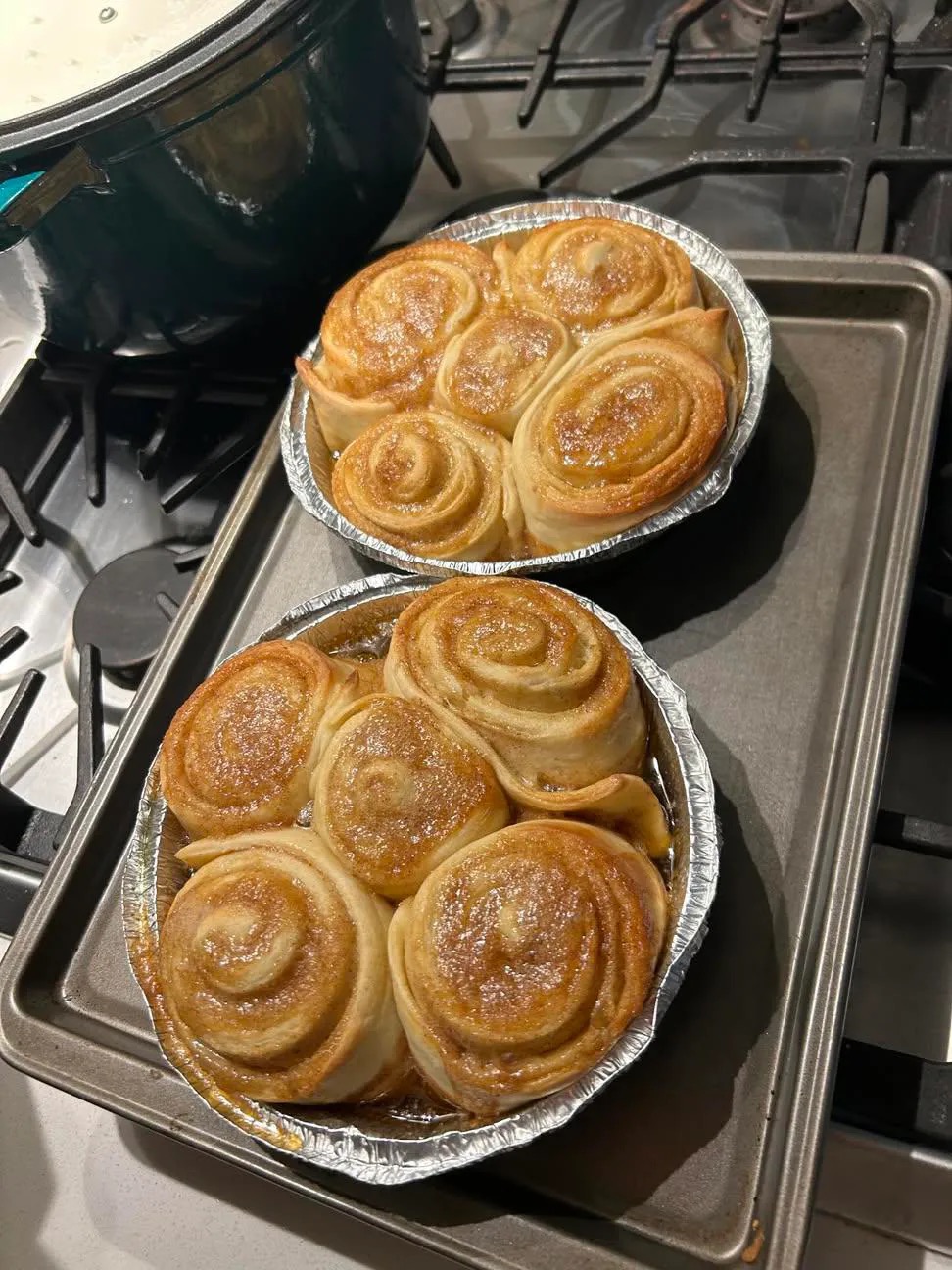
Homemade Cinnamon Rolls from Scratch
A Soft, Fluffy, Bakery-Style Recipe Worth Sharing
There is something deeply satisfying about making cinnamon rolls completely from scratch. The process takes time, patience, and care — but the reward is extraordinary. Soft, pillowy dough wrapped around a buttery cinnamon-sugar filling, baked until golden, and topped with a rich glaze that melts into every swirl. Whether or not anyone at home fully appreciates the effort, baking cinnamon rolls from scratch is a triumph worth celebrating.
This comprehensive, website-ready guide walks you through every step of the process — from activating yeast to achieving perfectly tender dough, shaping beautiful spirals, baking evenly, and finishing with a smooth glaze. You will also find detailed tips, troubleshooting advice, storage instructions, and variations to ensure your cinnamon rolls turn out perfect every time.
Why Make Cinnamon Rolls from Scratch?
While store-bought dough or pre-made rolls may be convenient, nothing compares to homemade cinnamon rolls. Making them from scratch allows you to control:
- The sweetness level
- The richness of the dough
- The amount of cinnamon filling
- The texture and softness
- The quality of ingredients
Freshly baked cinnamon rolls offer a depth of flavor and texture that cannot be replicated by shortcuts. The aroma alone — warm butter, cinnamon, and sugar rising in the oven — transforms your kitchen into a bakery.
Ingredients
For the Dough
- 1 cup warm whole milk (about 110°F / 43°C)
- 2 ¼ teaspoons active dry yeast (1 standard packet)
- ¼ cup granulated sugar
- ¼ cup unsalted butter, melted
- 1 teaspoon salt
- 2 large eggs, room temperature
- 3 ½ to 4 cups all-purpose flour
For the Cinnamon Filling
- ½ cup unsalted butter, softened
- ¾ cup brown sugar, packed
- 1 ½ tablespoons ground cinnamon
- Pinch of salt
For the Glaze
- 1 ½ cups powdered sugar
- 2–3 tablespoons milk or heavy cream
- ½ teaspoon vanilla extract
Equipment You Will Need
- Large mixing bowl
- Small bowl
- Measuring cups and spoons
- Stand mixer with dough hook (optional)
- Rolling pin
- 9×13-inch baking dish
- Sharp knife or unflavored dental floss
- Clean kitchen towel or plastic wrap
- Wire cooling rack
Step-by-Step Instructions
Step 1: Activate the Yeast
In a large mixing bowl, combine the warm milk and granulated sugar. Stir gently to dissolve. Sprinkle the active dry yeast over the surface and let it sit for 5–10 minutes.
The yeast should become foamy and slightly bubbly. This indicates that it is active and ready to use. If no foam forms, the yeast may be expired or the milk temperature may be too hot or too cold.
Step 2: Prepare the Dough
Add the melted butter, salt, and eggs to the yeast mixture. Mix until combined.
Gradually add flour, one cup at a time, stirring until a soft dough begins to form. If using a stand mixer, switch to the dough hook attachment and knead on medium speed for 6–8 minutes. If kneading by hand, turn the dough onto a lightly floured surface and knead for 8–10 minutes.
The dough should become smooth, elastic, and slightly tacky but not sticky. If it sticks heavily to your hands, add flour a tablespoon at a time.
Step 3: First Rise
Place the dough in a lightly greased bowl. Turn it once to coat the surface. Cover with a clean towel or plastic wrap.
Allow the dough to rise in a warm, draft-free area for 1 to 1 ½ hours, or until doubled in size.
A good rising environment can be created by:
- Placing the bowl in an oven that is turned off but slightly warm
- Setting it near a sunny window
- Placing it in a microwave with a cup of warm water beside it
Step 4: Prepare the Filling
While the dough rises, mix together the brown sugar, cinnamon, and salt in a small bowl.
Ensure the butter for spreading is softened but not melted. It should be easily spreadable without being runny.
Step 5: Roll Out the Dough
Once the dough has doubled in size, punch it down gently to release air.
Transfer to a lightly floured surface and roll into a rectangle approximately 16 x 12 inches. The thickness should be about ¼ inch.
Try to maintain even thickness to ensure uniform baking.
Step 6: Add the Filling
Spread the softened butter evenly across the surface of the dough, leaving a small border around the edges.
Sprinkle the cinnamon-sugar mixture evenly over the butter, pressing lightly to help it adhere.
Step 7: Roll and Slice
Starting from the longer side, tightly roll the dough into a log. Keep the roll even and firm without squeezing out the filling.
Once rolled, slice into 12 equal pieces using a sharp knife or unflavored dental floss. Floss creates clean cuts without squashing the dough.
Step 8: Second Rise
Place the rolls into a greased 9×13-inch baking dish, leaving slight space between them.
Cover and allow to rise again for 30–45 minutes, or until puffed and touching.
This second rise ensures soft, fluffy rolls.
Step 9: Bake
Preheat oven to 350°F (175°C).
Bake for 20–25 minutes, or until golden brown on top. The center rolls should be cooked through but still soft.
Avoid overbaking, as this can dry them out.
Step 10: Prepare the Glaze
In a small bowl, whisk together powdered sugar, milk or cream, and vanilla extract until smooth.
Adjust thickness as desired:
- Add more milk for thinner glaze
- Add more powdered sugar for thicker consistency
Step 11: Glaze and Serve
Allow the rolls to cool for 5–10 minutes before glazing. Pour or spread glaze evenly over warm rolls so it melts slightly into the swirls.
Serve warm for best flavor and texture.
Tips for Perfect Cinnamon Rolls
Use Room Temperature Ingredients
Eggs and butter mix more evenly when not cold.
Do Not Overheat Milk
Milk that is too hot will kill the yeast. Aim for 105–110°F.
Measure Flour Carefully
Too much flour leads to dense rolls. Spoon flour into measuring cup and level off.
Do Not Skip the Second Rise
This ensures light, airy texture.
Avoid Overbaking
Golden brown is ideal. The interior should remain soft.
Texture and Structure: What Makes Them Fluffy?
The softness of cinnamon rolls comes from:
- Proper gluten development during kneading
- Adequate rising time
- Balanced moisture from milk and butter
- Correct baking temperature
Yeast fermentation creates air pockets that expand during baking, producing the light interior crumb.
Variations
Cream Cheese Frosting
Replace glaze with:
- 4 ounces softened cream cheese
- ¼ cup softened butter
- 1 cup powdered sugar
- ½ teaspoon vanilla
Beat until smooth and spread over warm rolls.
Overnight Cinnamon Rolls
After shaping and placing in the baking dish, cover tightly and refrigerate overnight. In the morning, allow to come to room temperature for 45 minutes before baking.
Maple Glaze
Replace milk with maple syrup in the glaze for deeper flavor.
Nutty Cinnamon Rolls
Sprinkle chopped pecans or walnuts over the filling before rolling.
Orange Glaze
Add orange zest and a tablespoon of orange juice to the glaze for brightness.
Storage Instructions
Room Temperature
Store in an airtight container for up to 2 days.
Refrigerator
Store up to 5 days. Reheat before serving.
Freezer
Freeze baked rolls (unglazed) for up to 2 months. Thaw overnight and warm before glazing.
Reheating Tips
- Microwave individual roll for 20–30 seconds
- Warm entire pan in 300°F oven for 10–15 minutes
- Cover with foil to prevent drying
Troubleshooting
Dough Did Not Rise
Possible causes:
- Expired yeast
- Milk too hot
- Cold environment
Rolls Are Dense
Likely:
- Too much flour
- Insufficient kneading
- Skipped second rise
Filling Leaked Out
Roll may have been too loose or butter too melted.
Making Cinnamon Rolls for Special Occasions
Cinnamon rolls are perfect for:
- Weekend brunch
- Holiday mornings
- Birthdays
- Family gatherings
- Sharing on social media
They symbolize warmth and effort — something homemade and heartfelt.
Scaling the Recipe
To double:
- Multiply all ingredients by two
- Use two baking dishes
- Increase baking time slightly if needed
Nutrition Considerations
Homemade cinnamon rolls contain:
- Carbohydrates from flour and sugar
- Fat from butter
- Protein from eggs and milk
To lighten:
- Use low-fat milk
- Reduce sugar slightly
- Add whole wheat flour (replace up to 1 cup)
The Joy of Baking from Scratch
Baking cinnamon rolls from scratch is more than following a recipe. It is an experience:
- Mixing ingredients by hand
- Watching dough rise
- Rolling perfect spirals
- Filling your kitchen with warm aroma
Even if no one in the house reacts with excitement, the accomplishment is real. Sharing the moment — whether with friends, neighbors, or online — connects you to others who appreciate homemade food.
Final Thoughts
Making cinnamon rolls from scratch for the first time is something to be proud of. It requires patience, care, and attention to detail. From activating yeast to glazing warm rolls, every step contributes to the final result — soft, fluffy spirals layered with cinnamon and sugar.
Whether enjoyed quietly with coffee or proudly shared with others, homemade cinnamon rolls represent comfort, creativity, and dedication. Once you master this recipe, you will have a reliable, bakery-quality treat that can be made anytime you want something special.
And if no one at home makes a big deal about it, that is all right. The effort, skill, and delicious result speak for themselves.