
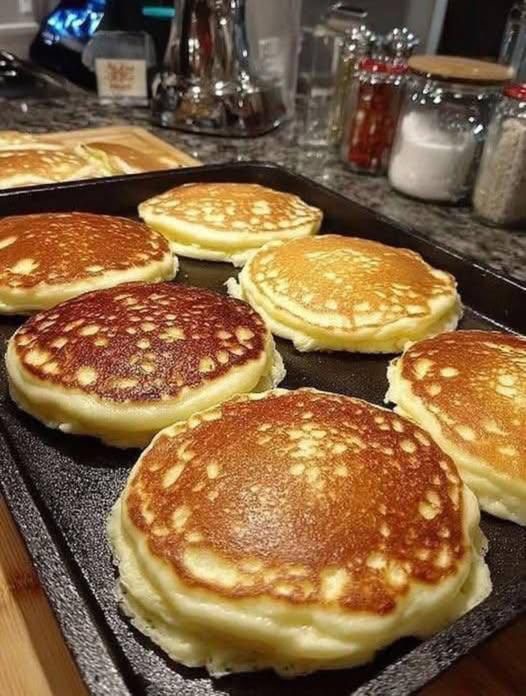
Classic Homemade Pancakes: A Timeless Recipe for Soft, Golden Perfection
Few dishes bring as much comfort, nostalgia, and universal appeal as a plate of freshly made homemade pancakes. Soft on the inside, lightly golden on the outside, and endlessly customizable, pancakes are a beloved staple in kitchens around the world. Whether served as a leisurely weekend breakfast, a quick weekday treat, or even a light dessert, this classic pancake recipe delivers consistent, delicious results every time.
This recipe is made using simple, everyday ingredients you likely already have in your kitchen: eggs, flour, milk, sugar, oil, and a touch of vanilla. Despite its simplicity, the result is a beautifully balanced batter that produces pancakes that are tender, flavorful, and satisfying. With careful technique and a few helpful tips, even beginners can master this recipe with confidence.
In this comprehensive guide, you’ll not only learn how to prepare perfect pancakes step by step, but you’ll also discover helpful cooking tips, variations, serving ideas, storage instructions, and answers to common pancake-making questions. This is more than just a recipe — it’s a complete resource for pancake lovers.
Bon appétit!
Why This Pancake Recipe Works
What makes this pancake recipe special is its balance. The ratio of eggs to flour ensures structure without toughness. The milk adds moisture and tenderness, while the oil prevents dryness and sticking. Sugar provides gentle sweetness without overpowering, and vanilla adds a warm, inviting aroma.
Unlike complicated recipes that require special equipment or hard-to-find ingredients, this recipe relies on straightforward techniques and common pantry staples. The result is a versatile pancake base that can be adapted for sweet or savory toppings and customized to suit different tastes.
Whether you’re cooking for yourself, your family, or guests, this recipe is reliable, forgiving, and deeply satisfying.
Ingredients
To make approximately 10–12 medium pancakes, you will need:
- Eggs – 4 pieces
Eggs provide structure, richness, and stability to the pancake batter. - Salt – 1 teaspoon
Salt enhances flavor and balances the sweetness. - Sugar – 80 grams
Adds gentle sweetness and helps achieve a golden color. - Vanilla – to taste
Vanilla brings warmth and depth of flavor. - Flour – 180 grams
All-purpose flour works best for a soft and fluffy texture. - Milk – 500 milliliters
Milk hydrates the flour and creates a smooth batter. - Oil – 3 tablespoons
Keeps pancakes moist and prevents sticking.
Equipment Needed
- Large mixing bowl
- Whisk or hand mixer
- Measuring cups and kitchen scale
- Non-stick frying pan or griddle
- Spatula
- Ladle or measuring cup
- Clean kitchen towel or plate for resting pancakes
Step-by-Step Instructions
Step 1: Prepare the Eggs
Crack the four eggs into a large mixing bowl. Whisk them gently until the yolks and whites are fully combined. This step ensures an even texture and helps incorporate air into the batter, resulting in lighter pancakes.
Take your time during this step. Well-whisked eggs are the foundation of a smooth batter.
Step 2: Add Sugar, Salt, and Vanilla
Add the sugar, salt, and vanilla to the beaten eggs. Whisk again until the sugar begins to dissolve and the mixture looks slightly pale and glossy.
This step is crucial for flavor balance. The salt enhances the sweetness, while the vanilla adds a subtle aromatic note that elevates the final taste.
Step 3: Gradually Add the Milk
Pour the milk into the egg mixture slowly, whisking continuously. Adding the milk gradually helps prevent lumps and keeps the batter smooth.
Make sure the milk is at room temperature if possible, as this allows the ingredients to combine more evenly.
Step 4: Incorporate the Flour
Sift the flour directly into the bowl to avoid clumps. Add it in stages, whisking gently after each addition. Continue whisking until the batter is smooth, silky, and lump-free.
Avoid overmixing at this stage. Overworking the flour can activate too much gluten, resulting in dense pancakes instead of tender ones.
Step 5: Add the Oil
Pour in the oil and whisk lightly until fully incorporated. The oil helps keep the pancakes moist and ensures they don’t stick to the pan during cooking.
Let the batter rest for 10–15 minutes. This resting period allows the flour to fully hydrate and improves the texture of the pancakes.
Cooking the Pancakes
Step 6: Heat the Pan
Place a non-stick pan or griddle over medium heat. Lightly grease it with a small amount of oil or butter. The pan should be hot but not smoking.
To test the temperature, sprinkle a few drops of water onto the pan. If they sizzle and evaporate quickly, the pan is ready.
Step 7: Pour the Batter
Using a ladle or measuring cup, pour the batter onto the pan, forming round pancakes. Leave space between each pancake to allow for easy flipping.
Cook for about 1–2 minutes, or until bubbles appear on the surface and the edges begin to set.
Step 8: Flip and Finish Cooking
Carefully flip the pancake using a spatula. Cook the second side for another 1–2 minutes, until golden brown and fully cooked through.
Transfer the cooked pancake to a plate and cover loosely with a kitchen towel to keep warm. Repeat with the remaining batter.
Serving Suggestions
Pancakes are incredibly versatile and can be served in countless ways. Here are some delicious ideas:
Sweet Toppings
- Maple syrup or honey
- Fresh berries
- Sliced bananas
- Powdered sugar
- Whipped cream
- Chocolate chips or chocolate sauce
- Fruit compote or jam
Savory Options
- Cream cheese and smoked salmon
- Cheese and herbs
- Fried or scrambled eggs
- Avocado and yogurt sauce
Special Occasion Ideas
- Stack pancakes with layers of fruit and cream
- Serve with ice cream for dessert
- Add nuts or caramel sauce for indulgence
Pancake Variations
Chocolate Pancakes
Add 2 tablespoons of cocoa powder and an extra tablespoon of sugar to the batter.
Banana Pancakes
Mash one ripe banana and mix it into the batter before cooking.
Whole Wheat Pancakes
Replace half of the all-purpose flour with whole wheat flour for a heartier texture.
Dairy-Free Option
Use plant-based milk such as almond, soy, or oat milk.
Common Pancake Mistakes and How to Avoid Them
Pancakes are too dense:
Avoid overmixing the batter and allow it to rest.
Pancakes are pale:
Increase the heat slightly and ensure enough sugar is present.
Pancakes stick to the pan:
Use a well-heated non-stick pan and lightly grease it.
Uneven cooking:
Cook on medium heat and flip only once bubbles form.
Storage and Reheating
Storing
Allow pancakes to cool completely. Store in an airtight container in the refrigerator for up to 3 days.
Freezing
Place pancakes in a single layer with parchment paper between them. Freeze for up to 2 months.
Reheating
- Microwave: 20–30 seconds
- Pan: Reheat on low heat
- Oven: 160°C for 5–7 minutes
Nutritional Overview (Approximate)
- Calories: Moderate
- Protein: From eggs and milk
- Carbohydrates: From flour and sugar
- Fats: From oil and eggs
This recipe provides a balanced base that can be adjusted for dietary needs.
Final Thoughts
This classic homemade pancake recipe proves that great food doesn’t need to be complicated. With just a handful of ingredients and a little care, you can create pancakes that are soft, flavorful, and deeply satisfying. Whether you enjoy them plain or dressed up with your favorite toppings, these pancakes are guaranteed to become a favorite in your kitchen.
Perfect for breakfast, brunch, or dessert, this recipe is one you’ll return to again and again.
Bon appétit! 🥞✨