
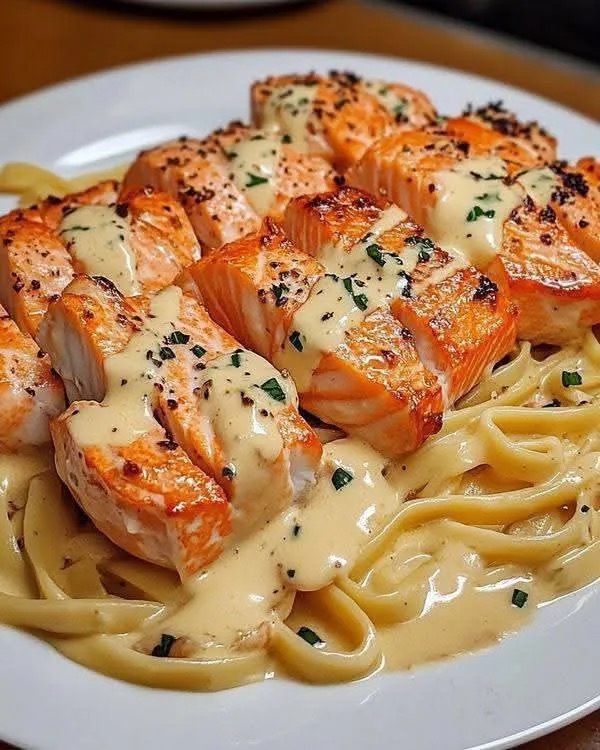
Creamy Butter Salmon Pasta: A Rich, Comforting Seafood Pasta Recipe
Creamy Butter Salmon Pasta is the kind of dish that feels luxurious yet comforting, elegant yet simple enough for a weeknight dinner. It brings together tender chunks of salmon, silky cream, rich butter, fragrant garlic, and perfectly cooked fettuccine in a harmonious sauce that clings to every strand of pasta. This recipe is ideal for anyone who loves seafood pasta, creamy sauces, or meals that feel restaurant-quality without requiring complicated techniques.
Whether you are cooking for family, entertaining guests, or simply treating yourself, this creamy salmon pasta delivers flavor, texture, and satisfaction in every bite. In this detailed recipe guide, you will learn not only how to prepare the dish step by step, but also how to choose the best ingredients, avoid common mistakes, customize flavors, and store leftovers properly.
This is a timeless pasta recipe that belongs in every home cook’s collection.
Why You Will Love This Creamy Butter Salmon Pasta
There are many reasons why this recipe stands out among pasta dishes:
- It combines rich dairy flavors with the natural freshness of salmon
- It requires minimal prep and cooks in under 40 minutes
- It uses simple, widely available ingredients
- It is versatile and easy to customize
- It feels indulgent without being overly heavy
The balance between cream, butter, garlic, and Parmesan creates a smooth, velvety sauce that enhances the salmon rather than overpowering it. The salmon remains moist and flaky, while the pasta absorbs just enough sauce to make every forkful satisfying.
Ingredients Overview and Selection Tips
Using quality ingredients is key to achieving the best flavor and texture. Below is a closer look at each ingredient and how to choose it wisely.
Salmon Fillets
You will need two salmon fillets, cut into bite-sized chunks.
Fresh salmon is ideal, but frozen salmon can also work if properly thawed. Look for fillets that are:
- Firm to the touch
- Bright pink or orange in color
- Free from strong fishy odors
Skinless salmon is easier to work with, but skin-on fillets can be used if the skin is removed before cooking.
Heavy Cream
Heavy cream is the foundation of the sauce. It provides richness and stability, helping the sauce thicken without curdling.
Avoid substituting with milk or half-and-half if you want a truly creamy texture. Heavy cream contains enough fat to hold up during cooking and blend smoothly with butter and cheese.
Fettuccine Pasta
Fettuccine is ideal for creamy sauces because its wide, flat shape holds onto the sauce beautifully.
You can substitute with linguine, tagliatelle, or pappardelle if desired, but avoid very thin pasta such as angel hair, as it may become overwhelmed by the sauce.
Olive Oil
Olive oil is used to sear the salmon and prevent sticking. Choose extra virgin olive oil for the best flavor.
Butter
Butter adds richness and depth to the sauce. Unsalted butter is preferred so you can control the salt level.
Garlic
Freshly minced garlic provides aromatic warmth and flavor. Avoid jarred garlic if possible, as it lacks the same intensity and freshness.
Parmesan Cheese
Freshly grated Parmesan cheese melts smoothly into the sauce and adds savory depth.
Avoid pre-shredded cheese, which often contains anti-caking agents that prevent proper melting.
Equipment You Will Need
- Large pot for boiling pasta
- Large skillet or sauté pan
- Sharp knife
- Cutting board
- Wooden spoon or spatula
- Colander
- Measuring cups and spoons
Step-by-Step Instructions
Step 1: Prepare the Salmon
Begin by patting the salmon fillets dry with paper towels. This helps them sear properly instead of steaming.
Cut the salmon into evenly sized chunks, about 1 to 1.5 inches each. Keeping the pieces uniform ensures they cook evenly.
Season lightly with salt and black pepper.
Set aside while you prepare the pasta water.
Step 2: Cook the Pasta
Fill a large pot with water and bring it to a rolling boil. Add a generous amount of salt; the water should taste like the sea.
Add the fettuccine and cook according to package instructions until al dente. This usually takes 10 to 12 minutes.
Reserve about one cup of the pasta cooking water before draining. This starchy water can be used later to adjust the sauce consistency.
Drain the pasta and set aside.
Step 3: Sear the Salmon
Heat two tablespoons of olive oil in a large skillet over medium-high heat.
Once the oil is hot, carefully add the salmon chunks in a single layer. Avoid overcrowding the pan.
Cook the salmon for about 2 to 3 minutes per side, or until lightly golden on the outside and just cooked through on the inside.
Remove the salmon from the pan and set aside. Do not overcook, as the salmon will be added back to the sauce later.
Step 4: Create the Butter and Garlic Base
Reduce the heat to medium.
In the same skillet, add the butter. Allow it to melt slowly, scraping up any flavorful bits left from the salmon.
Add the minced garlic and sauté for 30 seconds to 1 minute, stirring constantly. The garlic should become fragrant but not browned, as burnt garlic will taste bitter.
Step 5: Build the Cream Sauce
Slowly pour the heavy cream into the skillet, stirring continuously to combine with the butter and garlic.
Bring the mixture to a gentle simmer. Do not allow it to boil aggressively.
Let the cream cook for about 3 to 5 minutes, stirring occasionally, until it begins to thicken slightly.
Step 6: Add the Parmesan Cheese
Gradually sprinkle in the grated Parmesan cheese while stirring constantly. This helps the cheese melt smoothly into the sauce.
Continue stirring until the sauce becomes thick, creamy, and cohesive.
If the sauce becomes too thick, add a small amount of the reserved pasta water until the desired consistency is reached.
Step 7: Combine Pasta and Salmon
Add the cooked fettuccine to the skillet and gently toss to coat the pasta evenly with the sauce.
Carefully return the salmon chunks to the pan, folding them into the pasta to avoid breaking them apart.
Allow everything to simmer together for 2 to 3 minutes so the flavors can meld.
Taste and adjust seasoning with salt and black pepper as needed.
Tips for Perfect Creamy Salmon Pasta
- Always cook pasta to al dente to prevent it from becoming mushy in the sauce
- Use freshly grated Parmesan for the smoothest texture
- Do not overcook the salmon; it should remain tender and flaky
- Keep the heat moderate when cooking cream to avoid separation
- Reserve pasta water to fine-tune sauce consistency
Flavor Variations and Add-Ins
This recipe is delicious as written, but it also serves as an excellent base for customization.
Herbs
Add fresh parsley, dill, or basil for a pop of freshness.
Vegetables
Spinach, peas, mushrooms, or sun-dried tomatoes pair beautifully with salmon and cream sauce.
Citrus
A small splash of lemon juice or lemon zest can brighten the richness of the dish.
Heat
Add red pepper flakes for a subtle kick.
Serving Suggestions
Creamy Butter Salmon Pasta pairs well with:
- A crisp green salad with lemon vinaigrette
- Garlic bread or crusty artisan bread
- Steamed asparagus or roasted vegetables
Serve immediately for the best texture and flavor.
Storage and Reheating
Store leftovers in an airtight container in the refrigerator for up to 2 days.
To reheat:
- Warm gently on the stovetop over low heat
- Add a splash of cream or milk to loosen the sauce
- Stir frequently to prevent separation
Avoid reheating in high heat or microwaving for long periods, as this can dry out the salmon.
Common Mistakes to Avoid
- Boiling the cream, which can cause curdling
- Using pre-shredded cheese
- Overcrowding the pan when searing salmon
- Skipping seasoning at each stage
Nutritional Overview
This dish is rich in protein from salmon, calcium from cheese, and healthy fats. While indulgent, it can be enjoyed as part of a balanced diet when paired with vegetables or a light salad.
Final Thoughts
Creamy Butter Salmon Pasta is a comforting, satisfying dish that showcases how simple ingredients can create extraordinary results. The combination of flaky salmon, buttery cream sauce, garlic, and Parmesan is timeless and universally loved.
This recipe is perfect for both beginner cooks and experienced home chefs looking for a reliable, impressive pasta dish. With proper technique and quality ingredients, you can create a meal that feels indulgent, flavorful, and memorable every time.