
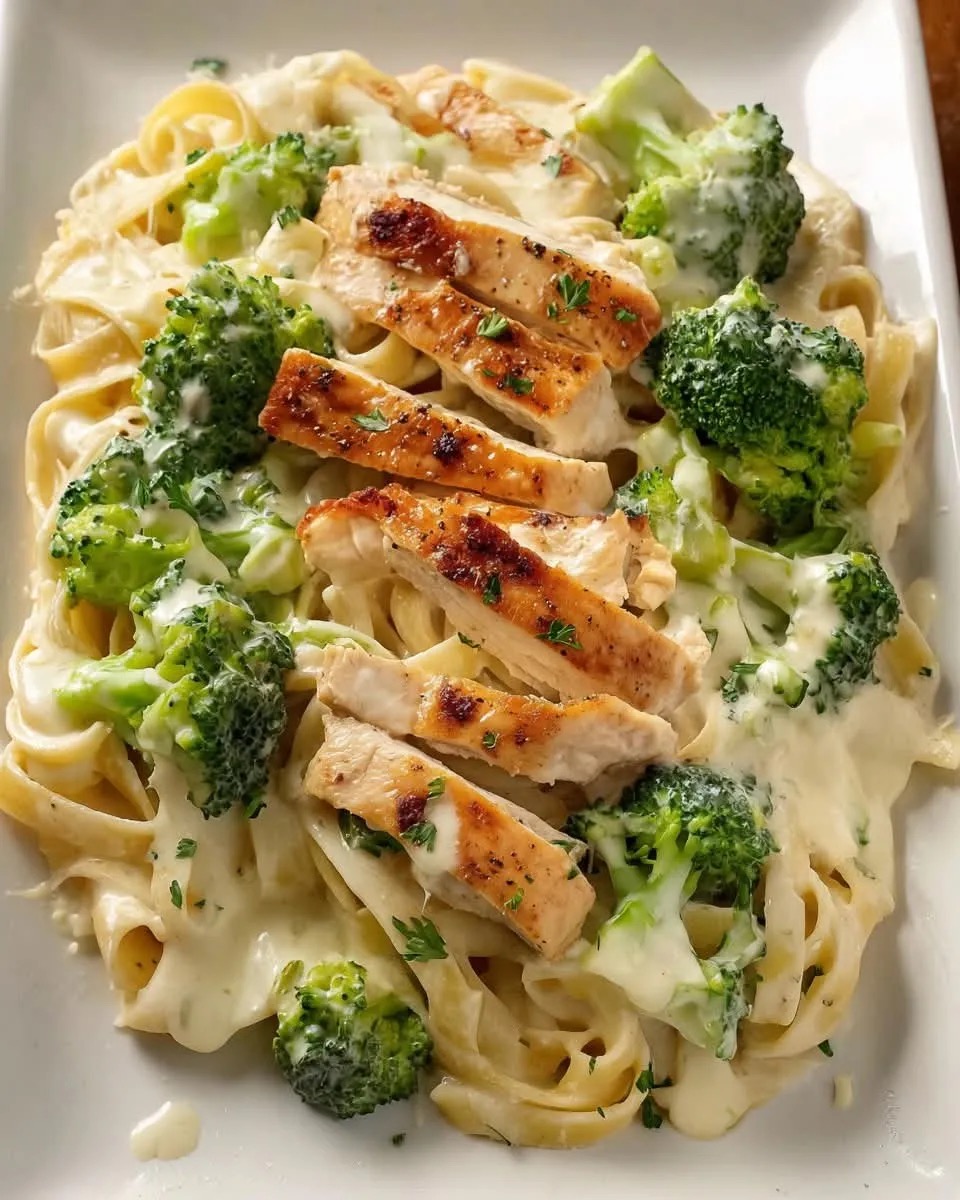
Creamy Chicken and Broccoli Fettuccine Alfredo
Creamy Chicken and Broccoli Fettuccine Alfredo is a comforting, indulgent pasta dish that brings together tender chicken, vibrant broccoli, and a rich Parmesan cream sauce, all tossed with perfectly cooked fettuccine. This recipe is inspired by classic Italian-American Alfredo, but enhanced with protein and vegetables to make it a complete, satisfying meal that works equally well for family dinners, special occasions, or meal prep.
This dish is beloved for its balance: the silky sauce coats every strand of pasta without being overly heavy, the chicken adds heartiness, and the broccoli introduces freshness and texture that keeps each bite interesting. While it may feel like a restaurant-quality dish, it is surprisingly simple to prepare at home with basic ingredients and straightforward techniques.
In this detailed guide, you’ll learn not only how to make this dish step by step, but also how to choose the best ingredients, avoid common mistakes, customize the recipe to your taste, and serve it beautifully. Whether you’re an experienced home cook or just starting out, this recipe is designed to set you up for success.
Why This Recipe Works
There are many versions of Alfredo pasta, but this one stands out for several reasons:
- The chicken is seasoned and cooked separately to ensure it stays juicy and flavorful.
- Broccoli is added for color, nutrition, and contrast to the creamy sauce.
- Fresh garlic and real Parmesan cheese build deep, authentic flavor.
- Heavy cream is gently simmered, not boiled, resulting in a smooth, stable sauce.
- Pasta water is used strategically to achieve the perfect sauce consistency.
This recipe respects the richness of Alfredo while keeping it balanced and approachable.
Ingredients
For the Chicken
- 2 boneless, skinless chicken breasts
- Salt and freshly ground black pepper, to taste
- 1 tablespoon olive oil
For the Pasta and Broccoli
- 250 grams (9 ounces) fettuccine pasta
- 2 cups broccoli florets
For the Alfredo Sauce
- 2 tablespoons butter
- 3 garlic cloves, finely minced
- 1 ½ cups heavy cream
- 1 cup freshly grated Parmesan cheese
For Garnish
- Fresh parsley, finely chopped
Ingredient Notes and Tips
Chicken
Boneless, skinless chicken breasts are ideal for this recipe because they cook quickly and slice neatly. You may substitute chicken thighs if you prefer darker meat, but be aware they may require a slightly longer cooking time.
Pasta
Fettuccine is the classic choice for Alfredo sauce due to its wide, flat shape, which holds onto the creamy sauce beautifully. If fettuccine is unavailable, linguine or tagliatelle are excellent alternatives.
Broccoli
Use fresh broccoli for the best texture and flavor. Cut the florets into bite-sized pieces to ensure even cooking. Frozen broccoli can be used in a pinch, but it should be thawed and well-drained to prevent excess moisture.
Cream
Heavy cream is essential for a rich and stable Alfredo sauce. Avoid substituting milk or half-and-half unless you are intentionally making a lighter version, as these can result in a thinner or less cohesive sauce.
Parmesan Cheese
Always use freshly grated Parmesan rather than pre-shredded cheese. Pre-packaged cheeses often contain anti-caking agents that prevent smooth melting and can make the sauce grainy.
Step-by-Step Instructions
Step 1: Prepare the Chicken
Begin by patting the chicken breasts dry with paper towels. Season both sides generously with salt and freshly ground black pepper. This simple seasoning allows the natural flavor of the chicken to shine while complementing the rich sauce.
Heat the olive oil in a large skillet over medium-high heat. Once the oil is shimmering, add the chicken breasts. Cook for about 5 to 7 minutes per side, depending on thickness, until the chicken is golden brown on the outside and fully cooked through. The internal temperature should reach 165°F (74°C).
Remove the chicken from the skillet and transfer it to a cutting board. Allow it to rest for at least 5 minutes before slicing. Resting helps retain the juices and keeps the chicken tender. Once rested, slice the chicken into strips or bite-sized pieces and set aside.
Step 2: Cook the Pasta and Broccoli
Bring a large pot of well-salted water to a rolling boil. Add the fettuccine and cook according to the package instructions until al dente. The pasta should be tender but still have a slight bite.
About 2 to 3 minutes before the pasta is done, add the broccoli florets directly to the boiling pasta water. This method efficiently cooks the broccoli while preserving its bright green color and crisp-tender texture.
Before draining, reserve about 1 cup of the pasta cooking water. This starchy water will help loosen and emulsify the sauce later if needed.
Drain the pasta and broccoli and set aside.
Step 3: Make the Alfredo Sauce
Using the same skillet in which you cooked the chicken, reduce the heat to medium. Add the butter and allow it to melt completely. Add the minced garlic and sauté for about 30 seconds to 1 minute, stirring constantly, until fragrant. Be careful not to brown the garlic, as it can become bitter.
Slowly pour in the heavy cream, stirring to combine. Bring the mixture to a gentle simmer, not a boil. Let it cook for 3 to 5 minutes, stirring occasionally, until it begins to thicken slightly.
Gradually add the grated Parmesan cheese, stirring continuously until the cheese is fully melted and the sauce is smooth. Taste the sauce and adjust seasoning with salt and pepper as needed.
If the sauce becomes too thick, add a small amount of the reserved pasta water, one tablespoon at a time, until the desired consistency is reached.
Step 4: Combine Everything
Add the cooked fettuccine and broccoli to the skillet with the Alfredo sauce. Toss gently to coat the pasta and vegetables evenly.
Add the sliced chicken and toss again, ensuring everything is well distributed and warmed through. Allow the dish to cook for an additional 1 to 2 minutes over low heat so the flavors can meld.
Remove from heat.
Step 5: Garnish and Serve
Transfer the pasta to a large serving platter or individual plates. Garnish with freshly chopped parsley and, if desired, additional grated Parmesan cheese.
Serve immediately while hot and creamy.
Serving Suggestions
Creamy Chicken and Broccoli Fettuccine Alfredo is rich and filling on its own, but it pairs beautifully with lighter sides that balance the meal:
- A crisp green salad with lemon vinaigrette
- Garlic bread or warm baguette slices
- Roasted vegetables such as asparagus or zucchini
- A glass of dry white wine, such as Pinot Grigio or Chardonnay
Variations and Customizations
Add Mushrooms
Sauté sliced mushrooms in butter before adding the garlic for an earthy flavor that complements the cream sauce.
Make It Spicy
Add a pinch of red pepper flakes or a dash of cayenne pepper to the sauce for gentle heat.
Lighten It Up
Substitute half of the heavy cream with whole milk and reduce the butter slightly. The sauce will be lighter but still flavorful.
Use Different Proteins
Shrimp, salmon, or even crispy tofu can replace chicken for variety.
Make It Vegetarian
Omit the chicken and add extra broccoli, spinach, or peas for a hearty vegetarian Alfredo.
Common Mistakes to Avoid
- Boiling the cream, which can cause separation
- Using pre-shredded cheese, leading to a grainy sauce
- Overcooking the pasta, which results in a mushy texture
- Skipping the pasta water, which is key to sauce consistency
Storage and Reheating
Store leftovers in an airtight container in the refrigerator for up to 3 days.
To reheat, warm gently over low heat on the stovetop or in the microwave at reduced power. Add a splash of milk or cream to loosen the sauce and stir frequently.
Final Thoughts
Creamy Chicken and Broccoli Fettuccine Alfredo is the kind of dish that feels indulgent yet familiar, elegant yet comforting. It showcases how simple ingredients, when treated with care, can come together into something truly special. Whether you’re cooking for guests or preparing a cozy dinner at home, this recipe delivers consistent, delicious results every time.
Once you master this version, you’ll find it easy to adapt and make your own. That’s the beauty of a well-crafted classic: it invites creativity while remaining timeless.