
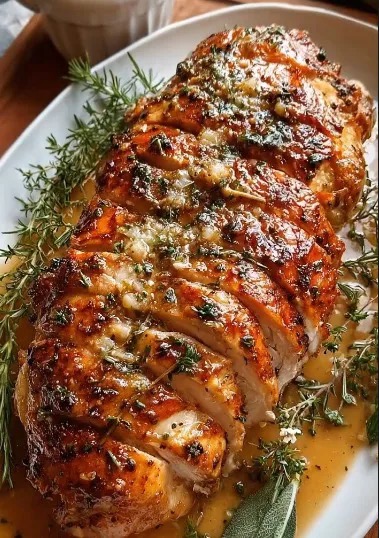
Garlic-Herb Roasted Turkey Breast with Pan Gravy
Garlic-Herb Roasted Turkey Breast with Pan Gravy is a classic, comforting dish that brings together tender roasted poultry, fragrant herbs, and a rich homemade gravy. This recipe delivers all the delicious flavor of a traditional roasted turkey but in a more manageable portion, making it perfect for smaller gatherings, family dinners, or special weekend meals.
Roasting a turkey breast is a wonderful alternative to preparing a whole turkey. It requires less cooking time, is easier to handle, and still provides the same satisfying flavor and juicy texture that people love about roasted turkey. When seasoned with garlic, butter, and fresh herbs, the meat becomes incredibly flavorful while staying moist and tender.
The secret to this recipe lies in the garlic-herb butter that coats the turkey before roasting. As the turkey cooks, the butter slowly melts into the meat while the herbs infuse it with aroma and depth of flavor. The result is a beautifully golden roast with crispy skin and succulent slices of meat.
Another highlight of this dish is the homemade pan gravy. Made from the flavorful drippings left in the roasting pan, this gravy captures all the savory goodness created during the roasting process. When poured over slices of turkey, it adds richness and ties the entire dish together.
Whether served during holidays, Sunday dinners, or festive gatherings, Garlic-Herb Roasted Turkey Breast with Pan Gravy is a comforting meal that never fails to impress.
Ingredients
For the Turkey Breast
1 boneless turkey breast roast (about 3 to 4 pounds)
5 tablespoons unsalted butter, softened
4 cloves garlic, minced
1 tablespoon fresh rosemary, finely chopped
1 tablespoon fresh thyme leaves
1 tablespoon fresh parsley, chopped
1 teaspoon salt
1/2 teaspoon black pepper
1 teaspoon paprika
1 tablespoon olive oil
1 lemon, cut in half
1 small onion, quartered
1 cup chicken broth or turkey broth
For the Pan Gravy
2 tablespoons unsalted butter
2 tablespoons all-purpose flour
1 1/2 to 2 cups pan drippings and broth
Salt to taste
Black pepper to taste
Equipment Needed
Roasting pan or oven-safe baking dish
Meat thermometer
Small mixing bowl
Whisk
Medium saucepan
Basting brush or spoon
Aluminum foil
Cutting board
Sharp carving knife
Why Roast Turkey Breast Instead of a Whole Turkey
Many home cooks choose turkey breast instead of a whole turkey for several practical reasons.
First, it cooks much faster. A full turkey can take several hours to roast, while a turkey breast usually cooks in under two hours.
Second, it is easier to handle. A smaller cut of meat is simpler to season, roast, and carve.
Third, it is perfect for smaller gatherings where a full turkey would produce too many leftovers.
Finally, turkey breast is naturally lean but becomes incredibly juicy when roasted with butter and herbs.
Preparing the Garlic-Herb Butter
The garlic-herb butter is what gives this turkey its signature flavor.
In a small bowl, combine:
softened butter
minced garlic
rosemary
thyme
parsley
salt
black pepper
paprika
Mix everything together until it forms a smooth and aromatic herb butter.
This mixture will be spread over the turkey before roasting, allowing the herbs and garlic to penetrate the meat as it cooks.
Preparing the Turkey Breast
Remove the turkey breast from the refrigerator about 30 minutes before cooking. Allowing the meat to come closer to room temperature helps it cook more evenly.
Pat the turkey breast dry using paper towels. Removing excess moisture helps the skin become golden and crisp during roasting.
Place the turkey breast in a roasting pan or baking dish.
Rub the olive oil lightly over the surface of the turkey. This helps the herb butter stick and encourages browning.
Next, spread the garlic-herb butter evenly over the turkey breast, covering all sides.
If the turkey breast still has skin attached, gently loosen the skin with your fingers and spread some of the herb butter underneath. This step ensures the meat itself becomes infused with flavor.
Adding Aromatics to the Pan
Place the lemon halves and onion quarters around the turkey in the roasting pan.
These aromatics add extra flavor to the roasting juices, which will later be used to make the pan gravy.
Pour the chicken broth into the bottom of the roasting pan. The liquid helps prevent the drippings from burning and keeps the turkey moist during cooking.
Roasting the Turkey Breast
Preheat the oven to 180°C.
Place the roasting pan in the oven and roast the turkey breast for approximately 60 to 90 minutes.
Cooking time will vary depending on the size and thickness of the turkey breast.
During roasting, baste the turkey with the pan juices every 20 minutes. Basting helps keep the meat moist and encourages even browning.
If the turkey begins to brown too quickly, loosely cover it with aluminum foil to prevent over-browning.
Checking for Doneness
The safest and most accurate way to determine if turkey is cooked is by using a meat thermometer.
Insert the thermometer into the thickest part of the turkey breast without touching the bone.
The turkey is fully cooked when the internal temperature reaches 74°C.
Once this temperature is reached, remove the turkey from the oven.
Resting the Turkey
Transfer the roasted turkey breast to a cutting board and cover it loosely with foil.
Allow the meat to rest for about 15 minutes before slicing.
Resting is an important step because it allows the juices to redistribute throughout the meat. If sliced immediately, the juices will run out and the turkey may become dry.
Making the Pan Gravy
While the turkey rests, prepare the gravy using the drippings left in the roasting pan.
Strain the pan drippings into a measuring cup to remove large pieces of onion or herbs.
If necessary, add additional broth until you have about 2 cups of liquid.
In a medium saucepan, melt the butter over medium heat.
Add the flour and whisk continuously for about 1 to 2 minutes. This mixture is called a roux and helps thicken the gravy.
Gradually pour in the pan drippings while whisking constantly. Continue cooking and stirring until the gravy thickens to your desired consistency.
Season with salt and black pepper to taste.
Carving the Turkey Breast
Once the turkey has rested, place it on a cutting board.
Using a sharp carving knife, slice the turkey breast against the grain into even slices.
Cutting against the grain helps keep the meat tender and easier to chew.
Arrange the slices on a serving platter and drizzle some of the warm gravy over the top.
Serve the remaining gravy on the side.
Flavor Variations
Although the classic garlic-herb combination is delicious, this recipe can easily be adapted with different flavors.
Lemon Herb Turkey
Add extra lemon zest and thyme for a brighter citrus flavor.
Garlic Parmesan Turkey
Mix grated parmesan cheese into the herb butter before roasting.
Honey Garlic Turkey
Add two tablespoons of honey to the butter mixture for a sweet and savory glaze.
Smoky Paprika Turkey
Use smoked paprika and a small amount of chili powder for a subtle smoky flavor.
Maple Herb Turkey
Add a tablespoon of maple syrup to the butter mixture for a mild sweetness.
Serving Suggestions
Garlic-Herb Roasted Turkey Breast pairs well with a wide variety of side dishes.
Mashed potatoes are a classic choice because they complement the rich gravy perfectly.
Roasted vegetables such as carrots, Brussels sprouts, and sweet potatoes add color and nutrition to the meal.
Stuffing or dressing is another traditional side dish that pairs wonderfully with roasted turkey.
Fresh salads, cranberry sauce, and buttered dinner rolls also make excellent accompaniments.
Storage and Leftovers
Leftover turkey breast can be stored in an airtight container in the refrigerator for up to 4 days.
To reheat, place slices in a baking dish with a small amount of broth and warm them in the oven until heated through.
Turkey also freezes well. Wrap slices tightly in plastic wrap and place them in a freezer-safe container for up to 3 months.
Leftover turkey can be used in many dishes such as sandwiches, salads, soups, casseroles, and pasta dishes.
Tips for the Best Roasted Turkey Breast
Use softened butter so it spreads easily across the turkey.
Fresh herbs provide the best flavor, although dried herbs can be used if necessary.
Basting during roasting helps keep the meat juicy.
Always allow the turkey to rest before slicing.
Use a thermometer to ensure perfect doneness.
Why This Recipe Is Perfect for Home Cooks
This recipe is ideal for both beginners and experienced cooks. The preparation is straightforward, and the ingredients are simple and easy to find. Despite its simplicity, the final dish feels elegant and impressive.
Roasting a turkey breast with garlic and herbs creates deep flavor without requiring complicated techniques. The homemade pan gravy adds a restaurant-quality finishing touch that elevates the entire meal.
Because the recipe uses a smaller cut of turkey, it is practical for everyday cooking while still being special enough for celebrations.
Conclusion
Garlic-Herb Roasted Turkey Breast with Pan Gravy is a comforting, flavorful dish that showcases the beauty of simple cooking. With its tender meat, aromatic herbs, and rich gravy, it delivers the classic taste of roasted turkey in an easy-to-prepare format.
The garlic-herb butter keeps the turkey moist and fragrant, while the pan gravy transforms the roasting juices into a delicious sauce that enhances every bite.
Whether served for a holiday meal, a Sunday dinner, or a special gathering, this roasted turkey breast recipe is sure to become a favorite in your kitchen. Once you experience the aroma and flavor of this dish fresh from the oven, it will quickly become one of your go-to recipes for memorable homemade meals.