
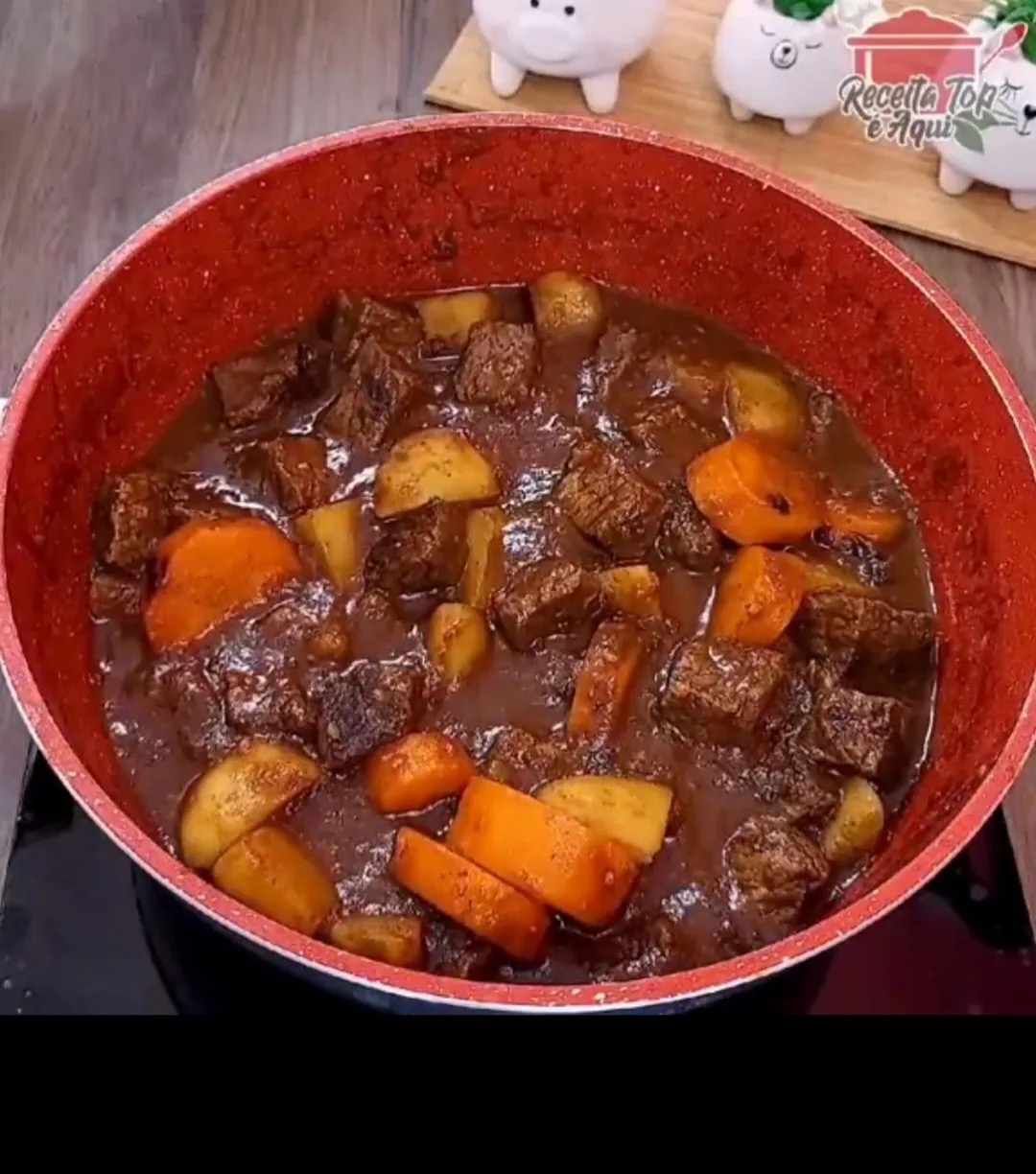
Hearty Homemade Beef Stew with Potatoes and Carrots
Introduction
Few dishes capture the warmth and comfort of home cooking quite like a classic beef stew. Rich, slow-cooked beef combined with tender vegetables and a deeply flavorful sauce creates a meal that feels nourishing, satisfying, and timeless. This Hearty Homemade Beef Stew with Potatoes and Carrots is the kind of recipe that fills the kitchen with an irresistible aroma while it simmers and rewards patience with incredible flavor.
Beef stew has been a beloved meal in many cultures for centuries. Its popularity comes from its simplicity and practicality. Tougher cuts of beef that might otherwise require long cooking become incredibly tender when simmered slowly in a flavorful broth. At the same time, vegetables such as potatoes and carrots absorb the savory sauce, becoming soft and delicious.
The beauty of a traditional stew lies in the way ingredients slowly blend together during cooking. Over time, the beef releases its juices, the vegetables soften, and the broth thickens into a rich gravy that coats every ingredient. The result is a dish that feels both rustic and deeply satisfying.
Another advantage of beef stew is its versatility. It can be prepared on the stovetop, in a slow cooker, or even in the oven. It also stores well and often tastes even better the next day as the flavors continue to develop.
In this detailed recipe guide, you will learn how to prepare a classic beef stew from start to finish. The method focuses on building layers of flavor, beginning with searing the beef and finishing with a slow simmer that creates a thick, hearty sauce. With a little patience and attention to detail, this recipe produces a stew that is tender, rich, and incredibly comforting.
Why This Beef Stew Is So Flavorful
The secret to a truly great beef stew lies in building flavor step by step. Each stage of cooking contributes to the final depth of the dish.
First, browning the beef creates caramelization on the surface of the meat. This process, known as the Maillard reaction, produces rich savory flavors that form the foundation of the stew.
Next, onions and garlic are sautéed to release their natural sweetness and aroma. These ingredients form the base of the stew’s flavor profile.
The broth is then enhanced with herbs, spices, and sometimes tomato paste or Worcestershire sauce, which add depth and complexity.
Finally, slow simmering allows the beef to become tender while the vegetables absorb the flavorful liquid. As the stew cooks, the broth thickens slightly, creating a comforting gravy that coats every ingredient.
Ingredients
For the Beef Stew
2 pounds beef stew meat, cut into cubes
2 tablespoons vegetable oil or olive oil
1 large onion, chopped
3 cloves garlic, minced
4 cups beef broth
2 tablespoons tomato paste
1 tablespoon Worcestershire sauce
3 medium potatoes, peeled and chopped
3 large carrots, sliced
1 teaspoon salt
1/2 teaspoon black pepper
1 teaspoon paprika
1 teaspoon dried thyme
1 teaspoon dried rosemary
1 bay leaf
Optional Ingredients
1 cup mushrooms, sliced
1 cup celery, chopped
1 tablespoon flour or cornstarch for thickening
Fresh parsley for garnish
Choosing the Best Cut of Beef
Selecting the right cut of beef is essential for achieving a tender and flavorful stew. Cuts that contain connective tissue and marbling work best because they break down slowly during cooking.
Beef chuck is one of the most popular choices for stew because it becomes tender and juicy when simmered for a long time. Other suitable cuts include brisket, bottom round, or stew meat sold specifically for slow cooking.
When preparing the beef, it is important to cut the pieces into evenly sized cubes. This helps them cook at the same rate and ensures consistent texture throughout the stew.
Preparing the Ingredients
Before starting the cooking process, it is helpful to prepare all ingredients in advance.
Peel and chop the potatoes into medium-sized chunks. Slice the carrots into thick rounds so they hold their shape during cooking. Chop the onion and mince the garlic.
Having all ingredients ready allows the cooking process to proceed smoothly.
Browning the Beef
Heat the vegetable oil in a large pot or Dutch oven over medium-high heat.
Add the beef cubes in batches, making sure not to overcrowd the pot. Overcrowding prevents proper browning.
Cook the beef for several minutes on each side until it develops a deep brown crust. This step is essential for building flavor.
Once browned, remove the beef from the pot and set it aside.
Cooking the Aromatics
In the same pot, add the chopped onion. Cook for about five minutes until the onion becomes soft and slightly golden.
Add the minced garlic and cook for another thirty seconds until fragrant.
If using tomato paste, add it at this stage and cook it for one minute. Cooking the paste briefly helps deepen its flavor.
Building the Stew Base
Return the browned beef to the pot.
Pour in the beef broth and stir well to combine. Use a wooden spoon to scrape any browned bits from the bottom of the pot. These bits add significant flavor to the stew.
Add Worcestershire sauce, salt, black pepper, paprika, thyme, rosemary, and the bay leaf.
Bring the mixture to a gentle simmer.
Adding the Vegetables
Once the stew begins to simmer, add the chopped potatoes and sliced carrots.
If using optional vegetables such as mushrooms or celery, add them at this stage.
Stir the stew gently so the vegetables are submerged in the broth.
Slow Simmering the Stew
Reduce the heat to low and cover the pot partially with a lid.
Allow the stew to simmer slowly for about one and a half to two hours.
During this time, the beef will become tender and the vegetables will soften. Stir occasionally to prevent sticking and ensure even cooking.
If the liquid reduces too much during cooking, additional broth can be added.
Thickening the Stew
As the stew cooks, it will naturally thicken slightly from the starch released by the potatoes.
If you prefer a thicker gravy, mix one tablespoon of flour or cornstarch with a small amount of water to form a slurry. Stir this mixture into the stew during the final ten minutes of cooking.
Allow the stew to simmer briefly until the sauce reaches the desired consistency.
Final Seasoning
Before serving, taste the stew and adjust the seasoning if necessary. Additional salt, pepper, or herbs can be added depending on preference.
Remove the bay leaf before serving.
Serving the Stew
Ladle the hot stew into bowls.
Garnish with freshly chopped parsley for color and freshness.
This stew pairs beautifully with crusty bread, warm biscuits, or rice. The rich sauce is perfect for dipping bread and enjoying every last drop.
Tips for the Best Beef Stew
Always brown the beef before simmering to develop deep flavor.
Cut vegetables into large pieces so they do not become too soft during long cooking.
Simmer the stew slowly rather than boiling it, which helps keep the meat tender.
Taste and adjust seasoning at the end of cooking.
Allow the stew to rest for a few minutes before serving so the flavors settle.
Variations
Beef and Red Wine Stew
Replace one cup of the beef broth with red wine to add depth and richness.
Garlic Herb Stew
Increase the amount of garlic and add fresh herbs such as thyme and rosemary.
Spicy Beef Stew
Add chili flakes or diced chili peppers for a subtle heat.
Vegetable Rich Stew
Add peas, green beans, or corn during the final stage of cooking.
Storage and Reheating
Beef stew stores very well and often tastes even better the next day.
Allow the stew to cool completely before transferring it to airtight containers.
Store in the refrigerator for up to four days.
To reheat, place the stew in a pot over medium heat and warm gently until heated through.
If the stew has thickened too much during storage, add a small amount of broth or water while reheating.
Freezing Instructions
Beef stew freezes exceptionally well.
Place cooled stew in freezer-safe containers or bags.
Freeze for up to three months.
To serve, thaw overnight in the refrigerator and reheat on the stovetop.
Why This Recipe Works
This classic beef stew works because it uses a slow cooking process that allows flavors to develop naturally. The beef becomes tender as connective tissues break down, while vegetables absorb the savory broth.
The combination of browned meat, aromatic vegetables, herbs, and slow simmering creates a rich and comforting dish that feels deeply satisfying.
Conclusion
Hearty Homemade Beef Stew with Potatoes and Carrots is a timeless recipe that brings warmth and comfort to the table. With its tender beef, flavorful broth, and soft vegetables, it is the kind of meal that feels both nourishing and satisfying.
Although it requires some time to cook, the process is simple and rewarding. As the stew slowly simmers, the ingredients transform into a rich, aromatic dish that fills the kitchen with comforting aromas.
Whether served on a cold evening, shared with family, or prepared ahead for easy meals during the week, this classic beef stew remains one of the most beloved comfort foods in home cooking.