
The Ultimate Guide to Homemade Persian-Inspired Rosewater and Pomegranate Ice Cream
There is a specific kind of magic that occurs when the culinary traditions of the East meet the classic comforts of the West. This recipe for Rosewater and Pomegranate Ice Cream—often referred to in various forms as Bastani Sonati or Persian Ice Cream—is a testament to that harmony. It is a dessert that manages to be simultaneously refreshing, deeply floral, and decadently creamy.
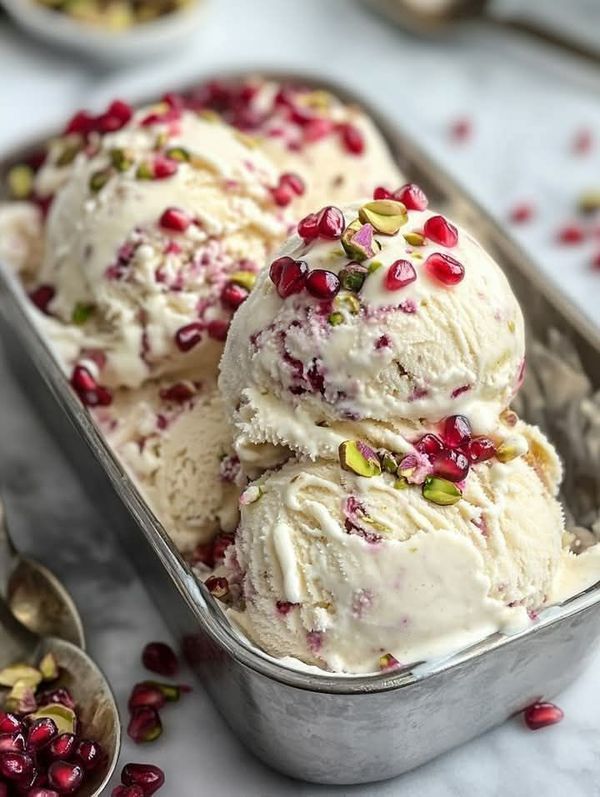
In this comprehensive guide, we will explore the nuances of floral infusions, the science of ice cream stabilization, and the step-by-step process to creating a masterpiece that looks exactly like the stunning image of cream-colored scoops adorned with ruby-red pomegranate seeds and emerald pistachios.
Understanding the Flavor Profile
To appreciate this ice cream, one must understand the three pillars of its flavor:
- The Rosewater: Distilled from rose petals, rosewater is potent. It provides a high-note aroma that lingers on the palate. The key is balance; too much and the dessert tastes like perfume; too little and the exotic essence is lost.
- The Pomegranate: We use pomegranate in two ways. First, as a concentrated swirl or juice reduction to provide acidity and tartness, which cuts through the heavy dairy. Second, as fresh arils (seeds) for a structural “pop” and a burst of fresh juice.
- The Pistachio: These provide the necessary saltiness and earthy crunch. Visually, the bright green of the pistachio against the deep red of the pomegranate creates a regal aesthetic.
The Science of the Perfect Scoop
Before we dive into the ingredients, it is important to discuss why we use specific techniques. Ice cream is a complex emulsion of milk fat, proteins, water, and air.
Why a Custard Base?
While “Philadelphia-style” ice cream (made without eggs) is faster, a French-style custard base using egg yolks provides a superior mouthfeel. The lecithin in the egg yolks acts as a natural emulsifier, binding the water and fat together to prevent large ice crystals from forming. This results in a smoother, “chewier” texture that holds up better to the floral notes of rosewater.
The Role of Sugar
Sugar is not just for sweetness; it acts as an anti-freeze. By lowering the freezing point of the water in the milk and cream, sugar ensures that the ice cream remains scoopable rather than turning into a solid block of ice.
Ingredients Checklist
For the Custard Base
- Heavy Cream (2 cups): Use a high-fat cream (at least 36%) for maximum richness.
- Whole Milk (1 cup): Do not substitute with low-fat or skim milk, as the water content will cause iciness.
- Granulated Sugar (3/4 cup): To be split between the milk and the egg yolks.
- Large Egg Yolks (5-6): Use fresh, room-temperature eggs.
- Vanilla Bean or Paste (1 tsp): A subtle background note to ground the floral rosewater.
- Sea Salt (a pinch): Essential for brightening all other flavors.
The Aromatics and Mix-ins
- High-Quality Rosewater (1 to 2 tbsp): Look for “Cortas” or similar Middle Eastern brands.
- Pomegranate Molasses or Concentrated Juice (1/4 cup): Used for the ribbon swirl.
- Fresh Pomegranate Arils (1/2 cup): For folding in and garnishing.
- Shelled Pistachios (1/4 cup): Lightly toasted and roughly chopped.
Step-by-Step Instructions
Phase 1: Infusing the Dairy
In a medium, heavy-bottomed saucepan, combine the heavy cream, whole milk, and half of the sugar. Heat over medium heat, stirring occasionally, until the mixture begins to steam and small bubbles form around the edges. Do not let it come to a rolling boil. If using a vanilla bean, scrape the seeds into the milk and drop the pod in as well. Once steaming, remove from heat and let it steep for 10 minutes.
Phase 2: Tempering the Yolks
In a separate glass bowl, whisk the egg yolks with the remaining sugar and the pinch of salt until the mixture becomes pale yellow and slightly thickened. This is a crucial step to ensure the sugar is partially dissolved before meeting the heat.
Slowly—very slowly—ladle about half a cup of the warm milk mixture into the egg yolks while whisking constantly. This “tempers” the eggs, gradually raising their temperature so they don’t scramble when added to the hot pot. Continue adding milk until the yolk mixture is warm to the touch.
Phase 3: Thickening the Custard
Pour the tempered egg mixture back into the saucepan with the remaining milk. Place over medium-low heat. Stir constantly with a heat-resistant spatula, making sure to scrape the bottom and corners of the pan.
Cook until the mixture thickens enough to coat the back of a spoon. If you run your finger through the coating on the spoon, the path should remain clear. This usually happens around 170°F to 175°F (77°C to 79°C).
Phase 4: The Chill Factor
Pour the custard through a fine-mesh sieve into a clean bowl to remove any potential bits of cooked egg or vanilla pod. Stir in the rosewater. Start with one tablespoon, taste, and add more if you prefer a stronger floral profile.
Cover the surface directly with plastic wrap to prevent a skin from forming. Refrigerate for at least 6 hours, though overnight is best. A cold base is the secret to a fast churn and a creamy texture.
Phase 5: Churning and Adding Textures
Pour the chilled base into your ice cream maker and churn according to the manufacturer’s instructions. Usually, this takes 20 to 25 minutes.
While the ice cream is churning, prepare your pomegranate swirl. If using pomegranate molasses, you can use it as is. If using juice, simmer it in a small pan until reduced by half to create a thick syrup.
In the final 2 minutes of churning, add half of the pistachios and half of the pomegranate arils.
Phase 6: The Final Layering
To achieve the professional look seen in the image, do not simply stir the remaining toppings in. Instead, layer them.
- Transfer a third of the churned ice cream into a chilled metal loaf pan.
- Drizzle a portion of the pomegranate molasses and sprinkle some pistachios and arils.
- Repeat with another layer of ice cream and toppings.
- Finish with a final layer of ice cream, then artfully top with the remaining ruby arils and green pistachios.
Storage and Serving
Freeze the ice cream for at least 4 hours to “ripen” or firm up. Because homemade ice cream lacks the stabilizers and gums found in commercial brands, it will freeze harder.
Pro Tip: Take the container out of the freezer and let it sit on the counter for 5 to 10 minutes before scooping. Dip your ice cream scoop in warm water between each scoop to get those perfect, rounded spheres shown in the photo.
Troubleshooting Common Issues
My ice cream is too hard.
This is usually due to a lack of fat or sugar. Ensure you are using heavy cream and not substituting with milk. You can also add a tablespoon of vodka or vegetable glycerin to the base before churning; alcohol does not freeze, which helps keep the texture soft.
The rosewater is overpowering.
Rosewater varies significantly in strength by brand. Always start small. If it is already too strong, you can make a second batch of plain vanilla base and mix them together to dilute the intensity.
The pomegranate seeds are too crunchy.
If you find the seeds (the pith inside the aril) distracting, you can skip the fresh arils inside the ice cream and only use them as a garnish on top. Rely on the pomegranate molasses swirl for the internal flavor.
Variations and Pairings
This ice cream is a star on its own, but it pairs beautifully with other desserts. Consider serving a scoop alongside a warm almond cake or a piece of crispy baklava. The honey and nuts in Middle Eastern pastries provide a wonderful textural contrast to the cold, floral cream.
For a modern twist, you can add a pinch of ground cardamom to the milk infusion stage. Cardamom and rosewater are classic partners in Persian confectionery and add a sophisticated, spicy depth to the recipe.
Conclusion
Creating this Rosewater and Pomegranate Ice Cream is an exercise in patience and sensory delight. From the moment the rosewater hits the warm cream to the final crunch of the pistachio, it is a recipe that engages every sense. By following the custard method and paying close attention to the tempering process, you will produce an artisanal dessert that rivals any high-end creamery. Enjoy the process of crafting this elegant, floral treat that brings a touch of ancient spice-route luxury to your modern kitchen.