
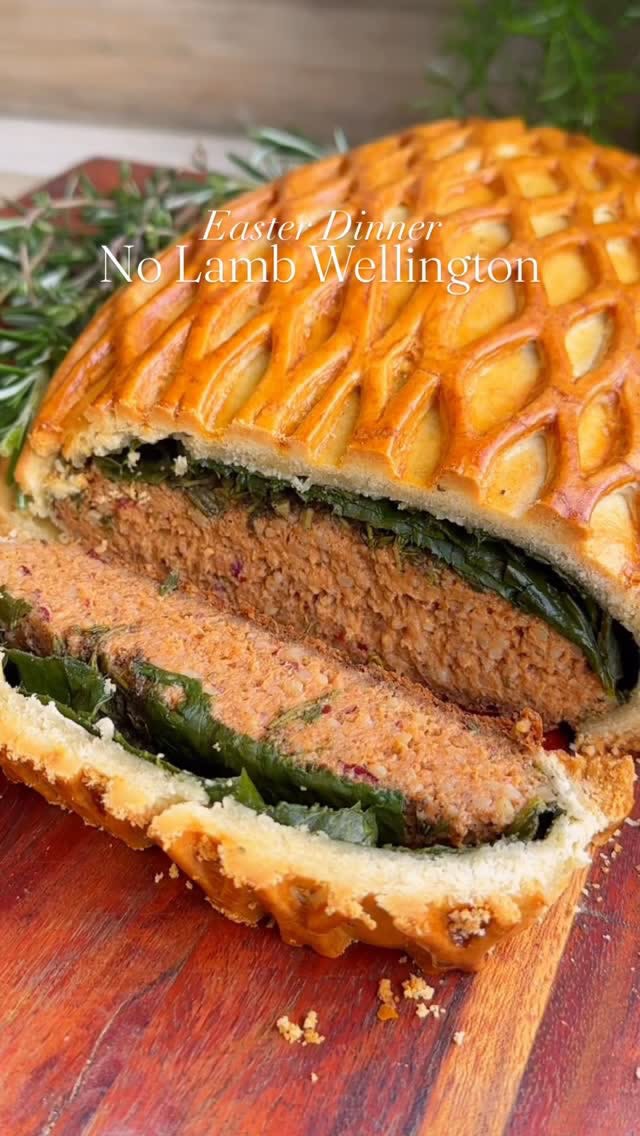
“No Lamb” Wellington
A Stunning Plant-Based Centerpiece for Easter Dinner
When it comes to special occasions like Easter, the main dish often takes center stage. Traditionally, lamb has been the star of the table, but modern cooking has opened the door to creative, plant-based alternatives that are just as satisfying—if not more so. This “No Lamb” Wellington is a perfect example. It is visually impressive, deeply flavorful, and thoughtfully crafted to deliver the same sense of indulgence and celebration as the classic version.
Wrapped in golden, flaky pastry and filled with a rich, herb-infused, savory core, this dish is designed to impress both vegetarians and meat lovers alike. The magic lies not in imitation, but in transformation—using wholesome ingredients, bold seasoning, and careful technique to create something entirely delicious in its own right.
In this complete guide, you will learn how to make a perfect “No Lamb” Wellington from scratch, including ingredient selection, preparation techniques, flavor building, assembly, and serving suggestions.
What Is a “No Lamb” Wellington?
A “No Lamb” Wellington is a plant-based interpretation of the traditional Wellington, where a savory filling replaces meat while maintaining the iconic structure:
- A rich, flavorful core
- A layer of herbs or greens
- A crisp, buttery pastry exterior
Instead of lamb, this version uses a combination of vegetables, legumes, nuts, and seasonings to create a hearty, satisfying filling with depth and texture.
Why This Recipe Works
This recipe succeeds because it focuses on three essential elements:
1. Texture
A combination of mushrooms, lentils, and nuts creates a firm yet tender filling that holds its shape when sliced.
2. Flavor
Herbs, garlic, smoked spices, and umami-rich ingredients replicate the depth typically associated with roasted meat.
3. Contrast
The crispy pastry contrasts beautifully with the soft, savory interior, creating a balanced eating experience.
Ingredients
For the Filling
- 2 tablespoons olive oil
- 1 onion, finely chopped
- 3 cloves garlic, minced
- 2 cups mushrooms, finely chopped
- 1 cup cooked lentils
- 1/2 cup walnuts or pecans, finely chopped
- 1/2 cup breadcrumbs
- 1 tablespoon soy sauce
- 1 teaspoon smoked paprika
- 1 teaspoon dried thyme
- 1 teaspoon dried rosemary
- 1 tablespoon tomato paste
- Salt and black pepper to taste
For the Herb and Spinach Layer
- 2 cups fresh spinach
- 1/4 cup fresh parsley, chopped
- 1 tablespoon olive oil
- Pinch of salt
For the Pastry
- 1 sheet puff pastry (thawed if frozen)
For Brushing
- 1 egg (or plant-based milk for vegan option)
Optional Gravy
- 2 tablespoons butter or plant-based alternative
- 2 tablespoons flour
- 2 cups vegetable broth
- Salt and pepper to taste
Ingredient Breakdown
Mushrooms
Mushrooms are essential for their umami flavor. They add depth and richness, making the filling more satisfying.
Lentils
Lentils provide protein and structure. They help bind the filling while keeping it hearty.
Nuts
Chopped nuts add texture and a subtle richness that enhances the overall mouthfeel.
Herbs and Spices
Rosemary, thyme, and smoked paprika are key to creating that classic, savory profile associated with roasted dishes.
Spinach Layer
The spinach and herb layer adds freshness and a slight bitterness that balances the richness of the filling.
Puff Pastry
This creates the signature golden, flaky crust that makes the Wellington so visually appealing.
Step-by-Step Instructions
Step 1: Prepare the Filling
Heat olive oil in a large skillet over medium heat.
Add the chopped onion and cook until soft and translucent, about 5 minutes.
Stir in the garlic and cook for another minute until fragrant.
Add the mushrooms and cook until they release their moisture and begin to brown. This step is crucial for developing flavor and preventing a soggy filling.
Step 2: Build the Flavor
Add the cooked lentils and chopped nuts to the pan.
Stir in the tomato paste, soy sauce, smoked paprika, thyme, and rosemary.
Mix well and cook for a few minutes to allow the flavors to meld.
Add breadcrumbs and stir until the mixture holds together. Season with salt and pepper.
Remove from heat and let the mixture cool slightly.
Step 3: Prepare the Spinach Layer
In a separate pan, heat olive oil over medium heat.
Add the spinach and cook until wilted.
Stir in the chopped parsley and a pinch of salt.
Remove from heat and allow to cool. Squeeze out excess moisture if necessary.
Step 4: Shape the Filling
Once the filling is cool enough to handle, shape it into a compact log. This will form the center of your Wellington.
Step 5: Assemble the Wellington
Roll out the puff pastry on a lightly floured surface.
Spread the spinach mixture evenly over the pastry, leaving a border around the edges.
Place the filling log in the center.
Carefully wrap the pastry around the filling, sealing the edges tightly. Place seam-side down on a baking sheet lined with parchment paper.
Step 6: Brush and Score
Brush the pastry with beaten egg or plant-based milk.
Use a knife to lightly score the top for a decorative finish.
Step 7: Bake
Preheat your oven to 200°C (400°F).
Bake the Wellington for 30–35 minutes, or until the pastry is golden brown and crisp.
Step 8: Rest and Serve
Allow the Wellington to rest for 10 minutes before slicing.
This helps the filling set and makes it easier to serve clean slices.
Making the Gravy
In a saucepan, melt butter over medium heat.
Stir in flour and cook for 1–2 minutes.
Gradually whisk in vegetable broth.
Simmer until thickened, then season with salt and pepper.
Serve warm alongside the Wellington.
Tips for Perfect Results
Remove Moisture
Ensure the mushroom mixture is well-cooked and not watery. Excess moisture can make the pastry soggy.
Cool Before Assembling
Always let the filling cool before wrapping it in pastry to prevent melting the dough.
Seal Properly
Make sure the pastry edges are sealed היט to keep the filling intact.
Do Not Skip Resting
Resting after baking improves texture and makes slicing easier.
Variations
Beetroot Version
Add grated beetroot for a richer color and subtle sweetness.
Vegan Cheese Addition
Include a layer of plant-based cheese for extra creaminess.
Spiced Version
Add cumin or coriander for a different flavor profile.
Serving Suggestions
This “No Lamb” Wellington pairs beautifully with:
- Roasted potatoes
- Steamed green beans or asparagus
- Carrot or parsnip puree
- Fresh spring salad
The addition of gravy enhances the dish and ties all elements together.
Storage and Reheating
Refrigeration
Store leftovers in an airtight container for up to 3 days.
Reheating
Reheat in the oven at 180°C (350°F) to maintain the crispness of the pastry.
Avoid microwaving if possible, as it can make the pastry soft.
Why It Is Perfect for Easter
This dish captures the spirit of Easter dining:
- It is elegant and celebratory
- It serves as a beautiful centerpiece
- It accommodates a variety of dietary preferences
- It highlights fresh herbs and seasonal ingredients
It is a dish that brings people together and creates a memorable dining experience.
Common Mistakes to Avoid
- Not cooking mushrooms long enough
- Overfilling the pastry
- Skipping the cooling step
- Baking at too low a temperature
Final Thoughts
The “No Lamb” Wellington is more than just an alternative—it is a standout dish in its own right. With its rich filling, vibrant herbs, and flaky pastry, it delivers everything you want in a праздничный centerpiece.
Whether you are preparing it for Easter or any special occasion, this recipe offers a perfect balance of flavor, texture, and presentation. It proves that plant-based cooking can be just as indulgent, satisfying, and impressive as traditional dishes.
Once you try it, it may very well become a new tradition at your table.