
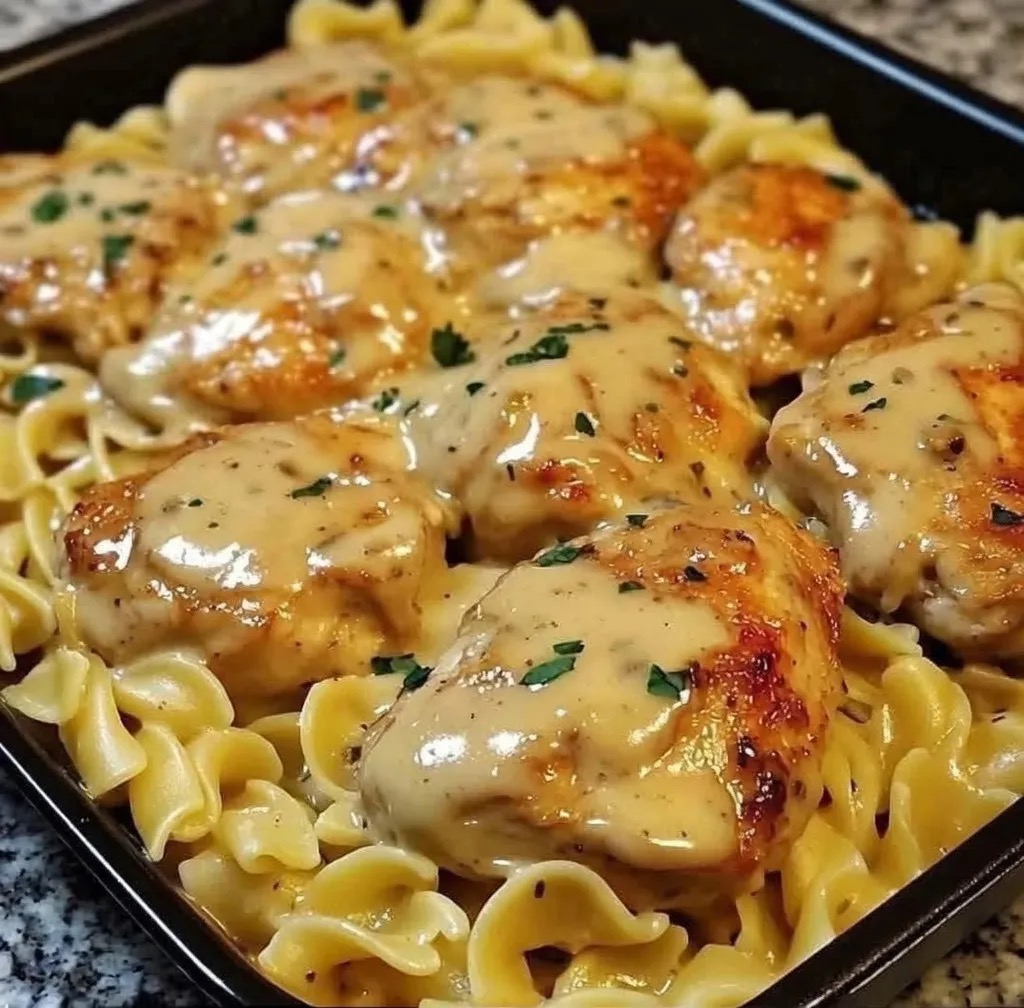
One-Pan Chicken with Buttered Noodles
A Comforting, Creamy Dinner Perfect for Busy Nights
When life gets busy, dinner is often the first thing to feel overwhelming. After a long day, most of us want a meal that feels comforting and homemade, without creating a mountain of dishes or requiring hours in the kitchen. That’s where One-Pan Chicken with Buttered Noodles truly shines.
This recipe brings together tender, golden-seared chicken breasts and silky buttered egg noodles, all coated in a rich, garlicky cream sauce that tastes far more indulgent than the effort required to make it. Best of all, everything comes together in one pan, making cleanup refreshingly simple.
Whether you’re cooking for your family on a weeknight, preparing a cozy meal for two, or looking for a reliable dish to add to your regular rotation, this recipe checks all the boxes. It’s hearty, comforting, adaptable, and deeply satisfying.
In this article, you’ll find not just the recipe, but everything you need to master it—step-by-step instructions, ingredient explanations, expert tips, variations, storage guidance, and answers to common questions. By the end, you’ll feel confident making this dish your own.
Why You’ll Love This Recipe
Before diving into the details, let’s talk about why this dish deserves a spot on your table.
- One pan, minimal cleanup
Everything cooks in a single skillet, from the chicken to the noodles. Fewer dishes mean less stress and more time to relax. - Quick but comforting
This recipe comes together in about 35–40 minutes, yet tastes like something that simmered all afternoon. - Family-friendly flavors
Creamy, buttery noodles and tender chicken are universally loved, making this a safe and satisfying option for picky eaters. - Customizable
You can easily add vegetables, swap proteins, or adjust the richness of the sauce to suit your preferences. - Perfect for leftovers
The flavors deepen as it rests, making leftovers just as enjoyable the next day.
Ingredients Overview
This recipe relies on simple, accessible ingredients that work together to create rich flavor and texture. Understanding each component will help you get the best results.
Chicken
- 4 boneless, skinless chicken breasts
Chicken breasts are lean, cook quickly, and absorb flavor beautifully. They’re ideal for busy nights, but the key is not overcooking them. Searing first locks in moisture and builds flavor that carries through the entire dish.
You can also substitute chicken thighs if you prefer darker meat. Thighs are slightly richer and more forgiving if overcooked, though they may require a bit more time.
Fat and Aromatics
- 2 tablespoons olive oil
- 3 garlic cloves, minced
Olive oil provides a flavorful base for searing the chicken and sautéing the garlic. Garlic adds depth and warmth to the sauce without overpowering it.
Liquids
- 2 cups chicken broth
- 1 cup heavy cream
Chicken broth adds savory backbone and helps cook the noodles directly in the pan. Heavy cream brings richness, body, and that luxurious texture that makes this dish feel special.
If you prefer a lighter version, you can substitute half-and-half, though the sauce will be slightly thinner.
Pasta
- 8 ounces egg noodles
Egg noodles are ideal here because they cook quickly and absorb sauce beautifully. Their tender texture pairs perfectly with the creamy sauce and chicken.
Butter and Cheese
- 3 tablespoons butter
- 1/4 cup grated Parmesan cheese
Butter gives the noodles their signature silky finish, while Parmesan adds saltiness and umami. Use freshly grated Parmesan if possible—it melts more smoothly and tastes far better than pre-shredded varieties.
Equipment You’ll Need
One of the biggest advantages of this recipe is its simplicity in terms of tools.
- Large, deep skillet or sauté pan with a lid
- Tongs or a spatula
- Wooden spoon
- Measuring cups and spoons
A skillet with high sides is ideal, as it allows room for the noodles and liquid to simmer without spilling.
Step-by-Step Instructions
Step 1: Prepare the Chicken
Pat the chicken breasts dry with paper towels. This step is crucial for achieving a golden sear. Season both sides generously with salt and black pepper.
Heat the olive oil in a large skillet over medium-high heat. Once the oil is shimmering, add the chicken breasts in a single layer. Avoid overcrowding the pan—if necessary, cook in batches.
Sear the chicken for about 5–6 minutes per side, until golden brown and nearly cooked through. The chicken doesn’t need to be fully done at this stage, as it will finish cooking later.
Remove the chicken from the skillet and set it aside on a plate. Tent loosely with foil to keep warm.
Step 2: Build the Flavor Base
Lower the heat to medium. In the same skillet, add the minced garlic. Sauté for about 30 seconds, stirring constantly, until fragrant. Be careful not to burn the garlic, as it can turn bitter.
At this point, you’ll notice browned bits stuck to the bottom of the pan. These bits are full of flavor and will dissolve into the sauce.
Step 3: Add the Liquids
Slowly pour in the chicken broth, using a wooden spoon to scrape up the browned bits from the bottom of the skillet. This process, known as deglazing, adds incredible depth to the sauce.
Once the broth is simmering, stir in the heavy cream. Bring the mixture to a gentle boil.
Step 4: Cook the Noodles
Add the egg noodles directly to the skillet, stirring to ensure they are submerged in the liquid. Reduce the heat to medium-low and cover the skillet.
Let the noodles cook for about 8–10 minutes, stirring occasionally to prevent sticking. As they cook, they’ll absorb the broth and cream, thickening the sauce naturally.
Step 5: Finish the Dish
Once the noodles are tender, stir in the butter and grated Parmesan cheese. The sauce should be creamy and coat the noodles evenly.
Nestle the chicken breasts back into the skillet, along with any juices that have collected on the plate. Spoon some sauce over the chicken.
Cover and simmer for an additional 3–5 minutes, until the chicken is fully cooked and warmed through.
Taste and adjust seasoning with salt and pepper as needed.
Tips for Perfect Results
- Don’t rush the sear
A good sear on the chicken adds flavor that carries through the entire dish. - Stir the noodles occasionally
This prevents them from clumping or sticking to the bottom of the pan. - Adjust sauce consistency
If the sauce becomes too thick, add a splash of broth. If it’s too thin, let it simmer uncovered for a few minutes. - Use freshly grated Parmesan
It melts more smoothly and enhances the sauce without becoming grainy.
Variations and Add-Ins
One of the strengths of this recipe is how adaptable it is. Here are some ideas to make it your own.
Add Vegetables
- Spinach or kale (stir in at the end)
- Mushrooms (sauté with the garlic)
- Peas or broccoli (add during the noodle cooking stage)
Change the Protein
- Chicken thighs instead of breasts
- Shrimp (add during the final 5 minutes)
- Rotisserie chicken (stir in at the end for an even faster meal)
Flavor Twists
- Add a pinch of red pepper flakes for heat
- Stir in fresh herbs like parsley or thyme
- Add a squeeze of lemon juice for brightness
Serving Suggestions
This dish is satisfying on its own, but it pairs well with simple sides:
- A crisp green salad with a light vinaigrette
- Steamed or roasted vegetables
- Garlic bread or crusty bread to soak up the sauce
Storage and Reheating
Storing
Allow leftovers to cool completely, then transfer to an airtight container. Store in the refrigerator for up to 3 days.
Reheating
Reheat gently on the stovetop or in the microwave. Add a splash of broth or cream to loosen the sauce, as it will thicken when chilled.
Frequently Asked Questions
Can I make this ahead of time?
Yes, though it’s best enjoyed fresh. If making ahead, slightly undercook the noodles and reheat gently with extra liquid.
Can I freeze this dish?
Cream-based sauces don’t freeze particularly well, as they can separate when thawed. For best texture, enjoy fresh or refrigerated.
What if I don’t have heavy cream?
You can substitute half-and-half or whole milk, though the sauce will be less rich.
Final Thoughts
One-Pan Chicken with Buttered Noodles is the kind of recipe that quickly becomes a household favorite. It’s simple enough for weeknights, comforting enough for colder evenings, and flexible enough to adapt to whatever you have on hand.
With minimal cleanup and maximum flavor, this dish proves that great cooking doesn’t have to be complicated. Once you try it, you’ll find yourself coming back to it again and again—exactly the kind of recipe every home cook needs.