
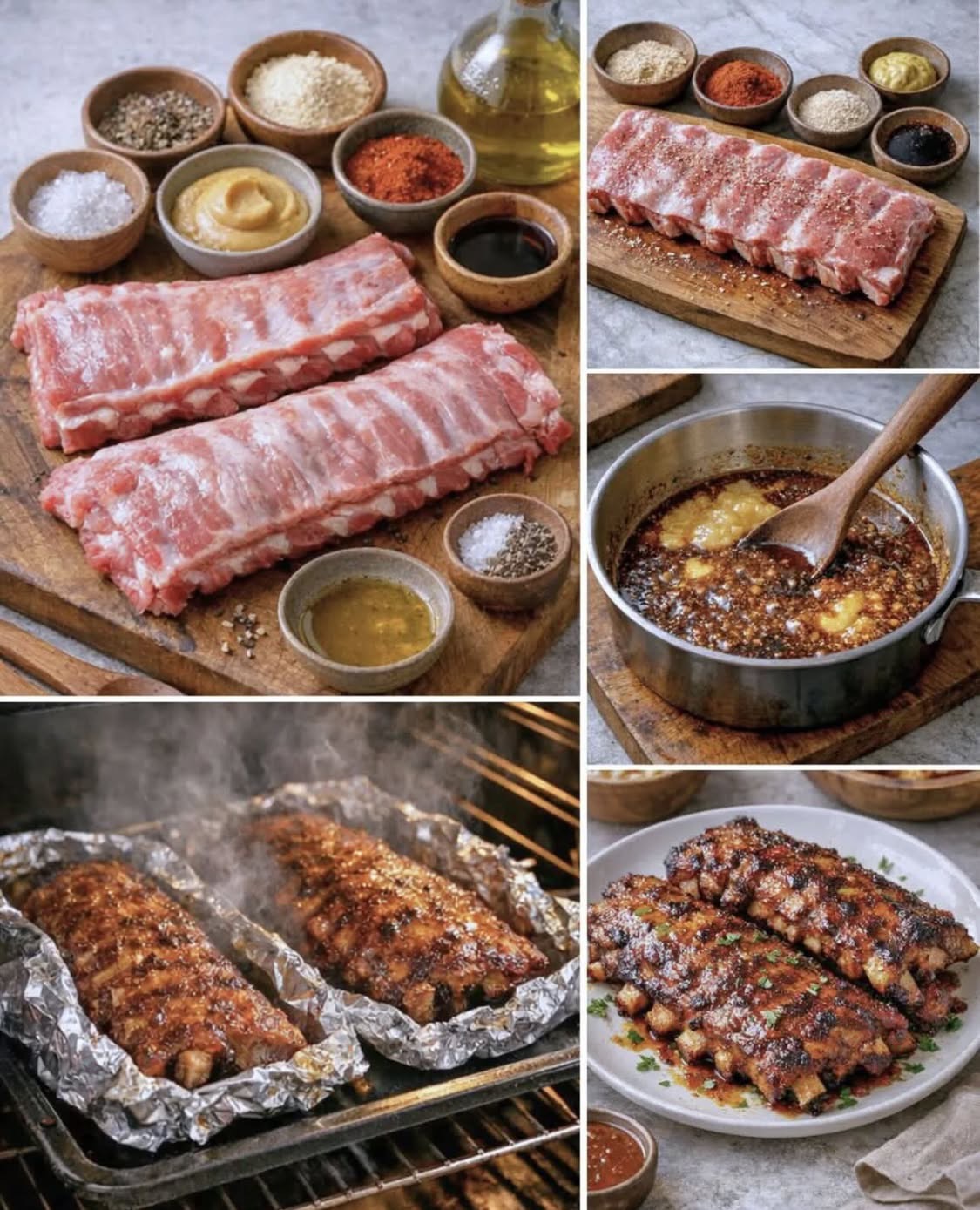
Oven-Baked Ribs – Juicy and Perfectly Golden
Few dishes are as satisfying as a plate of tender, juicy, oven-baked pork ribs. With their rich flavor, caramelized surface, and fall-apart texture, ribs are a favorite comfort food around the world. While many people associate ribs with outdoor grilling or smoking, baking them in the oven is one of the easiest and most reliable ways to achieve delicious results at home.
This oven-baked ribs recipe produces ribs that are juicy on the inside and beautifully golden on the outside. A simple blend of salt, pepper, garlic powder, onion powder, and paprika enhances the natural flavor of the pork while creating a savory crust. The slow baking process allows the meat to become tender and flavorful without requiring special equipment.
Whether you are preparing a family dinner, hosting friends, or simply craving a hearty meal, these oven-baked ribs are guaranteed to impress. This guide will walk you through every step of the process, from selecting the best ribs to seasoning, baking, and serving them perfectly.
Why Bake Ribs in the Oven
Many people think ribs must be grilled or smoked to taste good, but baking them in the oven has several advantages.
First, the oven provides consistent heat, which helps cook the ribs evenly. Unlike grilling, where heat can vary, the oven allows precise temperature control.
Second, baking ribs is convenient. You can prepare the ribs, place them in the oven, and allow them to cook slowly while you focus on other dishes or activities.
Third, oven baking locks in moisture. When ribs are cooked slowly at the right temperature, the fat melts gently into the meat, creating an incredibly tender texture.
Finally, baking ribs makes it easy to achieve a golden crust. By finishing the ribs uncovered at a slightly higher temperature, the surface becomes beautifully caramelized.
Ingredients
This recipe uses simple pantry ingredients that work together to enhance the natural flavor of pork ribs.
For the Ribs
2 racks of pork ribs
Pork ribs are the main ingredient in this dish. Baby back ribs or spare ribs both work well, although baby back ribs are typically more tender.
2 teaspoons salt
Salt enhances the natural flavor of the meat and helps the seasoning penetrate the ribs.
1 teaspoon black pepper
Black pepper adds mild heat and depth to the seasoning.
2 tablespoons garlic powder
Garlic powder provides a strong savory flavor that complements pork very well.
2 tablespoons onion powder
Onion powder adds sweetness and balance to the spice blend.
2 tablespoons paprika or mild chili powder
Paprika adds color, warmth, and a subtle smoky flavor to the ribs.
1 tablespoon oil
Oil helps the spices adhere to the ribs and promotes browning during baking.
Optional Sauce for Extra Flavor
While these ribs are delicious with dry seasoning alone, adding a sauce can make them even more flavorful.
You can create a simple sauce using ingredients such as mustard, soy sauce, honey, oil, paprika, garlic, and pepper. This mixture creates a savory glaze that becomes slightly caramelized in the oven.
Choosing the Best Pork Ribs
Selecting high-quality ribs is the first step to making a great dish.
When shopping for ribs, look for racks with a good amount of meat on top of the bones. Avoid ribs that have very little meat or large areas of exposed bone.
Fresh ribs should have a pink color and a small amount of marbling. The fat helps keep the meat tender during cooking.
If possible, choose ribs that are evenly sized so they cook at the same rate.
Preparing the Ribs
Proper preparation is important for achieving tender ribs with great flavor.
Remove the Membrane
Most racks of ribs have a thin membrane on the back side. This membrane can become tough during cooking.
To remove it, slide a knife under the membrane at one end of the rack. Once loosened, grip it with a paper towel and pull it off slowly.
Removing the membrane allows seasoning to penetrate the meat more effectively.
Trim Excess Fat
Ribs naturally contain fat, which adds flavor during cooking. However, very large pieces of fat can prevent seasoning from sticking.
Use a knife to trim away any thick areas of fat while leaving a thin layer for flavor.
Seasoning the Ribs
Seasoning is one of the most important steps in this recipe.
In a small bowl, combine the salt, black pepper, garlic powder, onion powder, and paprika.
Rub the ribs with a tablespoon of oil. The oil helps the spices stick to the meat and promotes browning.
Sprinkle the seasoning mixture generously over both sides of the ribs. Use your hands to press the spices into the meat so they adhere evenly.
For best flavor, allow the seasoned ribs to rest for about 30 minutes before baking. This gives the spices time to penetrate the meat.
If you have extra time, you can refrigerate the seasoned ribs for several hours or overnight for even deeper flavor.
Preparing the Oven
Preheat the oven to 325°F (165°C).
Low and slow cooking is essential for tender ribs. Cooking them at a lower temperature allows the connective tissue to break down gradually.
Line a baking tray with aluminum foil or parchment paper for easier cleanup.
Place a wire rack on top of the tray if possible. This allows air to circulate around the ribs and helps them cook evenly.
Baking the Ribs
Place the ribs on the prepared baking tray with the meat side facing up.
Cover the tray loosely with aluminum foil. This helps trap moisture and prevents the ribs from drying out during the first stage of cooking.
Bake the ribs for about 2 hours.
During this time, the meat will slowly become tender as the fat melts and the flavors develop.
Adding the Sauce
If you want to add sauce, prepare it while the ribs are baking.
In a small bowl, combine mustard, soy sauce, honey, oil, paprika, garlic, and black pepper. Mix well until smooth.
After the ribs have baked for about two hours, remove them from the oven and discard the foil.
Brush the sauce generously over the ribs.
Return the ribs to the oven and bake uncovered for another 20 to 30 minutes. This allows the sauce to caramelize and create a golden crust.
Achieving a Golden Finish
For an even deeper color, you can increase the oven temperature to 400°F (200°C) during the final 10 minutes of baking.
This step helps caramelize the surface and gives the ribs their attractive golden appearance.
Keep a close eye on the ribs during this stage to prevent burning.
Checking for Doneness
Properly cooked ribs should be tender but not completely falling apart.
The meat should easily pull away from the bone when gently twisted with a fork.
Another sign of doneness is when the bones begin to slightly protrude from the meat.
Resting the Ribs
Once the ribs are done, remove them from the oven and allow them to rest for about 10 minutes before cutting.
Resting helps the juices redistribute within the meat, keeping the ribs moist.
Cut the ribs between the bones using a sharp knife.
Serving Suggestions
Oven-baked ribs pair well with many classic side dishes.
Some popular options include mashed potatoes, roasted vegetables, coleslaw, or corn on the cob.
Fresh salads also complement the richness of the ribs.
You can serve extra sauce on the side for dipping.
Tips for Perfect Oven-Baked Ribs
Cook the ribs slowly
Low heat allows the meat to become tender without drying out.
Use enough seasoning
Ribs are thick cuts of meat, so they need a generous amount of seasoning.
Cover during the first stage of baking
This traps moisture and prevents the ribs from becoming dry.
Finish uncovered
Removing the foil during the final stage helps create a golden crust.
Let the ribs rest before cutting
Resting ensures juicy, flavorful meat.
Variations and Flavor Ideas
This basic recipe can easily be customized with different spices and sauces.
Sweet and smoky ribs
Add brown sugar and smoked paprika to the seasoning mix.
Spicy ribs
Include cayenne pepper or hot chili powder for extra heat.
Herb ribs
Add dried thyme, oregano, or rosemary for an aromatic flavor.
Garlic lovers ribs
Increase the garlic powder and add fresh minced garlic.
Storing Leftover Ribs
If you have leftover ribs, they can be stored easily.
Place them in an airtight container and refrigerate for up to three days.
To reheat, place the ribs in the oven at 300°F (150°C) until warmed through.
You can also freeze ribs for up to three months. Wrap them tightly in foil and store in a freezer-safe container.
Final Thoughts
Oven-baked ribs are a delicious and comforting dish that anyone can prepare at home. With simple ingredients and a slow cooking process, you can achieve tender, juicy ribs with a beautifully golden exterior.
This recipe proves that you do not need a grill or smoker to enjoy flavorful ribs. By seasoning the meat properly and baking it slowly, the oven can produce results that rival traditional barbecue methods.
Whether served for a weekend meal, a family gathering, or a special dinner, these oven-baked ribs are guaranteed to satisfy. Once you try this method, it may become your favorite way to cook ribs.
With patience, good seasoning, and careful baking, you can create ribs that are rich in flavor, tender in texture, and unforgettable in taste.