
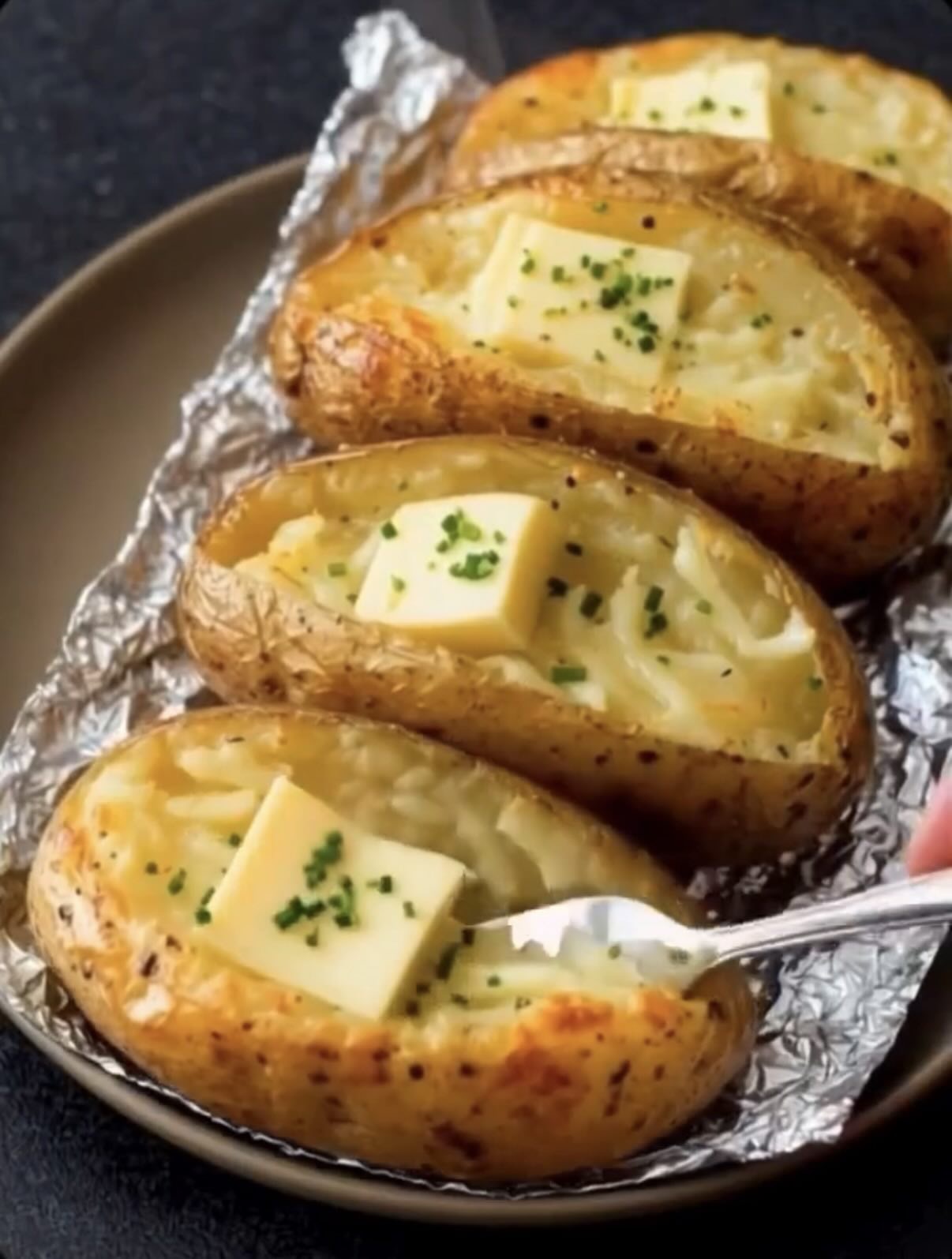
Classic Oven-Baked Russet Potatoes (Perfectly Crispy Skin & Fluffy Inside)
Few dishes are as comforting and versatile as a perfectly baked potato. With crisp, salty skin and a light, fluffy interior, baked Russet potatoes can be served as a satisfying side dish or transformed into a hearty main course with the right toppings. Whether you are preparing a casual family dinner, meal-prepping for the week, or hosting a gathering, mastering the art of baking potatoes in the oven is a skill that will serve you well.
This comprehensive guide walks you through everything you need to know — from selecting the best potatoes to achieving ideal texture and flavor. You will also find helpful tips, variations, storage instructions, and serving ideas to ensure your baked potatoes turn out perfect every time.
Why Choose Russet Potatoes?
When it comes to baking, Russet potatoes are the gold standard. Their high starch content and low moisture level make them ideal for creating that signature fluffy interior. The thick skin also crisps beautifully in the oven, especially when brushed with oil and seasoned with salt.
Unlike waxy potatoes such as red or Yukon varieties, Russets hold their structure while baking and develop a light, airy texture inside. This makes them the preferred choice for classic baked potatoes.
Ingredients
- 6 small to medium Russet potatoes (approximately 110–215 grams each)
- ¼ cup canola oil or olive oil
- 1 teaspoon sea salt
- ¼ teaspoon freshly ground black pepper
These simple ingredients are all you need to create a delicious, satisfying baked potato. The oil helps crisp the skin, while the salt enhances flavor and contributes to that irresistible outer texture.
Equipment You Will Need
- Baking sheet
- Fork
- Small bowl
- Pastry brush (optional)
- Paper towels or clean kitchen towel
- Oven mitts
- Sharp knife (for serving)
Step-by-Step Instructions
Step 1: Preheat the Oven
Preheat your oven to 425°F (220°C). This temperature allows the potatoes to cook through evenly while developing crispy skin. Avoid lower temperatures, as they can result in dry interiors and tough skin.
Position the oven rack in the center to ensure even heat distribution.
Step 2: Select and Prepare the Potatoes
Choose potatoes that are firm, smooth, and free from blemishes or green spots. Uniform size is important for even cooking.
Wash the potatoes thoroughly under cold running water to remove dirt. Use a vegetable brush if necessary. Since the skin will be eaten, cleaning them properly is essential.
Dry each potato completely using paper towels or a clean kitchen towel. Moisture on the surface can prevent the skin from crisping properly.
Step 3: Pierce the Potatoes
Using a fork, pierce each potato 6–8 times around the surface. This allows steam to escape during baking and prevents the potatoes from bursting in the oven.
Do not skip this step, as trapped steam can build pressure inside the potato.
Step 4: Season the Potatoes
In a small bowl, combine the oil, sea salt, and freshly ground black pepper.
Rub each potato generously with the oil mixture. You can use your hands or a pastry brush to ensure the entire surface is coated. The oil promotes browning and crisping, while the salt enhances flavor and draws moisture to the surface for a better crust.
Make sure the potatoes are evenly coated on all sides.
Step 5: Arrange for Baking
Place the potatoes directly on a baking sheet. For even crisping, do not wrap them in foil. Wrapping traps steam and results in softer skin.
If you prefer extra crispiness, you may place the potatoes directly on the oven rack with a baking sheet on the rack below to catch any drips.
Ensure there is space between each potato for proper airflow.
Step 6: Bake
Bake for 45–60 minutes, depending on the size of the potatoes. Smaller potatoes may cook in 45 minutes, while larger ones may take up to 70 minutes.
To test for doneness:
- Insert a fork or knife into the center. It should slide in easily with no resistance.
- Gently squeeze the potato using oven mitts. It should feel soft inside.
The skin should appear crisp, slightly wrinkled, and well-seasoned.
Step 7: Rest and Serve
Remove the potatoes from the oven and let them rest for 5 minutes. This allows the interior to settle and makes handling easier.
Slice each potato open lengthwise using a sharp knife. Gently squeeze the ends to open the interior and fluff the flesh with a fork.
Serve immediately with your favorite toppings.
Tips for Perfect Baked Potatoes
1. Do Not Skip the Oil
Oil is essential for crispy skin. Baking without oil produces dry, papery skin.
2. Avoid Foil
Foil traps steam and results in soft, almost boiled skin. If you enjoy crispy skin, bake uncovered.
3. Season Generously
Salt not only enhances flavor but also helps create a delicious crust. Do not be afraid to coat evenly.
4. Use High Heat
425°F is ideal. Lower temperatures can cause uneven cooking and dense texture.
5. Check for Even Sizes
Uniform size ensures consistent cooking times.
Texture Breakdown: What Makes a Great Baked Potato?
A perfect baked potato has three distinct qualities:
- Crisp outer skin
- Fluffy, airy interior
- Even seasoning throughout
The starch granules inside Russet potatoes expand during baking, creating that soft texture. Meanwhile, the oil and salt react with the dry heat of the oven to produce crisp skin through a mild browning effect.
Serving Suggestions
Baked potatoes are incredibly versatile. Here are several serving ideas:
Classic Style
- Butter
- Sour cream
- Chopped chives
- Shredded cheddar cheese
- Crumbled bacon
Healthy Toppings
- Greek yogurt
- Steamed broccoli
- Avocado slices
- Salsa
- Cottage cheese
Hearty Meal Options
- Chili
- Pulled chicken
- Sauteed mushrooms
- Grilled vegetables
- Taco-style toppings
Gourmet Variations
- Garlic herb butter
- Caramelized onions
- Blue cheese crumbles
- Pesto
- Smoked salmon with dill
Making It a Complete Meal
To turn baked potatoes into a balanced meal, add:
- Protein: grilled chicken, beans, lentils, steak
- Vegetables: spinach, roasted peppers, zucchini
- Healthy fats: avocado, olive oil drizzle
A loaded baked potato can easily serve as a filling main dish.
Storage and Reheating
Storing
Allow potatoes to cool completely. Store in an airtight container in the refrigerator for up to 4 days.
Reheating in Oven
Preheat oven to 350°F (175°C).
Place potatoes on a baking sheet and heat for 15–20 minutes until warmed through.
Reheating in Microwave
Slice open and heat for 2–3 minutes. Note that skin will soften.
Freezing
While possible, freezing may affect texture. If freezing, wrap tightly and store for up to 2 months.
Common Mistakes to Avoid
- Skipping the drying step
- Not piercing the potatoes
- Baking at too low a temperature
- Overcrowding the baking sheet
- Cutting open immediately without resting
Avoiding these mistakes ensures ideal texture and flavor.
Nutritional Benefits of Baked Potatoes
Potatoes often receive criticism, but they are naturally:
- Fat-free (before toppings)
- A good source of potassium
- Rich in vitamin C
- A source of fiber (especially when eaten with skin)
When prepared simply with oil and seasoning, baked potatoes can be part of a balanced diet.
Variations
Garlic Baked Potatoes
Add ½ teaspoon garlic powder to the oil mixture.
Herb-Crusted Potatoes
Mix dried rosemary, thyme, or oregano into the oil.
Spicy Version
Add paprika or cayenne pepper for heat.
Parmesan Crust
Sprinkle grated Parmesan over the skin before baking.
How to Achieve Extra Crispy Skin
For restaurant-style crispy skin:
- After baking, brush lightly with additional oil.
- Increase oven temperature to 450°F (230°C).
- Bake for an extra 10 minutes.
This final blast of heat enhances crispiness.
Air Circulation and Oven Science
Proper airflow allows moisture to evaporate from the skin while the interior steams. Direct exposure to heat promotes browning and crisping.
Steam trapped inside foil prevents evaporation, leading to softer results. Dry heat is essential.
Scaling the Recipe
For larger gatherings:
- Double or triple ingredients proportionally.
- Leave space between potatoes.
- Rotate baking sheets halfway through cooking.
Cooking time may increase slightly if oven is crowded.
Frequently Asked Questions
Should I microwave before baking?
While possible to reduce cooking time, microwaving can alter texture. For best results, bake fully in the oven.
Why is my potato dense inside?
Likely causes:
- Undercooking
- Using waxy potatoes instead of Russets
- Baking at too low temperature
Can I prepare in advance?
Yes. Bake ahead and reheat before serving.
Pairing Ideas
Baked potatoes pair well with:
- Grilled meats
- Roasted chicken
- Fresh salads
- Steamed vegetables
- Barbecue dishes
They complement both casual and formal meals.
Final Thoughts
A perfectly baked Russet potato is simple yet deeply satisfying. With just a few ingredients — oil, salt, and pepper — you can create a dish that is crisp on the outside and soft on the inside. The key lies in proper preparation, high heat, and avoiding shortcuts like foil wrapping.
Whether served plain with butter or fully loaded with toppings, baked potatoes remain a timeless favorite. By following the detailed steps and tips outlined above, you can achieve consistent, restaurant-quality results right in your own kitchen.
Master this classic technique once, and you will have a reliable, crowd-pleasing recipe for years to come.