
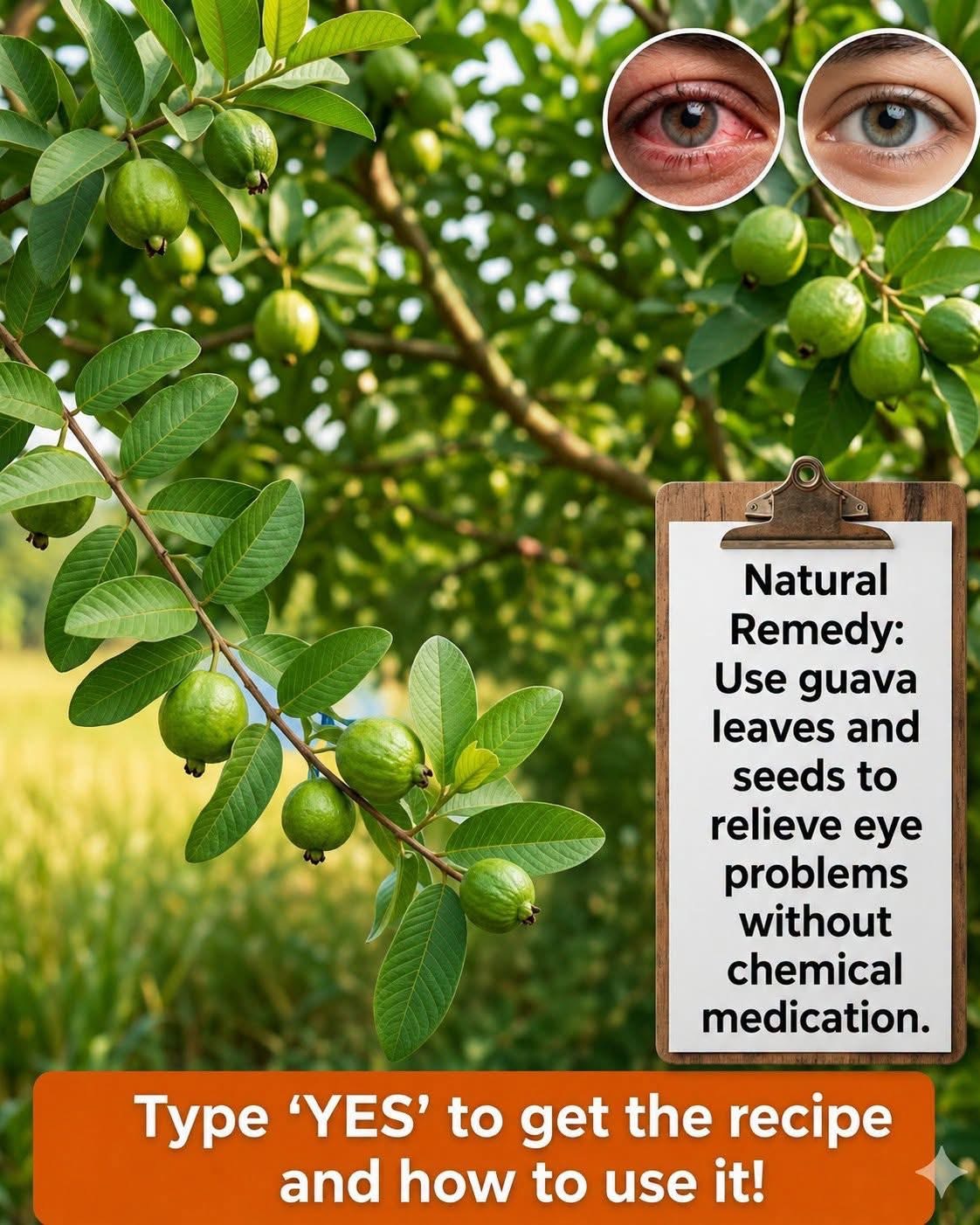
Guava is one of those fruits that deserves far more attention. Sweet, refreshing, and naturally rich in nutrients, guava can be a valuable addition to a balanced diet—and some of its nutrients are particularly relevant to maintaining healthy eyes.
But there is a lot of misinformation online about using guava leaves, seeds, or juice to “restore eyesight” or cure eye diseases. So let’s separate the potential benefits from the exaggerated claims.
Why Is Guava Good for You?
Guava provides several important nutrients, including:
- Vitamin C
- Vitamin A-related carotenoids
- Folate
- Potassium
- Fiber
- Various antioxidant plant compounds
Its nutritional profile can vary depending on the variety and ripeness.
1. Vitamin C and Eye Health
Guava is exceptionally rich in vitamin C.
Vitamin C is an antioxidant that helps protect cells from oxidative stress and contributes to normal tissue function.
The eyes are exposed to oxidative stress throughout life, so getting enough antioxidants as part of a varied diet is important for overall health.
However, eating guava does not mean that it can prevent or reverse every eye disease.
2. Carotenoids May Support Healthy Vision
Some guava varieties contain carotenoids, including beta-carotene.
The body can convert beta-carotene into vitamin A, a nutrient essential for normal vision.
Vitamin A is particularly important for maintaining normal vision in low-light conditions.
A severe vitamin A deficiency can cause serious vision problems, but that doesn’t mean taking extra vitamin A—or eating enormous quantities of one particular food—is beneficial for everyone.
3. Antioxidant Plant Compounds
Guava contains polyphenols and other naturally occurring compounds with antioxidant activity.
These compounds are one reason researchers are interested in fruits such as guava and their potential role in overall health.
The important point is that antioxidant activity in food or laboratory studies doesn’t automatically mean the fruit can treat an eye condition.
4. Don’t Expect Guava to Restore Lost Vision
You may encounter claims that eating guava every day can:
- Remove cataracts
- Reverse glaucoma
- Cure macular degeneration
- Restore damaged eyesight
- Eliminate the need for glasses
These claims are not supported by good clinical evidence.
Nutrition can support normal eye health, but established eye diseases require appropriate diagnosis and treatment.
What About Guava Leaves?
Guava leaves are used traditionally in various cultures, and guava-leaf teas are sometimes promoted online for numerous health conditions.
Research has investigated compounds found in guava leaves, but evidence is not sufficient to treat eye diseases with guava-leaf tea.
Most importantly, do not put homemade guava-leaf preparations, juice, or extracts directly into your eyes.
The eye is extremely sensitive, and non-sterile substances can introduce bacteria or cause irritation and injury.
What About Guava Seeds?
Guava seeds are edible and are generally consumed naturally when eating the fruit.
They provide some fiber and other plant components, but there is no good evidence that chewing large amounts of guava seeds provides a special treatment for eyesight.
You don’t need to separate the seeds from the fruit to enjoy guava.
How to Include Guava in Your Diet
The simplest approach is to eat the fruit itself.
Try:
- Fresh guava as a snack
- Guava added to fruit salads
- Sliced guava with yogurt
- Guava blended into a smoothie
- Guava with oatmeal
- Homemade guava salsa
Eating the whole fruit also provides fiber that you lose or reduce when turning fruit into juice.
A Simple Guava Smoothie
Try combining:
- 1 ripe guava
- ½ banana
- ½ cup plain yogurt
- ½ cup water or milk
- A few ice cubes
Blend until smooth.
This makes a nutritious snack or breakfast addition without relying on exaggerated health claims.
When Should You See an Eye Doctor?
Don’t rely on food remedies if you’re experiencing:
- Sudden vision loss
- New flashes or floaters
- Severe eye pain
- Significant redness
- Double vision
- A sudden change in eyesight
- Persistent blurred vision
Some eye conditions can progress without obvious symptoms, which is why routine eye examinations can be important.
The Bottom Line
Guava is an excellent fruit to include in a varied diet. Its vitamin C, carotenoids, fiber, and other plant compounds can contribute to overall nutrition and support normal body functions, including those relevant to eye health.
But guava isn’t a cure for cataracts, glaucoma, macular degeneration, or vision loss.