
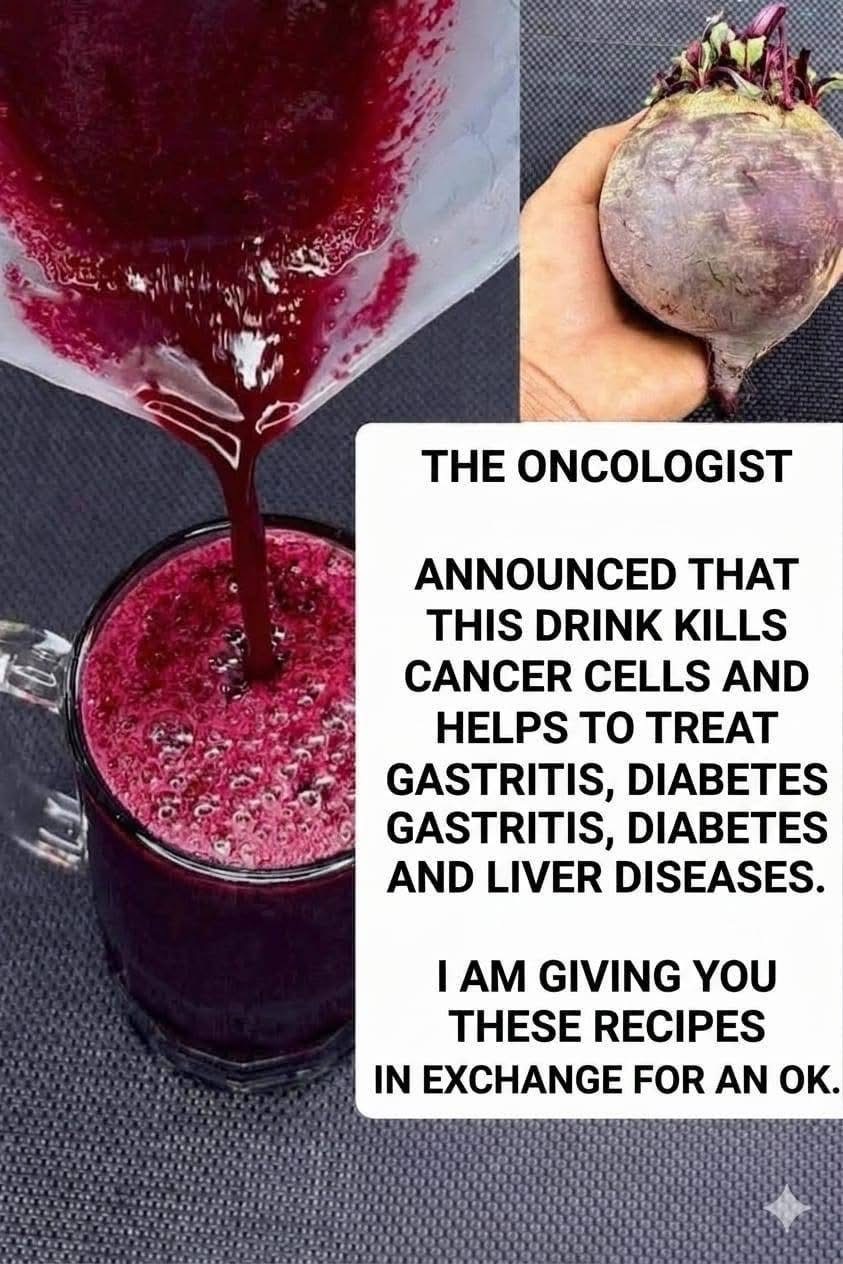
It certainly sounds like incredible news. Beetroot is packed with naturally occurring compounds, and scientists have investigated some of these compounds for their potential biological effects.
But there is a crucial difference between a food showing interesting effects in laboratory research and proving that drinking beetroot juice kills cancer in people.
What Makes Beetroot Interesting?
Beetroot contains several compounds that have attracted scientific interest, including:
- Nitrates
- Betalain pigments
- Polyphenols
- Folate
- Potassium
- Vitamin C
These compounds contribute to beetroot’s nutritional value and distinctive red-purple color.
Beetroot is also particularly well known for its naturally occurring dietary nitrates, which can be converted in the body into nitric oxide and may influence blood-vessel function.
Does Beetroot Juice Kill Cancer Cells?
This is where the viral claim becomes misleading.
Some laboratory studies have examined beetroot extracts or compounds found in beetroot and observed effects on cancer cells under experimental conditions.
But that does not prove that drinking beetroot juice kills cancer cells inside a human body.
The concentration used in a laboratory experiment may be very different from what someone obtains by drinking a glass of juice. Researchers also need clinical studies to determine whether an intervention actually improves outcomes in people with cancer.
There is currently no established evidence that drinking beetroot juice for 42 days cures or eliminates cancer.
Where Did the “42 Days” Claim Come From?
Specific numbers like “42 days” can make a health claim sound scientific.
But a precise time period doesn’t automatically mean that the claim has been clinically demonstrated.
Before believing a statement like this, ask:
Was the study performed in humans?
How many people participated?
What type of cancer was studied?
Was beetroot juice actually used, or was an isolated compound or laboratory extract tested?
Was there a control group?
These details matter enormously.
Is Beetroot Juice Still Healthy?
Yes.
For most people, beetroot can be a nutritious addition to a balanced diet.
It can provide beneficial plant compounds and dietary nitrates, and research has investigated beetroot and beetroot juice in relation to cardiovascular and exercise performance.
You can enjoy beetroot in many forms:
- Fresh roasted beetroot
- Cooked beetroot
- Beetroot salads
- Beetroot soup
- Homemade beetroot juice
- Beetroot blended into smoothies
Whole beetroot also provides fiber that may be reduced when the vegetable is juiced.
Important If You Have Cancer
If someone has been diagnosed with cancer, drinking beetroot juice can be part of their diet if appropriate, but it should not replace chemotherapy, radiation, surgery, immunotherapy, targeted therapy, or other treatments recommended by their medical team.
Cancer treatment depends on the type and stage of cancer and many other individual factors.
Natural foods can support nutrition during treatment, but they aren’t automatically cancer treatments.
A Simple Beetroot Drink
If you simply enjoy beetroot juice, you can make a refreshing drink using:
- 1 small beetroot
- 1 apple
- 1 carrot
- A small piece of ginger
- Water as needed
Wash the ingredients thoroughly, blend or juice them, and consume promptly.
This can be a nutritious drink—but don’t make claims that it will destroy cancer cells.
One More Thing to Know
Beetroot can temporarily turn urine or stools pink or reddish. This is called beeturia and is usually harmless.
People with certain medical conditions, including a history of calcium oxalate kidney stones, may need to discuss their beetroot intake with a healthcare professional because beets are relatively high in oxalates.
The Bottom Line
Beetroot is a nutritious vegetable with fascinating compounds that scientists continue to study.
But the statement “beetroot juice kills cancer cells in 42 days” is not an established cancer treatment claim.
The safest message to share is not that beetroot cures cancer, but that it can be one nutritious food within an overall healthy diet.
And when it comes to cancer, replacing proven medical treatment with an unproven juice can be dangerous.